Hyperpigmentation issues such as melasma, acne marks, and dark spots are among the most common skin concerns worldwide. While countless brightening products exist, hydroquinone creams remain one of the most clinically proven and widely prescribed options for treating stubborn pigmentation.
Despite ongoing debates around alternatives, dermatologists continue to rely on hydroquinone as a first-line treatment when faster, visible improvement is needed. This article explains how hydroquinone works, why concentration matters, and introduces commonly prescribed formulations available in different strengths and brands.
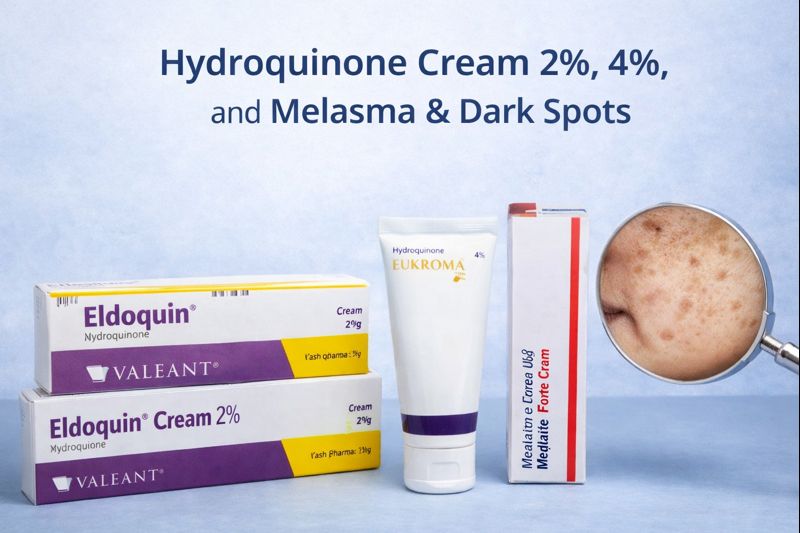
Why Hydroquinone Is Still Widely Used
Hydroquinone works by inhibiting tyrosinase, an enzyme essential for melanin production. By reducing melanin synthesis at its source, hydroquinone gradually lightens darkened areas of skin caused by sun exposure, hormonal changes, acne inflammation, or melasma.
Unlike cosmetic brighteners that act superficially, hydroquinone directly targets pigment-producing cells. This is why results are often noticeable within weeks when used correctly under guidance.
Because melasma and post-inflammatory hyperpigmentation tend to recur, treatment usually combines hydroquinone with sun protection and controlled treatment cycles rather than continuous, indefinite use.
Different Strengths, Same Active Ingredient
All products discussed below contain hydroquinone as the active ingredient. The primary difference lies in concentration, tube size, and brand formulation, which allows dermatologists to tailor treatment intensity based on skin tolerance and severity of pigmentation.
Lower strengths are often preferred for beginners or maintenance phases, while higher strengths are typically reserved for more persistent cases under supervision.
Commonly Prescribed Hydroquinone Creams
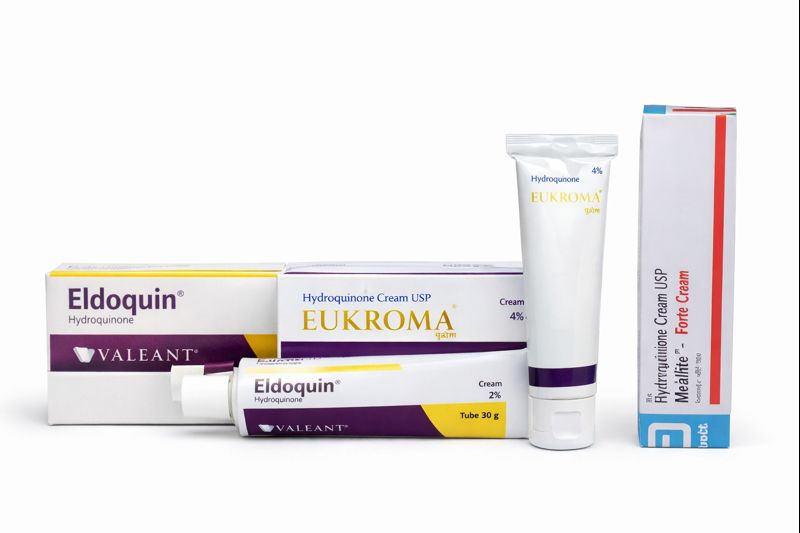
One of the widely used options is Eldoquin Cream 2% (30g), manufactured by Valeant Pharmaceuticals. This formulation is often chosen for individuals new to hydroquinone therapy or those with sensitive skin. The 2% concentration provides gradual brightening while minimizing irritation, making it suitable for early-stage pigmentation or maintenance use.
For more resistant pigmentation, Eldoquin Forte Cream 4% (30g) by Meda Pharmaceuticals offers a stronger approach. The 4% concentration is frequently prescribed for melasma and deeper discoloration, where faster pigment reduction is required. Dermatologists often recommend limiting the duration of use to avoid skin irritation or rebound pigmentation.
Another well-known brand is Eukroma, produced by Yash Pharma Laboratories. Eukroma is available in both 2% (40g) and 4% (20g) formulations, giving flexibility depending on treatment goals. The 2% version is typically used for extended courses or combination regimens, while the 4% variant is used for short-term intensive correction.
A further example is Melalite Forte Cream 4% (30g) by Abbott. This formulation is commonly prescribed in dermatology settings for melasma and post-acne hyperpigmentation. Like other 4% hydroquinone products, it is intended for controlled use under professional guidance.
Although these products differ in branding and packaging, their core mechanism remains the same: targeted melanin suppression to visibly lighten dark patches.
Hydroquinone vs Long-Term Brightening Alternatives
Hydroquinone is often compared with non-hydroquinone ingredients such as azelaic acid, kojic acid, vitamin C, niacinamide, and tranexamic acid. While these alternatives are useful for long-term maintenance and sensitive skin, they generally act more slowly and produce subtler results.
For patients seeking faster and more predictable improvement, hydroquinone remains the most effective option when used correctly. Non-hydroquinone products are frequently introduced after hydroquinone therapy to maintain results and reduce relapse.
Safety, Duration, and Best Practices
Hydroquinone is effective, but it must be used responsibly. Dermatologists typically recommend:
Using hydroquinone for limited treatment cycles
Avoiding prolonged continuous use
Applying sunscreen daily to prevent rebound pigmentation
Monitoring for irritation or sensitivity
When these principles are followed, hydroquinone remains a safe and powerful treatment for pigmentation disorders.
Conclusion
Hydroquinone creams continue to play a central role in treating melasma, acne scars, and dark spots due to their strong clinical evidence and consistent results. While multiple brands and strengths exist—such as Eldoquin, Eukroma, and Melalite Forte—the choice usually depends on skin tolerance, pigmentation severity, and treatment duration.
When used correctly and paired with sun protection, hydroquinone remains one of the most reliable tools for achieving clearer, more even-toned skin.