When it comes to treating acne, Tretinoin has long been considered one of the most reliable and clinically proven topical treatments. Dermatologists have prescribed it for decades to manage acne, improve skin texture, and even reduce early signs of ageing.
One of the most common questions people face when starting Tretinoin is whether to choose the gel or the cream version. Both contain the same active ingredient, a vitamin A derivative, but the formulation can make a noticeable difference in how your skin reacts and how comfortable the treatment feels over time.
This guide breaks down the real differences between Tretinoin gel and cream to help you choose the option that best fits your skin type, acne severity, and tolerance level.
What is Tretinoin and how does it work
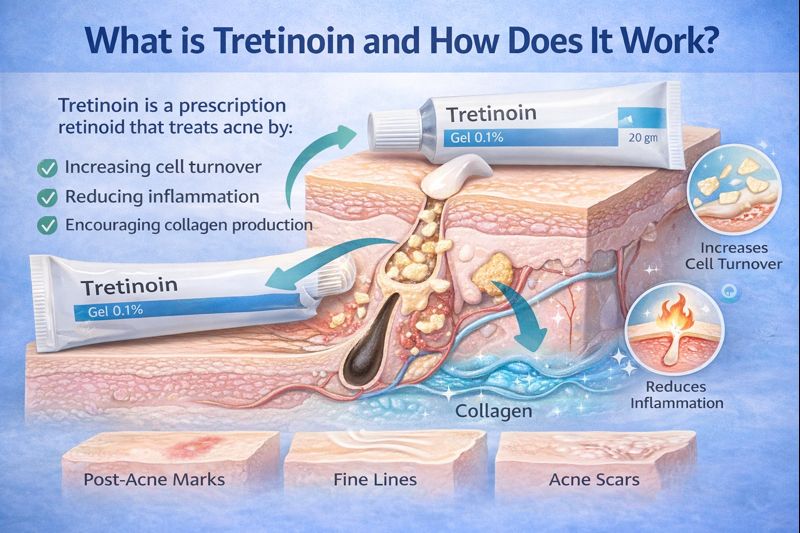
Tretinoin, also known as all-trans retinoic acid, is a prescription retinoid primarily used for acne treatment. It works by increasing skin cell turnover, which helps prevent dead skin cells from clogging pores. At the same time, it reduces inflammation, encourages collagen production, and improves overall skin texture.
Because of these effects, Tretinoin is effective not only for acne but also for post acne marks, uneven tone, and early fine lines. It is available in multiple strengths ranging from very low concentrations to stronger formulations, and it comes mainly in gel and cream forms.
Understanding Tretinoin cream
Tretinoin cream has a thicker, more moisturising base that includes emollients. This makes it a popular choice for people with dry, sensitive, or mature skin. The cream formulation releases the active ingredient more gradually, which often results in less irritation during the early stages of treatment.
Many people find that Tretinoin cream is easier to tolerate when applied to the entire face, especially if they are also targeting fine lines or uneven texture along with acne. Because it is gentler, it is often recommended for beginners or those who have previously struggled with redness, peeling, or burning from retinoids.
However, the richer texture can be a drawback for some users. In people with very oily or acne prone skin, the cream base may feel heavy and, in some cases, contribute to clogged pores. Absorption tends to be slower compared to gel formulations, which means visible acne improvement may take a bit longer, particularly in more severe cases.
Understanding Tretinoin gel
Tretinoin gel has a lightweight, oil free formulation that absorbs quickly into the skin. This makes it especially suitable for people with oily, combination, or acne prone skin. Because it penetrates the skin faster, it often delivers quicker results for active breakouts and clogged pores.
The gel formulation is less likely to block pores, which is a major reason dermatologists often recommend it for patients dealing with persistent or inflammatory acne. It is commonly preferred by experienced Tretinoin users who already know their skin can tolerate retinoids.
The downside is that Tretinoin gel can be more drying and irritating, particularly during the first few weeks of use. People with dry or sensitive skin may experience increased redness, flaking, or discomfort. For this reason, it is generally not the first choice for ageing skin or for those new to retinoids.
How gel and cream compare in real use
The main difference between Tretinoin gel and cream comes down to skin type and tolerance rather than effectiveness. Both forms contain the same active ingredient and can deliver similar long term results when used consistently.
Tretinoin cream is usually better suited for dry, sensitive, or mature skin. Its thicker consistency provides some moisture, leading to lower irritation and better comfort for full face use. It also works well for people treating both acne and early signs of ageing.
Tretinoin gel, on the other hand, is often a better fit for oily or acne prone skin. Its fast absorption and oil free base make it more effective for moderate to severe acne, especially when clogged pores and excess sebum are major concerns. The trade off is a higher chance of dryness and irritation, particularly at the beginning.
Which one works faster for acne
Many users notice that Tretinoin gel seems to work faster for active acne. This is largely due to its quicker penetration into the skin. However, faster results do not always mean better outcomes. Increased irritation can force some people to reduce usage frequency, which may slow overall progress.
Tretinoin cream tends to deliver steadier improvement over time. While results may appear more gradually, better tolerance often allows consistent long term use, which is essential for maintaining acne control and preventing relapse.
How to choose the right formulation
Choosing between Tretinoin gel and cream should be based on your skin type, treatment goals, and tolerance level.
If you have dry or sensitive skin, the cream formulation is usually the safer starting point. It offers a gentler introduction to Tretinoin and reduces the risk of excessive irritation.
If your skin is oily or you struggle with frequent breakouts, the gel formulation may provide better results, especially if acne is your primary concern.
Beginners often benefit from starting with a lower strength cream to build tolerance. Those who have used retinoids before and tolerate them well may prefer the gel for its stronger acne focused action.
Tips for using Tretinoin safely
Regardless of whether you choose gel or cream, proper use is critical for success. Start slowly by applying it two to three times per week at night, then gradually increase frequency as your skin adjusts. Use only a pea sized amount for the entire face, as applying more will not speed up results and may increase irritation.
Always apply Tretinoin to clean, completely dry skin. Waiting about twenty minutes after washing your face helps reduce irritation. Follow up with a gentle, non comedogenic moisturiser to support the skin barrier.
Daily sunscreen use is essential, as Tretinoin increases sensitivity to sunlight. Avoid combining it with harsh exfoliants, alcohol based toners, or other strong actives unless advised by a dermatologist.
Can you switch between gel and cream
Switching between formulations is possible and sometimes recommended. If gel causes excessive dryness or irritation, moving to a cream can make treatment more manageable. Likewise, if cream feels too heavy or ineffective for acne control, switching to gel may improve results. Any change should ideally be guided by a healthcare professional.
What dermatologists generally agree on
Most dermatologists agree that both Tretinoin gel and cream are effective for acne. The most important factor is consistency. A formulation that your skin can tolerate long term will always outperform a stronger option that you cannot use regularly.
Final verdict
There is no single best option when comparing Tretinoin gel and cream.
Tretinoin gel is often better for oily, acne prone skin and for those seeking faster results who can tolerate dryness.
Tretinoin cream is better suited for dry, sensitive, or ageing skin and for people who need a gentler, more comfortable approach.
Ultimately, the best Tretinoin is the one you can use consistently. With patience, proper skincare, and the right formulation, Tretinoin can be a powerful tool for clearer, healthier skin over time.