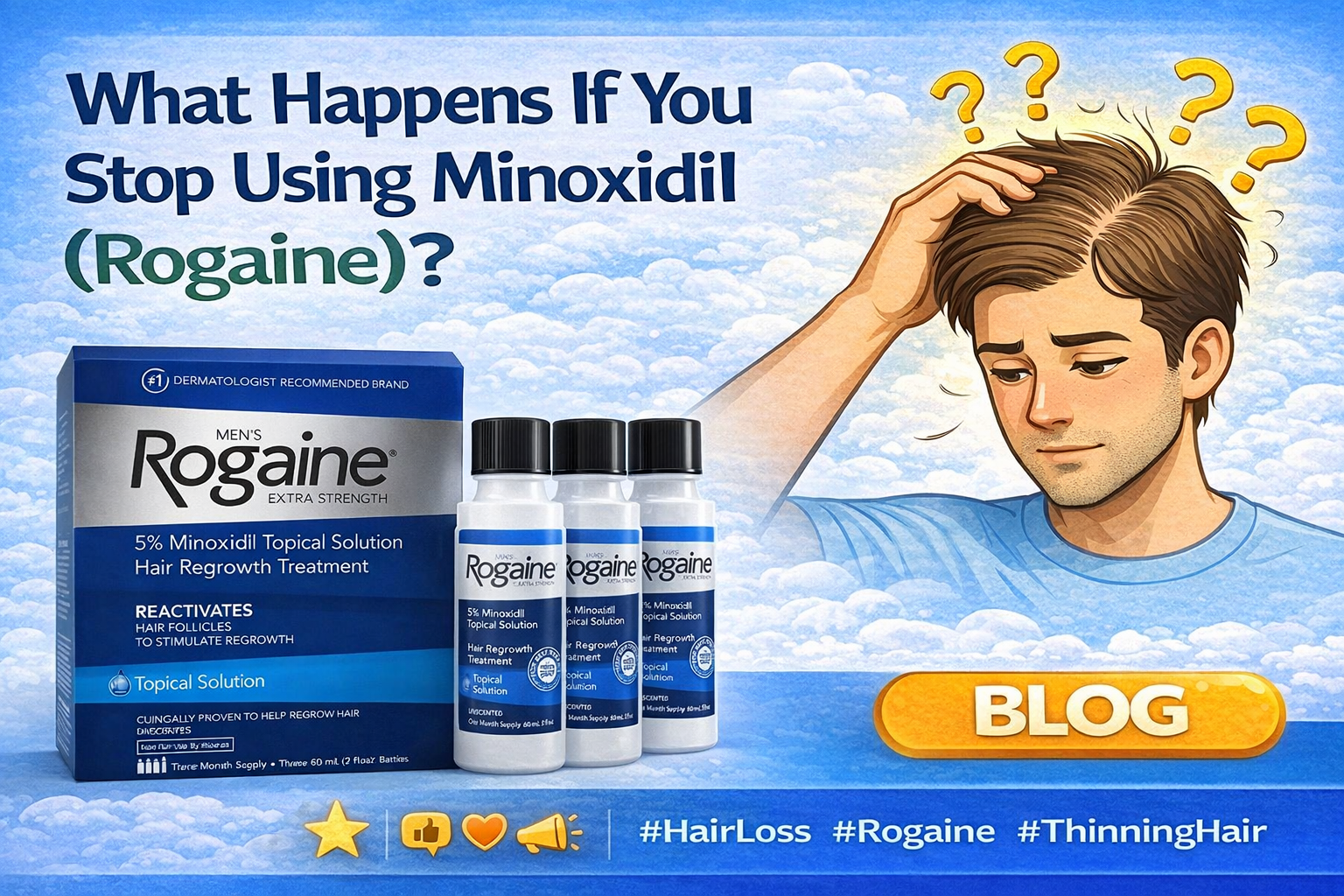
Hair loss affects millions of people worldwide, and many turn to Rogaine (Minoxidil) for help. While this topical solution can preserve existing hair and stimulate new growth, a common question arises: what happens if you stop using it? Understanding the effects of discontinuing Minoxidil is key to managing expectations and maintaining hair health.
How Rogaine Works
Rogaine contains 5% Minoxidil, a clinically proven topical treatment for hair loss. Its main functions include:
- Preserving existing hair: Keeps hair you naturally have by slowing down follicle miniaturization.
- Stimulating regrowth: Helps thin hair in the crown or vertex areas grow thicker and stronger.
- Enhancing hair density: Improves the appearance of thinning areas over time.
Most users notice visible improvements after 3–6 months of consistent application. However, results vary based on age, genetics, and the stage of hair loss.
Before, During, and After: The Hair Cycle
Before Using Rogaine
- Hair is thinning, and density is lower than desired.
- Hair follicles are miniaturized but still active.
- Without intervention, hair loss usually continues gradually.
During Rogaine Use
- Hair appears thicker, and new growth becomes noticeable.
- Thinning areas, especially on the crown, may fill in over time.
- Hair regrowth is temporary and requires ongoing application to maintain results.
After Stopping Rogaine
- Newly grown hair from Minoxidil typically sheds within months.
- Baseline hair returns to its original density.
- Temporary shedding may occur as hair transitions back to its natural state.
Bottom line: Minoxidil is a maintenance and regrowth solution, not a permanent cure. Continuous use is necessary to maintain the hair gained during treatment.
Tips to Maximize Hair Health
Using Minoxidil effectively is only part of maintaining hair growth. Consider these complementary strategies:
- Scalp care: Use gentle shampoos and conditioners to prevent irritation.
- Nutrition: Maintain a balanced diet with vitamins and minerals that support hair follicles, such as biotin, zinc, and vitamin D.
- Topical support: Products containing copper peptides or growth-stimulating compounds may strengthen follicles.
- Lifestyle: Reduce stress, avoid harsh chemicals, and limit excessive heat styling to protect hair quality.
FAQs
Q1: Will my hair be worse than before if I stop Rogaine?
No. Stopping Minoxidil usually results in hair returning to its baseline density. Any hair gained during use may be lost, but you will not lose hair beyond your natural progression.
Q2: How long does it take for hair to shed after stopping Minoxidil?
Hair regrown from Minoxidil typically sheds within 2–4 months. The timeline varies based on hair cycle and genetics.
Q3: Can I switch to another hair treatment instead?
Yes, options include finasteride, low-level laser therapy, or platelet-rich plasma (PRP) treatments. These can complement or replace Minoxidil depending on your needs.
Q4: Is continuous use safe?
Yes. Minoxidil is FDA-approved for long-term use, but follow instructions and monitor for scalp irritation or other side effects.
Key Takeaways
- Rogaine preserves existing hair and promotes regrowth but requires continuous use.
- Stopping Minoxidil leads to shedding of newly grown hair, with baseline hair remaining intact.
- Complementary scalp care, nutrition, and lifestyle measures help maximize and maintain results.
With realistic expectations and consistent care, Minoxidil can be a highly effective tool for managing hair thinning and improving appearance.