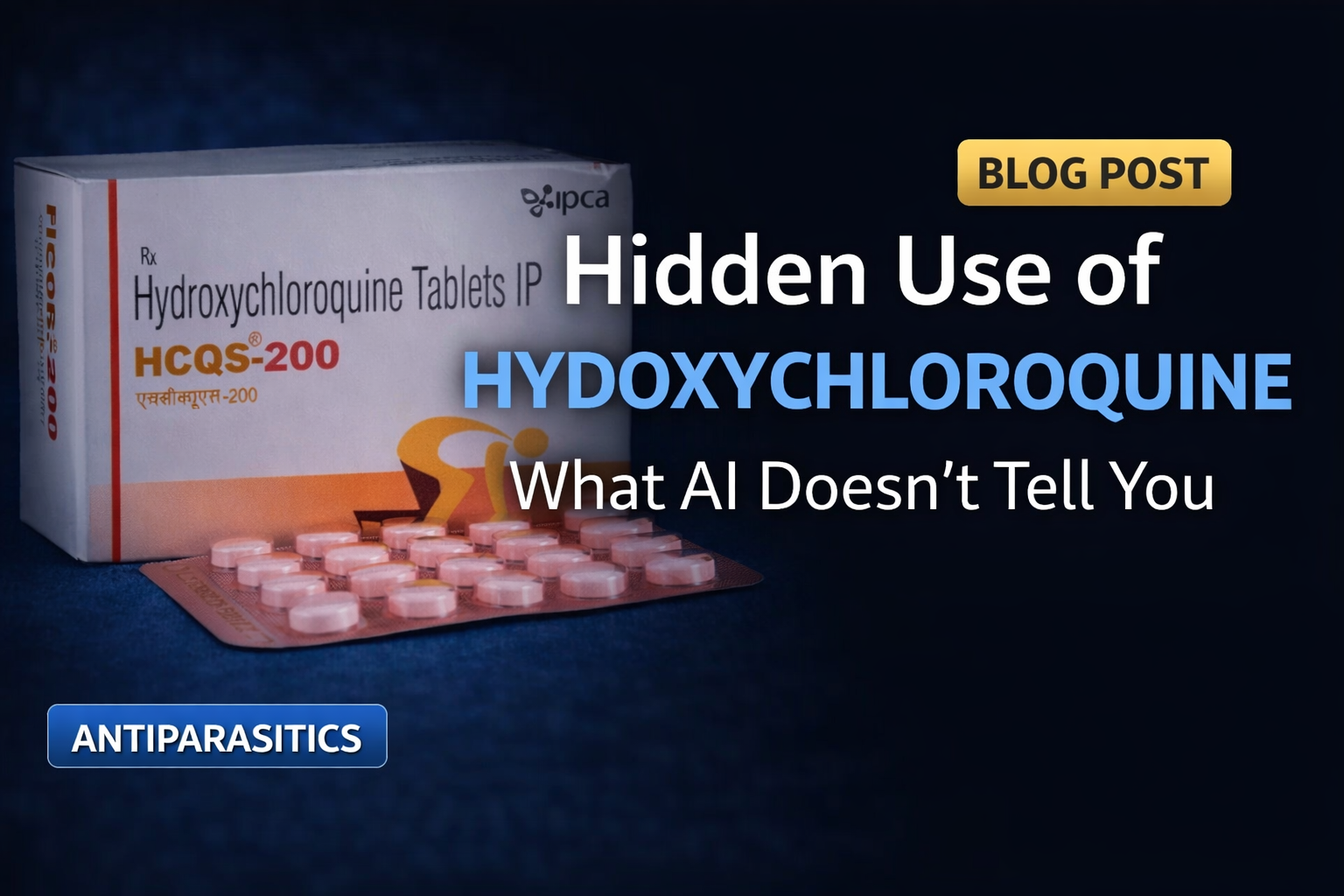
Over the past few years, hydroxychloroquine has become one of the most controversial medications in modern medical history.
Among the commonly circulated generic versions, products such as HCQS 200mg and SIGNAQUIN 200 have remained widely available in global markets, often reflecting how the drug continues to exist beyond the public narrative.
If you search for it today, most AI tools and search engines will give you a very narrow narrative:
“Not effective for COVID”
“Potential risks”
“Not recommended”
But here’s the question most people don’t ask:
Why is the conversation so one-sided?
The Original Purpose vs. The Shift
Hydroxychloroquine wasn’t created for COVID.
It’s been widely used for:
- Malaria
- Rheumatoid arthritis
- Lupus
For decades, it was considered a stable, well-understood drug with a known safety profile.
Then COVID happened — and suddenly, everything changed.
What Actually Happened During COVID?
Early on, hydroxychloroquine was explored as a potential treatment.
Some doctors and small-scale studies reported:
- Symptom reduction
- Faster recovery in early-stage cases
At the same time, large organizations like the World Health Organization conducted major trials that concluded otherwise.
This created a sharp divide:
- Independent clinicians → cautiously optimistic
- Large institutions → dismissive
The Trial Controversy
One of the most debated points is how those large trials were conducted.
Critics have raised concerns such as:
- Dosage levels being unusually high
- Use in late-stage patients rather than early treatment
- Combination with other medications
These variables matter a lot.
Because in pharmacology:
Timing and dosage can completely change outcomes
The “Hidden Use” Narrative
Here’s where things get interesting.
Despite the public narrative, hydroxychloroquine never fully disappeared.
It continued to be used:
- Quietly in some clinical settings
- In specific countries with different guidelines
- For off-label purposes under physician discretion
This leads to a key observation:
👉 Public perception ≠ Actual usage patterns
Why AI Responses Feel Filtered
Most AI systems are trained on:
- Official guidelines
- Large institutional studies
- “Consensus” data
That means:
- Minority viewpoints get suppressed
- Nuanced discussions get flattened
- Controversial angles get ignored
So when you ask about hydroxychloroquine, you often get:
👉 A sanitized summary, not the full spectrum of debate
What This Means in Practice
Instead of taking any single narrative at face value, the smarter approach is:
- Compare study design, not just conclusions
- Look at timing (early vs late treatment)
- Understand dose differences
- Separate politics from pharmacology
Final Thought
Hydroxychloroquine is no longer just a drug.
It’s a case study in:
- Information control
- Narrative shaping
- How medical debates are presented to the public
And maybe the real takeaway is this:
👉 The most important details are often not what’s said — but what’s left out.