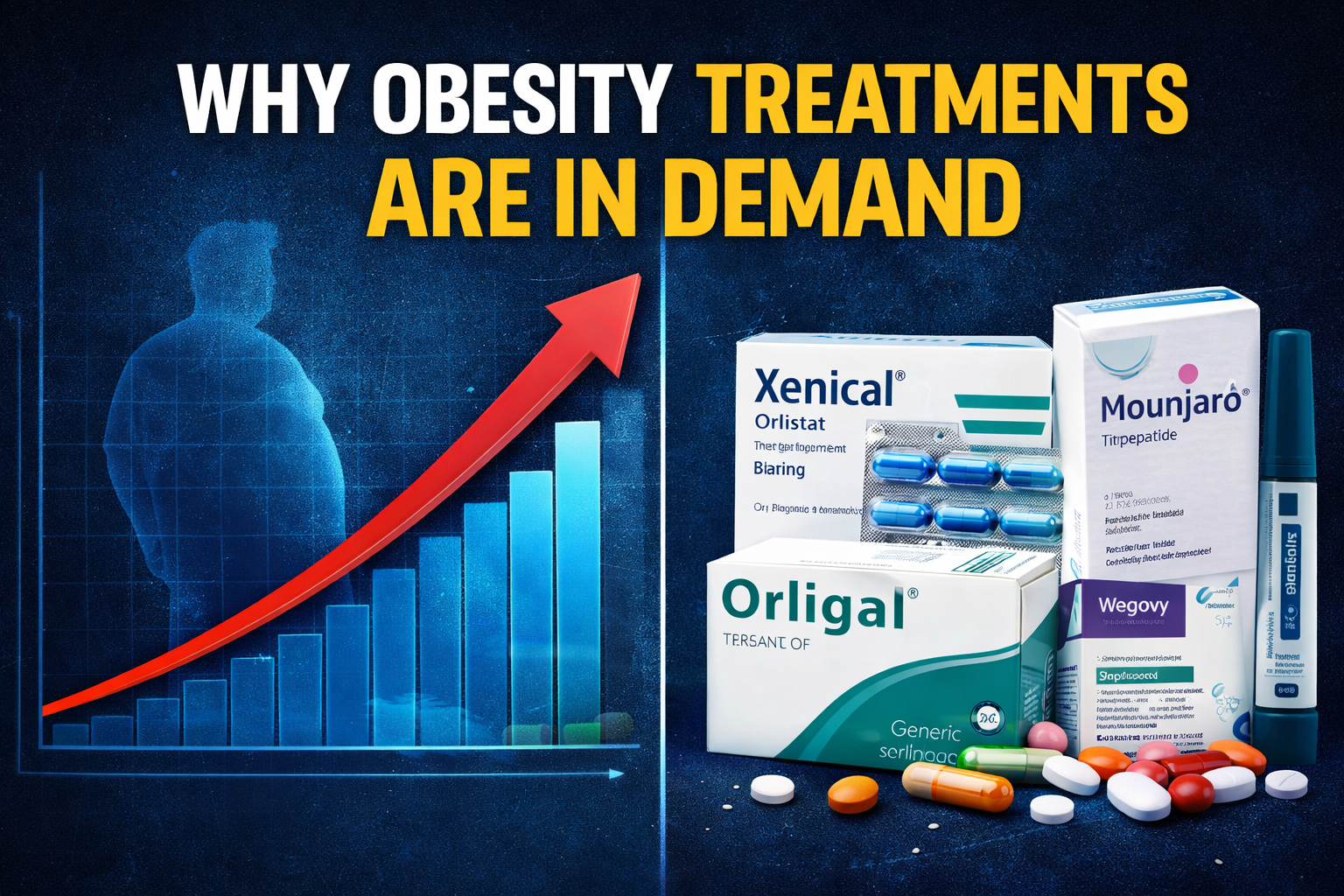
Obesity is no longer just a matter of personal choice.
It is increasingly being recognized as a structural issue driven by economic systems and food environments.
In the United States, dietary patterns have been heavily shaped by government subsidies, making refined grains, processed foods, and calorie-dense products significantly cheaper and more accessible.
As a result, obesity, type 2 diabetes, and cardiovascular diseases have risen sharply — creating a growing demand for effective weight management solutions.
From Diet Failure to Pharmaceutical Solutions
For many people, lifestyle changes alone are not enough.
This is why medical weight loss treatments have gained significant traction in recent years.
Among the most widely used options:
- Orlistat-based treatments
- Xenical (original brand)
- Orligal (generic alternative)
→ Works by reducing fat absorption in the body
→ One of the most established and accessible solutions
And more recently:
→ Help regulate appetite and metabolic function
→ Leading the next generation of weight loss therapies
Why These Treatments Are Gaining Popularity
The reason is simple.
In reality:
- Maintaining a strict, healthy diet is difficult
- Processed and subsidized foods dominate daily consumption
- Obesity-related conditions continue to rise
As a result, more people are turning to
👉 a combination of lifestyle management and pharmaceutical support
as a practical and sustainable solution.
A Structural Problem Requires Practical Solutions
Obesity is not just an individual issue — it is a systemic one.
Food pricing, agricultural policy, and consumption patterns have collectively shaped an environment that promotes weight gain over time.
In this context, weight loss medications are no longer seen as optional —
they are becoming part of a broader, realistic approach to health management.
Final Thoughts
The conversation around obesity is evolving.
Instead of focusing solely on willpower or diet,
the focus is shifting toward:
👉 practical, science-based approaches that include medical support
As the environment continues to work against healthy habits,
solutions must adapt accordingly.