Managing herpes effectively isn’t just about treating symptoms — it’s about choosing a treatment approach that you can realistically maintain over time.
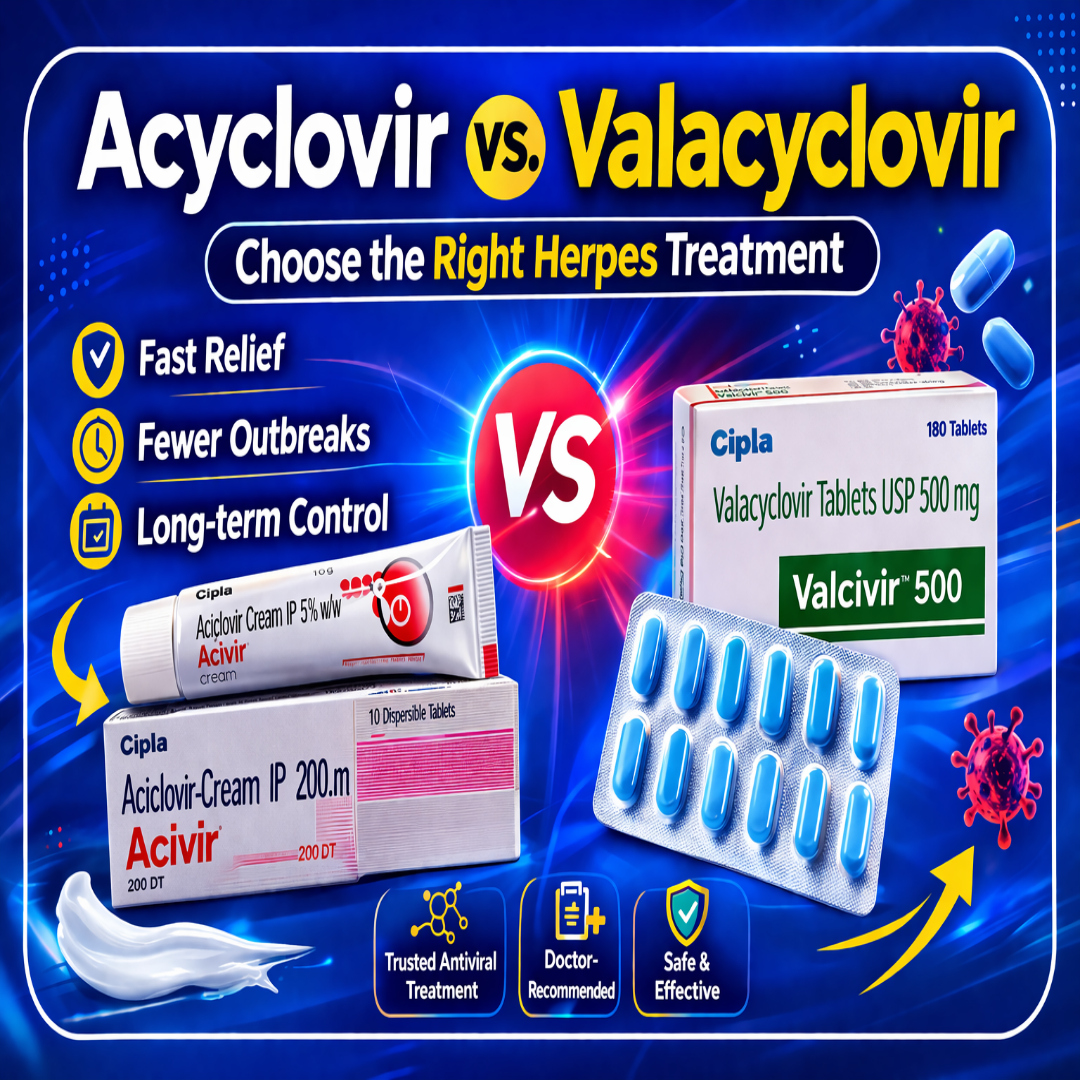
In real-world use, patients typically rely on a mix of topical and oral antivirals, such as Acivir Cream (10gm) for localized outbreaks, combined with oral options like Acivir 200 DT (100 Tablets) or Valcivir 500 (180 Tablets) for systemic control.
This combination approach reflects how herpes is actually managed today — not one-size-fits-all, but layered depending on severity and frequency.
1. Understanding the Core Difference
Both Acyclovir and Valacyclovir target the herpes virus by blocking its ability to replicate.
However, how they function in the body differs:
- Valacyclovir is a prodrug that converts into Acyclovir after absorption
- This results in higher bioavailability and more efficient drug delivery
- Acyclovir works directly but requires more frequent dosing
👉 In practice, this means fewer doses are needed with Valacyclovir to achieve similar or better outcomes
2. How These Treatments Are Actually Used
Treatment isn’t limited to just tablets.
For example:
- Topical use (Acivir Cream) helps manage visible lesions and speeds up surface healing
- Oral Acyclovir (Acivir 200 DT) is commonly used for active outbreaks requiring consistent suppression
- Valacyclovir (Valcivir 500) is often chosen for its convenience in long-term management
This layered approach allows users to handle both immediate symptoms and long-term recurrence risk.
3. Convenience vs Frequency
One of the biggest differences comes down to dosing:
- Acyclovir requires multiple doses per day to maintain effectiveness
- Valacyclovir reduces this burden significantly with once or twice daily dosing
👉 For users with busy schedules or frequent outbreaks,
Valacyclovir often becomes the more practical choice
4. Speed and Real-World Effectiveness
Both medications begin working quickly once absorbed, but:
- Valacyclovir tends to provide faster relief due to better absorption
- Acyclovir remains effective but relies heavily on consistent timing
👉 Key takeaway:
Starting treatment early matters more than which drug you use
5. Safety and Considerations
Both medications are widely used and generally well tolerated.
Common effects include:
- Headache
- Nausea
- Fatigue
Important considerations:
- Hydration is essential to reduce kidney strain
- Dosing should be consistent for optimal results
6. Choosing the Right Approach
There is no single “best” option — only what works best for your situation.
- If cost matters more → Acyclovir-based options
- If convenience matters more → Valacyclovir-based options
- If outbreaks are localized → topical + oral combination
👉 This is why many users naturally move toward combining products rather than relying on a single solution
Conclusion
The real shift in herpes management today is not choosing between Acyclovir or Valacyclovir —
it’s understanding how to use them together effectively.
Products like Acivir Cream, Acivir 200 DT, and Valcivir 500 represent different layers of the same strategy:
- Surface treatment
- Active suppression
- Long-term control
And when used correctly, they create a more balanced and sustainable approach to managing outbreaks.
Final Insight
The most effective treatment isn’t the strongest one —
it’s the one you can consistently follow.