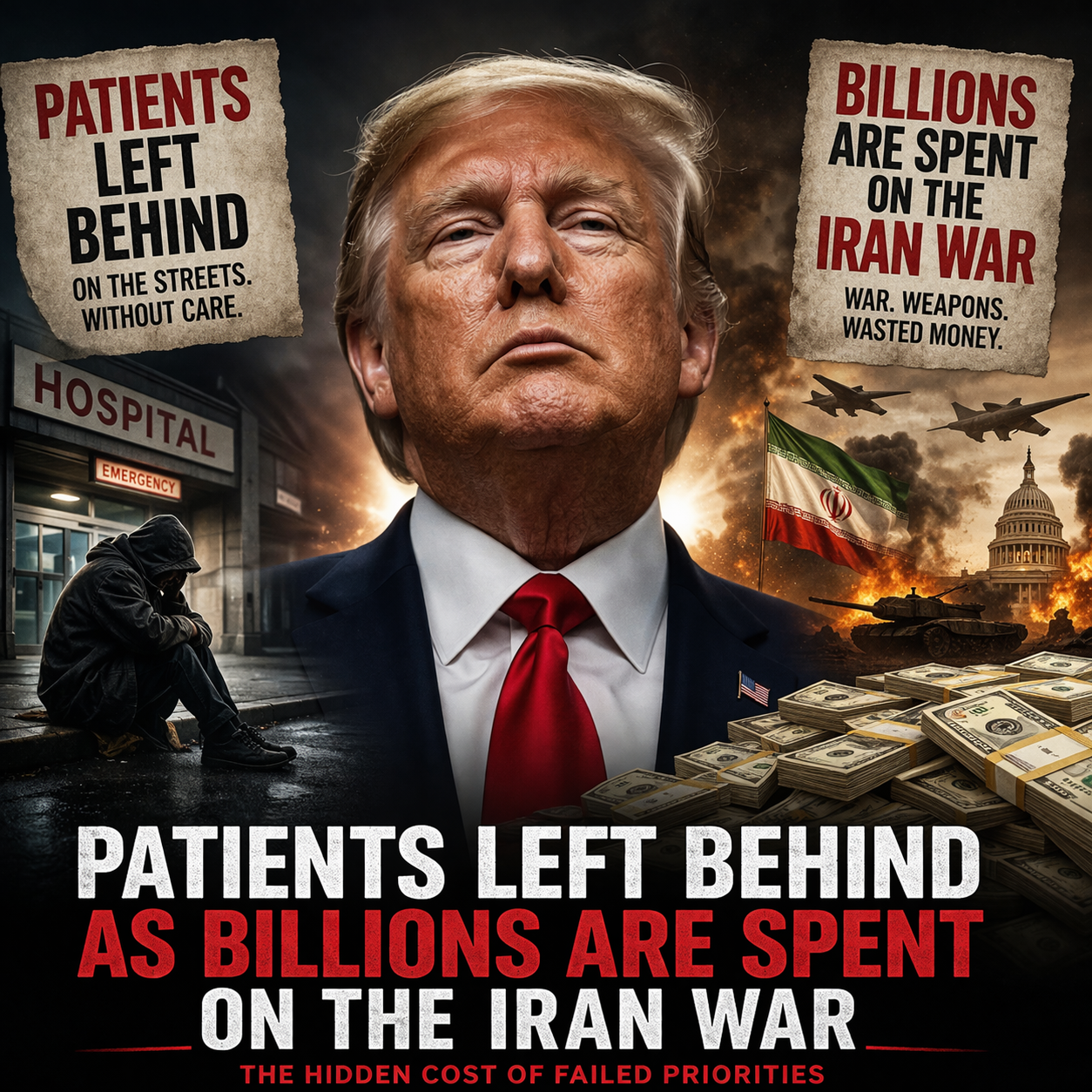
Kentucky Hospital Patient Dumping Allegations Go Viral on X
A recent post circulating on X (formerly Twitter) has reignited public outrage over the treatment of vulnerable patients in the United States. The post claims:
“At a hospital in Kentucky (U.S.), poor patients who could not pay their medical bills were abandoned and left out on the street in front of the hospital.”
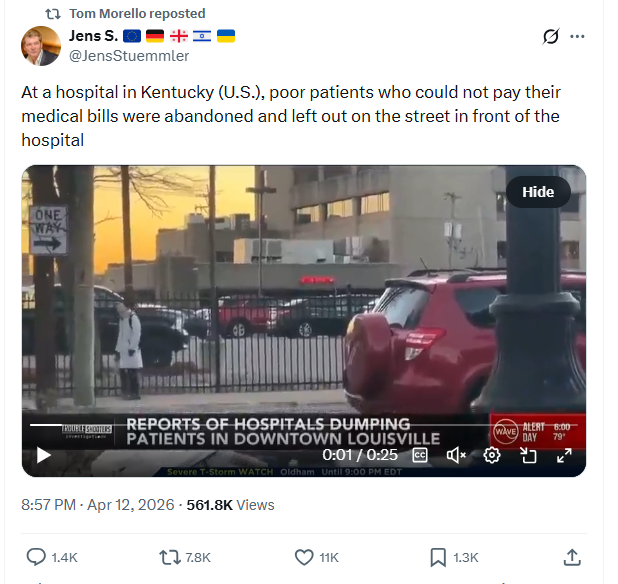
The statement quickly gained traction, reflecting growing distrust toward the healthcare system. While some initially questioned whether the claim was exaggerated, similar real-world cases suggest that such incidents are not without precedent.
2023 Kentucky Case: Woman Found Dead After Hospital Discharge
In 2023, a widely reported case in Kentucky involved a woman, Amber Hall, who was transported to a hospital by ambulance and later discharged — only to be found dead at a bus stop just outside the hospital entrance.
Witnesses reported seeing hospital staff escorting a patient in a wheelchair to the location and leaving shortly after.
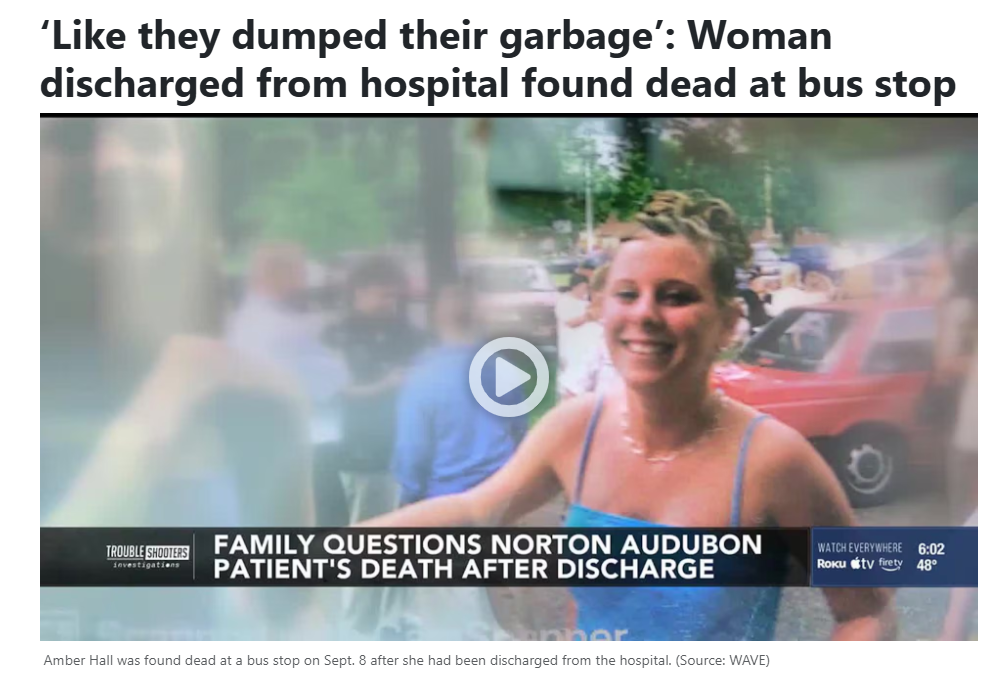
Although the hospital stated that the patient had been medically cleared and did not require further inpatient care, the incident raised serious ethical concerns. For individuals dealing with financial hardship or unstable conditions, being “discharged” does not necessarily mean they are safe — it often simply marks the end of institutional responsibility.
Such incidents are often associated with what is informally referred to as “patient dumping,” where individuals are released without adequate support due to financial, administrative, or capacity-related constraints.
U.S. Healthcare Crisis: Domestic Strain vs Foreign War Spending
These concerns are unfolding alongside broader debates about national priorities. Critics argue that massive government spending on international conflicts — including ongoing tensions involving Iran — continues to expand, while domestic systems such as healthcare face increasing strain.
This perception has been further amplified by recent remarks from former President Donald Trump, who stated, “We can’t take care of Medicaid, Medicare…” — a comment that has fueled concerns about the sustainability of core public healthcare systems.
Medicaid and Medicare remain critical pillars for millions of Americans. If confidence in these systems begins to weaken, it signals a deeper structural imbalance between public needs and government priorities.
Rising Demand for Affordable Medication and Alternative Access
As these pressures converge — rising healthcare costs, limited insurance coverage, administrative barriers, and declining trust — patients are increasingly seeking alternative ways to access treatment.
Access to medication, in particular, has become a major challenge. Many individuals now face high out-of-pocket costs, strict prescription requirements, or limited availability through traditional healthcare channels.
As a result, demand has surged for:
- Prescription medications not fully covered by insurance
- Oncology-related treatments for extended therapeutic access
- COVID-related medications such as ivermectin and hydroxychloroquine
- Weight management treatments like Wegovy and Mounjaro, which often require strict prescription verification and are difficult to obtain
These overlapping challenges have led to a noticeable shift in patient behavior. More individuals are actively exploring alternative channels to obtain necessary medications — prioritizing affordability, accessibility, and convenience.
What was once considered an alternative option is increasingly becoming a primary solution for many.