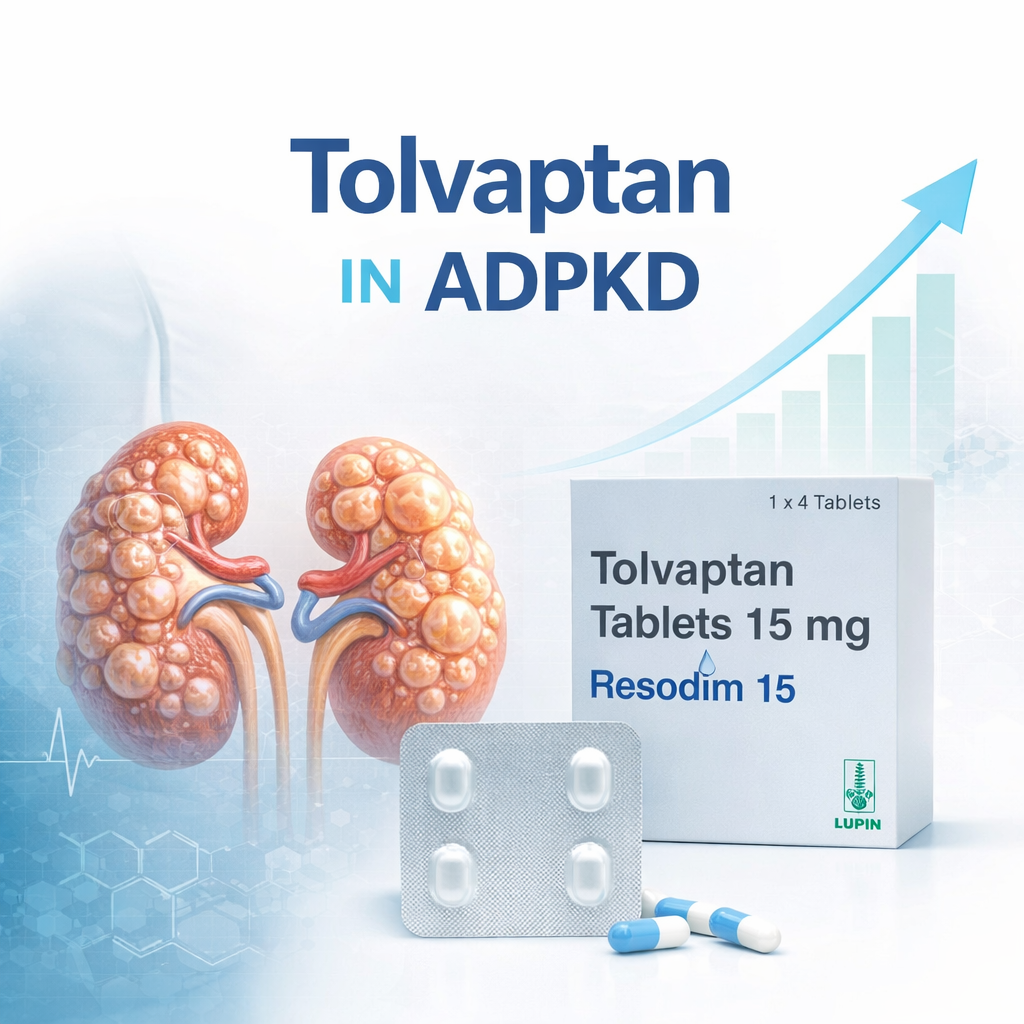
At present, tolvaptan is the only therapy available to slow disease progression in patients with Autosomal Dominant Polycystic Kidney Disease ADPKD. It is a vasopressin V2 receptor antagonist and plays a unique role compared to conventional treatments.
Background
ADPKD is a progressive genetic disorder characterized by continuous cyst growth in the kidneys. Over time this leads to a decline in kidney function and eventually kidney failure.
Most available treatments focus on symptom control such as blood pressure management. Tolvaptan is different because it directly targets disease progression.
Study Design
A long term study conducted by Paul Geertsema MD and colleagues evaluated the real world effectiveness of tolvaptan.
The study included pooled data from two cohorts
DIPAK which was prospective
OBSERVA which was retrospective
A total of 615 patients were analyzed
105 patients received tolvaptan
The average age was 48 years
58.2 percent were female
Average treatment duration was 6.1 years
Kidney function was measured using eGFR yearly
Total kidney volume TKV was measured every 3 years
Key Results
Tolvaptan showed a significant effect in slowing the decline of kidney function
During long term follow up
The decline in eGFR was reduced in the tolvaptan group compared to the control group
This indicates that kidney function deterioration was slowed over time
However there was no significant impact on total kidney volume growth
This means cyst growth was not meaningfully reduced
The treatment effect was more pronounced in patients with higher osmolar intake
Interpretation
The key takeaway from this study is clear
Tolvaptan does not significantly reduce kidney size or cyst growth
But it slows down the loss of kidney function
This distinction is critical in understanding its role in ADPKD management
Market Insight
Tolvaptan is generally considered a high cost medication compared to standard therapies
However many patients actively seek more affordable options due to long term treatment needs
Online pharmacies provide access to significantly lower pricing
This has led to consistent global demand especially among patients managing chronic conditions like ADPKD
Conclusion
Tolvaptan remains the only available therapy that can modify disease progression in ADPKD
Its value lies in delaying the progression to kidney failure rather than reversing structural damage
For patients this means more time before dialysis or transplantation becomes necessary