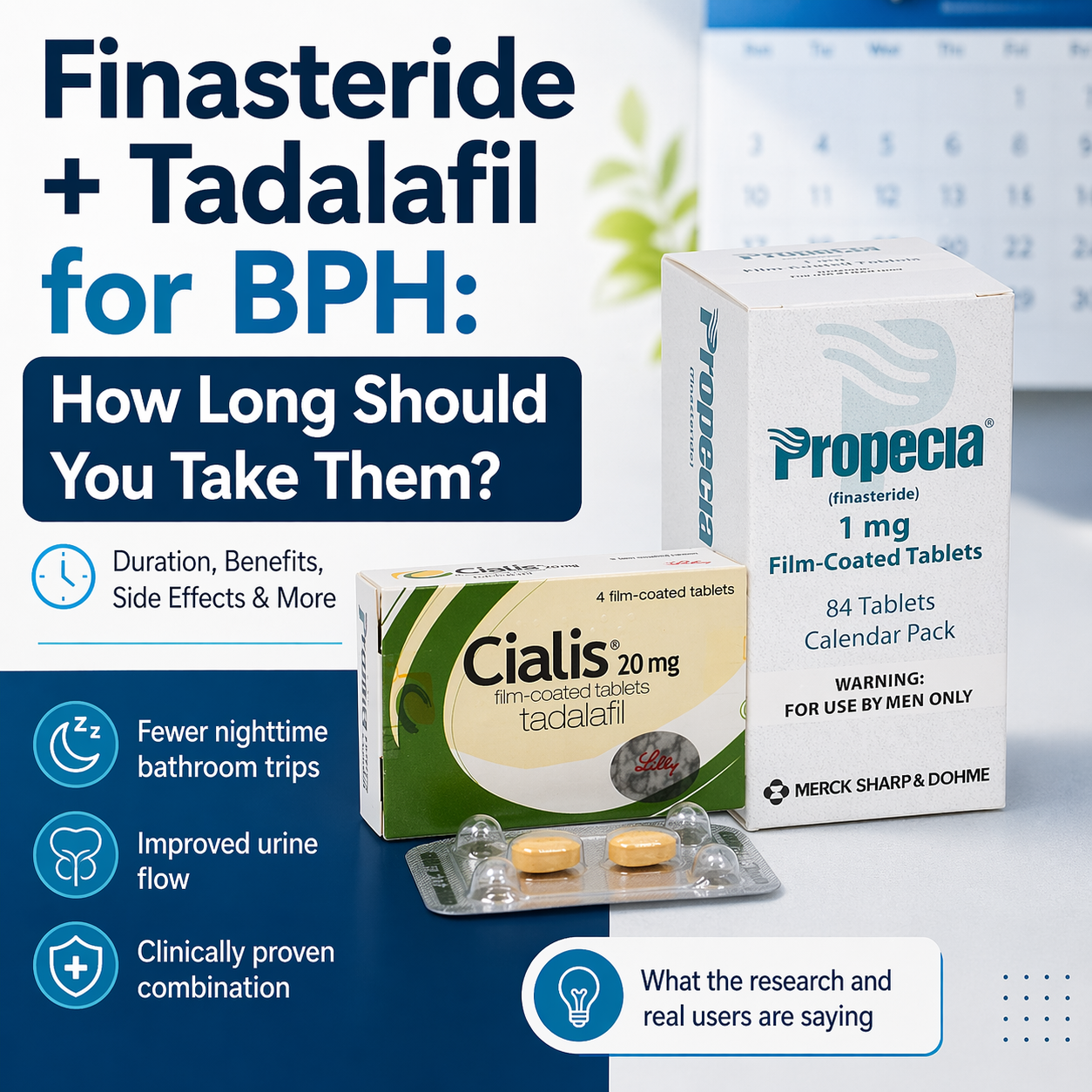
If you’ve been dealing with BPH for a while, you probably already know the routine — waking up multiple times at night, interrupted sleep, and that constant feeling of not fully emptying your bladder.
A lot of men start with finasteride. Some notice gradual improvement, others feel like it’s not quite enough. That’s usually when tadalafil gets added into the mix. And for many, the combination does make a difference.
I’ve seen plenty of cases where nighttime bathroom trips drop from 4–5 times to around 1–2. Not perfect, but definitely more manageable.
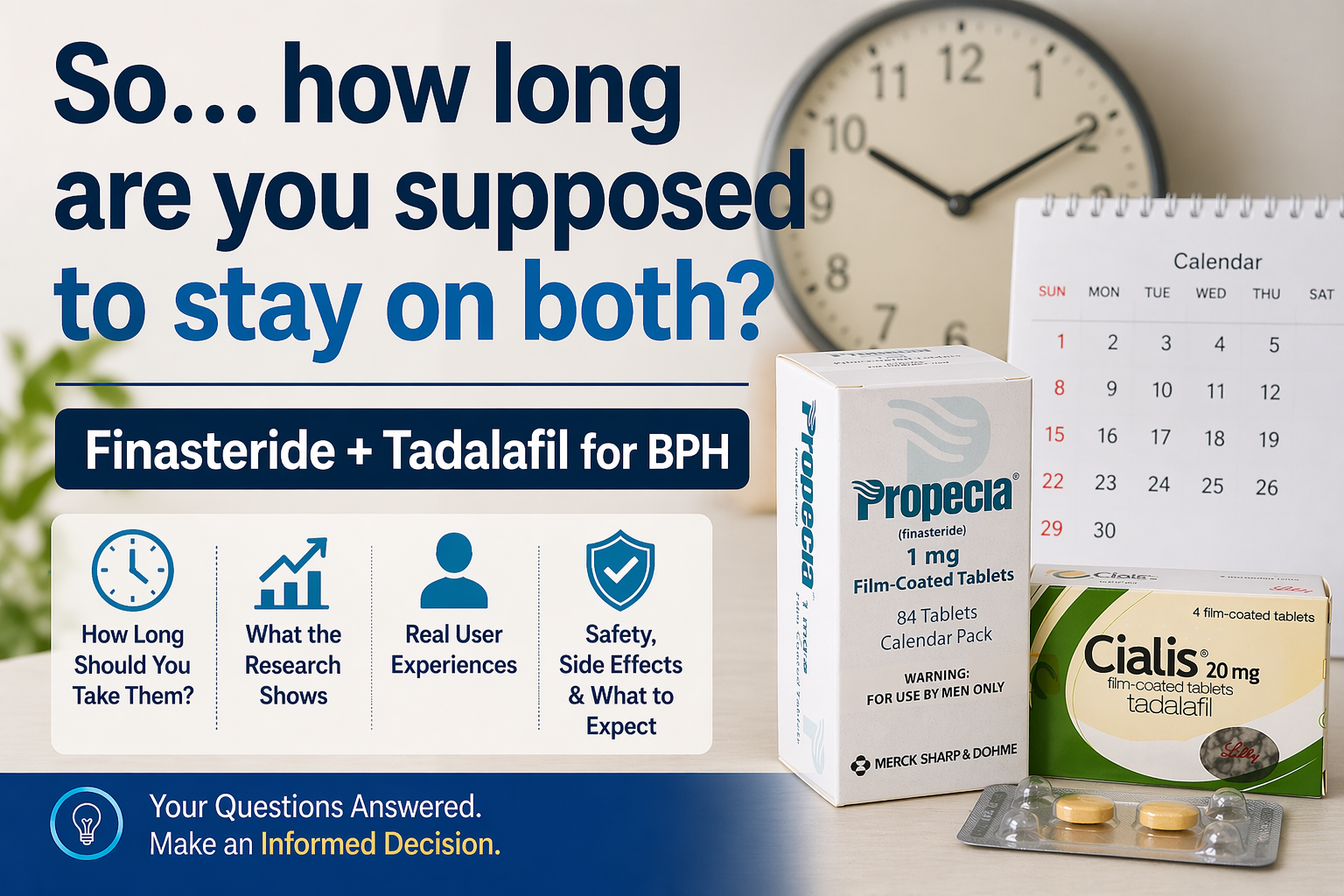
So… how long are you supposed to stay on both?
This is where most people get confused.
You’ll often see “6 months” mentioned online, but that doesn’t mean you stop at 6 months. That number usually comes from how long finasteride takes to show its full effect — not the end of treatment.
In reality, finasteride is a long-term medication. It works by gradually shrinking the prostate, and that process doesn’t just “finish” and stay permanent.
Most data — and real-world experience — point to this:
- Noticeable improvement: around 3–6 months
- Maximum prostate size reduction: around 6–12 months
- Continued use: often ongoing, sometimes years
If you stop finasteride, the prostate typically returns toward its previous size within a few months. That’s just how the mechanism works.
What about tadalafil?
Tadalafil plays a different role.
It doesn’t shrink the prostate. Instead, it helps relax smooth muscle in the bladder and prostate area, which can improve urine flow and reduce symptoms.
Think of it like this:
- Finasteride → long-term structural change
- Tadalafil → symptom relief on top of that
Because of that, tadalafil is often continued as long as it’s helping and well tolerated.
Is it safe to stay on them long-term?
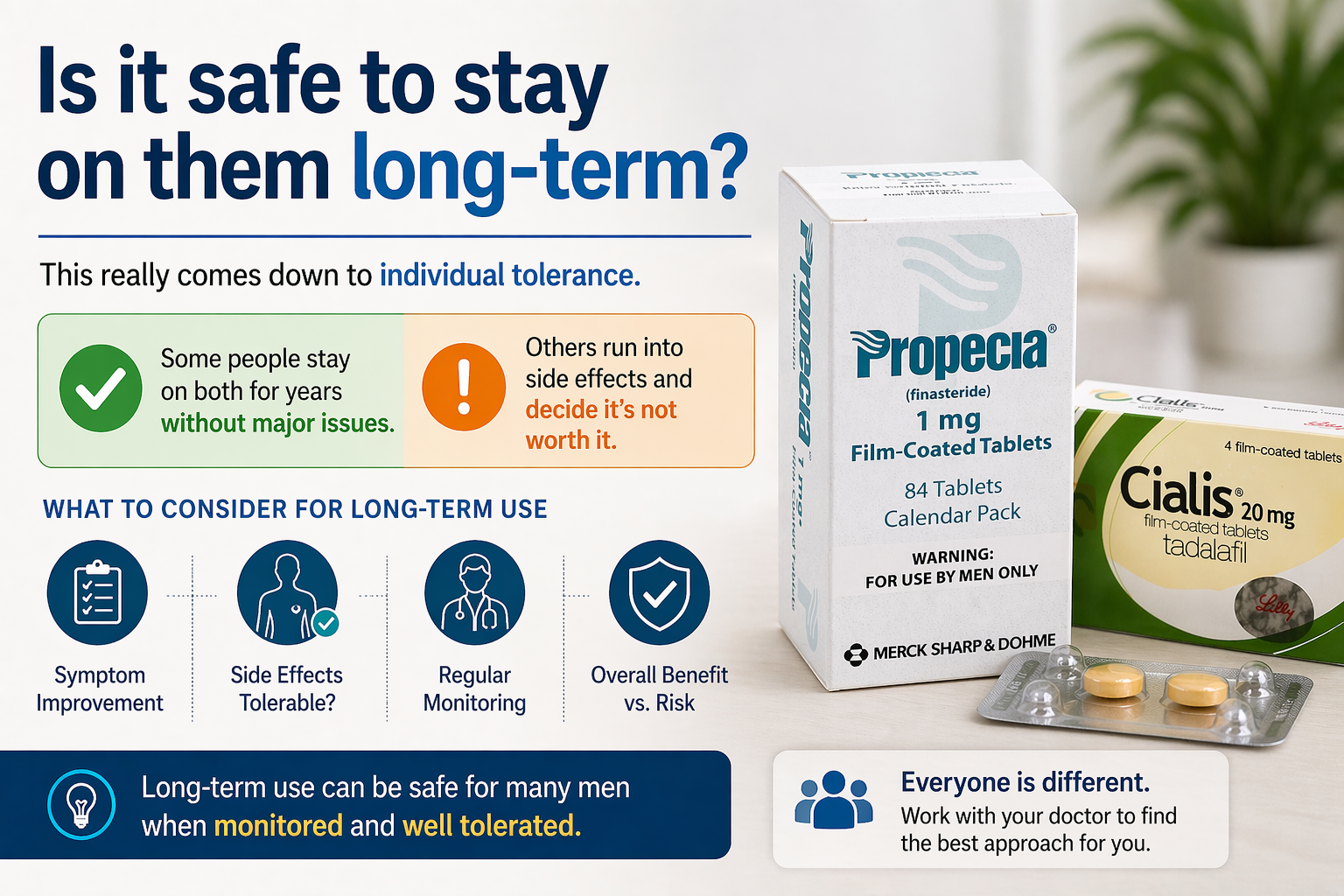
This really comes down to individual tolerance.
Some people stay on both for years without major issues. Others run into side effects and decide it’s not worth it.
From what people commonly report:
- Finasteride → reduced semen volume, sometimes libido changes
- Tadalafil → generally mild, but varies person to person
There’s no universal “cutoff point” like 6 months where you must stop. It’s more about:
- Are your symptoms improving?
- Are side effects manageable?
- Are you being monitored regularly?
If the answer is yes across the board, many end up staying on the combination long-term.
What happens if you stop?
This is another big one.
- Stopping finasteride → prostate gradually regrows
- Symptoms → often come back over time
- Tadalafil → effect simply disappears once you stop
That’s why a lot of people either:
- stay on medication long-term, or
- eventually consider procedures if they want to get off meds
The practical takeaway
There isn’t a fixed timeline like “take it for 6 months and you’re done.”
For most people, it looks more like:
- Start treatment
- Reassess at 3–6 months
- Continue if it’s working
- Adjust only if side effects or lack of improvement become an issue
BPH itself tends to progress over time, so management is usually ongoing rather than temporary.
Bottom line
If finasteride + tadalafil is helping and you’re tolerating it well, it’s not unusual to stay on the combination long-term.
The real decision isn’t about hitting a time limit —
it’s about whether the benefits continue to outweigh the downsides for you.