I used to think all acne creams were basically the same until I actually started using them.
Over the years, I’ve tried Adapalene, Tretinoin, and Benzoyl Peroxide at different stages of my skincare journey. What surprised me most was how differently each one behaved. Some worked slowly but gently, others delivered stronger results but came with irritation, peeling, and weeks of adjustment.
At first, I simply used whatever my dermatologist prescribed without asking many questions. After several breakouts, dry patches, and a lot of trial and error, I eventually learned that these treatments are not interchangeable. Each one has a specific purpose, a different learning curve, and a unique place in an acne routine.
If you're trying to decide which treatment is right for you—or wondering whether you can combine them safely—this guide breaks down the practical differences in a way that's easy to understand.
Adapalene
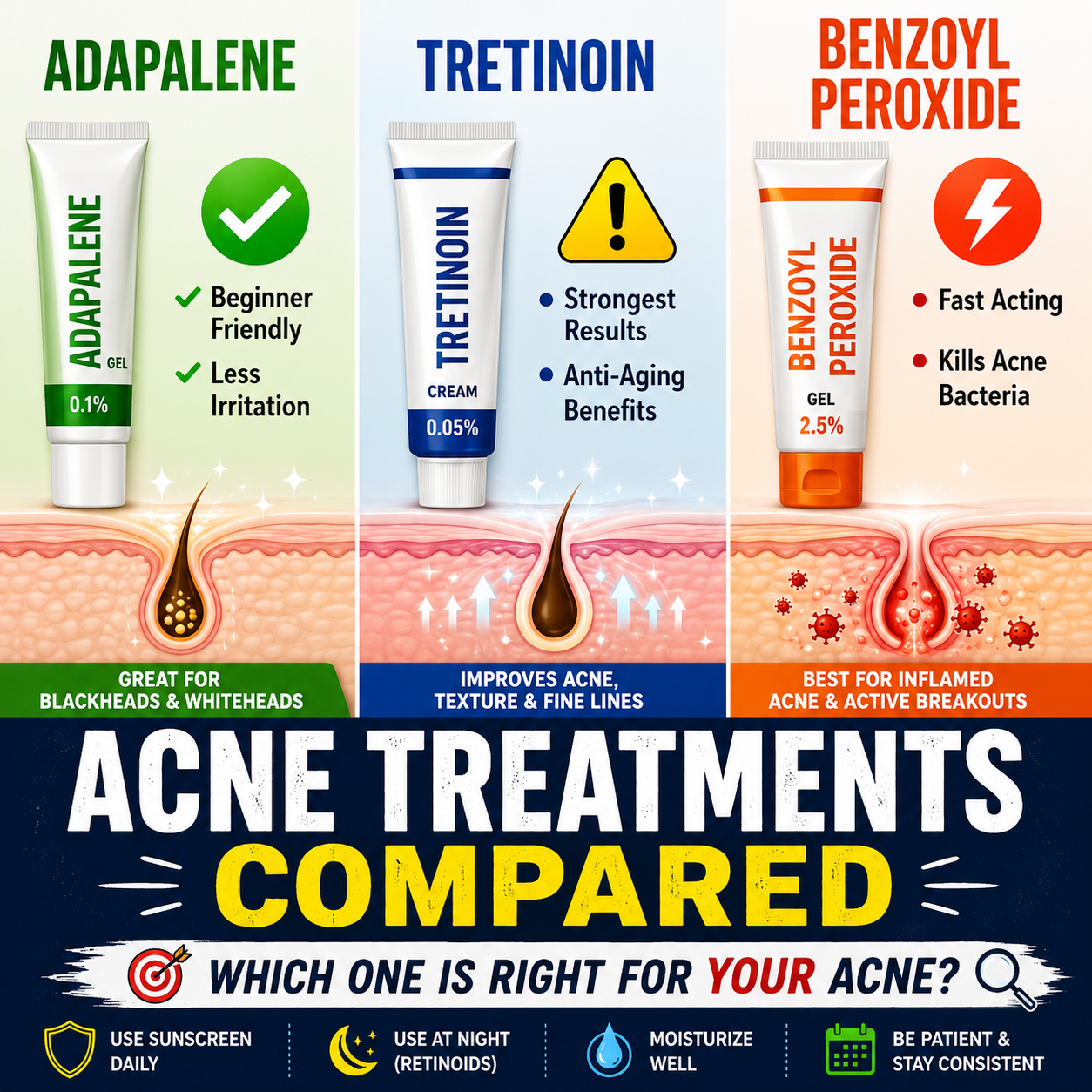
Adapalene is a third-generation retinoid designed to increase skin cell turnover, keep pores clear, and prevent new acne from forming. It is generally considered the most beginner-friendly prescription-strength retinoid because it tends to cause less irritation than Tretinoin.
It works especially well for blackheads, whiteheads, and mild to moderate acne. While it can also improve inflammatory acne, the results usually develop gradually over several weeks.
Common Strengths
- 0.1%
- 0.3%
Pros
- Beginner-friendly retinoid
- Less irritating than Tretinoin
- Stable when exposed to light
- Effective for clogged pores and comedonal acne
Cons
- Requires patience
- May cause temporary dryness during adjustment
Practical Tip
Start by applying Adapalene every other night. Once your skin becomes comfortable with it, you can increase usage to nightly applications. Using a moisturizer afterward can significantly reduce irritation.
Tretinoin
Tretinoin is often considered the gold standard among topical retinoids. It accelerates skin renewal, helps prevent clogged pores, reduces acne lesions, improves skin texture, and can even reduce visible signs of sun damage.
The trade-off is that Tretinoin tends to be more irritating than Adapalene. Many users experience redness, peeling, dryness, and a temporary worsening of acne during the first few weeks.
Common Strengths
- 0.025%
- 0.05%
- 0.1%
Pros
- Powerful acne treatment
- Helps improve pigmentation
- Reduces fine lines and photoaging
- Extensive clinical research supporting effectiveness
Cons
- Higher irritation potential
- Longer adjustment period
- Increased sensitivity to sunlight
Practical Tip
Use Tretinoin only at night. Apply a pea-sized amount to the entire face rather than spot treating individual pimples. Follow with a moisturizer and wear sunscreen daily.
Understanding Photoaging
Photoaging refers to premature skin aging caused by long-term sun exposure. Common signs include:
- Fine lines
- Wrinkles
- Uneven skin tone
- Loss of elasticity
- Rough skin texture
Tretinoin remains one of the few topical ingredients that has consistently demonstrated the ability to improve these visible signs over time.
Benzoyl Peroxide
Unlike retinoids, Benzoyl Peroxide works by directly targeting acne-causing bacteria. It is particularly effective for inflammatory acne, including red, swollen pimples and pustules.
One major advantage is that bacteria do not develop resistance to Benzoyl Peroxide the way they can with antibiotics. This makes it a valuable long-term treatment option.
Common Strengths
- 2.5%
- 5%
Pros
- Fast acting
- Effective against acne-causing bacteria
- Helps reduce inflammation
- No bacterial resistance concerns
Cons
- Can be drying
- May irritate sensitive skin
- Can bleach towels, clothing, and pillowcases
Practical Tip
Many people assume stronger is better, but 2.5% formulations often work nearly as well as higher concentrations while causing less irritation. Starting low is usually the smarter approach.
How to Use Them
Adapalene
Apply once daily at night to clean, dry skin. Avoid sensitive areas such as:
- Around the eyes
- Corners of the mouth
- Sides of the nose
Most users begin noticing improvement after four to eight weeks. Evaluate progress after approximately three months of consistent use.
Tretinoin
Apply once nightly. Beginners may benefit from starting every two to three nights before increasing frequency.
For sensitive skin, waiting approximately twenty minutes after washing your face before application can help reduce irritation.
Benzoyl Peroxide
Apply once or twice daily depending on tolerance.
Allow skin to dry completely after cleansing before applying. Follow with a moisturizer if dryness develops.
Key Warnings
Sun Sensitivity
All three treatments can make your skin more vulnerable to UV damage. Daily sunscreen use is essential, regardless of the season.
Pregnancy Considerations
Retinoids such as Adapalene and Tretinoin are generally avoided during pregnancy or when actively trying to conceive.
Tretinoin and Benzoyl Peroxide
Avoid applying Tretinoin and Benzoyl Peroxide at the same time.
Traditionally, Benzoyl Peroxide can reduce the effectiveness of Tretinoin when applied simultaneously. If you use both, separate them into different routines—for example, Benzoyl Peroxide in the morning and Tretinoin at night.
Managing Irritation
If redness, burning, or excessive peeling occurs:
- Reduce frequency
- Use more moisturizer
- Take a short break if necessary
- Resume gradually once irritation improves
Frequently Asked Questions
Can I wear makeup while using these treatments?
Yes, but during the first few weeks it may be beneficial to minimize makeup use while your skin adjusts. This can help reduce additional irritation.
My skin feels dry and stings after application. Is that normal?
Mild dryness, tightness, and stinging are common during the adjustment period. Try applying less frequently or using a moisturizer before treatment.
Is sunscreen really necessary?
Absolutely.
These treatments increase photosensitivity, making your skin more vulnerable to sunburn, hyperpigmentation, and long-term UV damage. Choose SPF 30 or higher and apply it daily.
Can I combine these treatments?
Adapalene and Benzoyl Peroxide are commonly combined and are even available together in certain prescription products.
Tretinoin and Benzoyl Peroxide can also be used in the same overall routine, but they should generally be applied at different times of day.
When should I expect results?
Most people notice meaningful improvement within four to eight weeks. Consistency is more important than intensity.
Final Thoughts
One of the biggest lessons I learned is that stronger doesn't automatically mean better.
The best acne treatment is often the one that your skin can tolerate consistently over time.
Best Uses at a Glance
Adapalene
- Great for beginners
- Suitable for sensitive skin
- Excellent for blackheads and whiteheads
Tretinoin
- Strong acne-fighting effects
- Helps improve aging skin
- Ideal for long-term skin renewal
Benzoyl Peroxide
- Fast relief for inflamed acne
- Targets acne-causing bacteria
- Useful for active breakouts
Every skin type responds differently. What worked perfectly for someone else may not work the same way for you.
Focus on building a routine you can maintain, be patient with the process, and remember that healthy skin is usually the result of consistency rather than quick fixes.