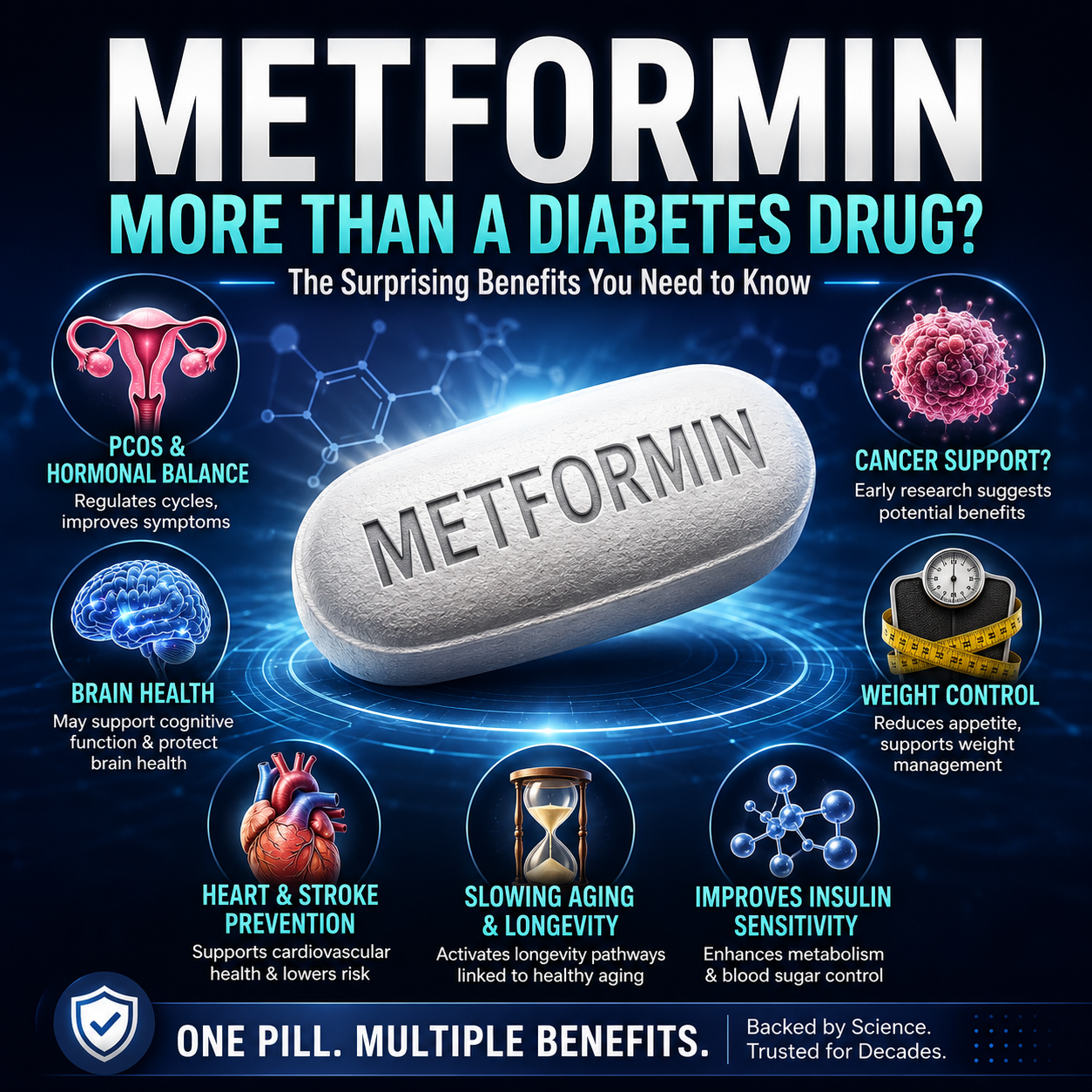
Metformin has long been recognized as one of the most widely prescribed medications for managing type 2 diabetes. For decades, it has helped millions of people control blood glucose levels safely and effectively. Yet in recent years, researchers and patients alike have begun looking at metformin from a completely different perspective.
What sparked my interest wasn't diabetes—it was the growing number of personal experiences shared online. Reddit discussions, health forums, and patient communities were full of stories from people taking metformin for conditions far beyond blood sugar control.
Some described improved menstrual cycles after years of struggling with PCOS. Others noticed reduced cravings that made weight management far easier. Some even claimed clearer skin, improved energy, and better mental focus.
Curiosity quickly turned into research.
While not every claim is backed by strong clinical evidence, it became clear that metformin is being studied for far more than diabetes. Scientists are investigating its role in metabolism, aging, cardiovascular health, cognitive decline, and even certain cancers.
Let's explore what current research—and real-world experience—suggest.
What Is Metformin?
Metformin belongs to a class of medications called biguanides. It primarily lowers blood sugar by:
- Reducing glucose production in the liver
- Improving insulin sensitivity
- Increasing glucose uptake by muscles
- Decreasing intestinal glucose absorption
- Positively influencing the gut microbiome
Unlike many diabetes medications, metformin rarely causes hypoglycemia when used alone and is generally weight-neutral or associated with modest weight loss.
1. The Gold Standard for Type 2 Diabetes
Metformin remains the first-line treatment for most patients with type 2 diabetes—and for good reason.
Benefits include:
- Effective blood glucose control
- Low risk of hypoglycemia
- No significant weight gain
- Extensive long-term safety data
- Affordable cost worldwide
Rather than forcing the pancreas to produce more insulin, metformin helps the body use its own insulin more efficiently.
For millions of patients, it remains the foundation of diabetes management.
2. PCOS: Restoring Hormonal Balance
One of metformin's best-established uses outside diabetes is Polycystic Ovary Syndrome (PCOS).
Because insulin resistance plays a major role in PCOS, improving insulin sensitivity often leads to significant hormonal improvements.
Many women report:
- More regular menstrual cycles
- Improved ovulation
- Better fertility
- Reduced acne
- Less excess facial hair
- Easier weight management
A common experience shared online sounds like this:
"After years of irregular periods, metformin finally helped regulate my cycle."
While individual responses vary, clinical studies support metformin as an important treatment option for insulin-resistant PCOS patients.
3. Weight Management and Appetite Control
Metformin is not a weight-loss drug, but many users experience gradual weight reduction.
Common reports include:
"I stopped craving sweets."
"I finally felt full after meals."
"Dieting became much easier."
Researchers believe several mechanisms contribute:
- Delayed gastric emptying
- Improved insulin sensitivity
- Better leptin signaling
- Reduced appetite
- Lower post-meal blood sugar spikes
Weight loss is usually modest rather than dramatic, but for many people it becomes easier to maintain healthier eating habits.
4. Could Metformin Help Protect Brain Health?
One of the fastest-growing research areas involves cognitive function.
Scientists are investigating whether metformin may:
- Improve cerebral blood flow
- Reduce chronic inflammation
- Lower oxidative stress
- Enhance insulin signaling within the brain
These mechanisms have raised interest in potential protection against:
- Mild Cognitive Impairment (MCI)
- Alzheimer's disease
- Age-related cognitive decline
Although results remain mixed and more large clinical trials are needed, the connection between metabolic health and brain health has become an exciting field of research.
5. Cancer Research: An Unexpected Area of Interest
Researchers have also explored whether metformin could influence cancer development.
Laboratory and observational studies suggest metformin may:
- Activate the AMPK pathway
- Suppress mTOR signaling
- Reduce chronic inflammation
- Lower circulating insulin levels
- Slow cancer cell growth
Studies have examined potential roles in:
- Breast cancer
- Colorectal cancer
- Pancreatic cancer
- Liver cancer
- Endometrial cancer
However, it's important to understand that metformin is not an approved cancer treatment, and evidence from randomized clinical trials remains inconclusive.
Instead, it is viewed as a promising area for future research.
6. Heart Health and Stroke Prevention
People with diabetes face increased cardiovascular risk.
Fortunately, metformin appears to provide benefits beyond glucose control.
Research suggests it may help:
- Improve cholesterol profiles
- Reduce vascular inflammation
- Enhance endothelial function
- Lower oxidative stress
- Reduce cardiovascular events in certain patients
Because cardiovascular disease remains the leading cause of death among people with diabetes, these additional benefits are particularly important.
7. Metformin and Healthy Aging
Perhaps the most fascinating discussion surrounding metformin involves longevity.
Scientists studying aging have focused on pathways influenced by metformin, including:
- AMPK activation
- mTOR inhibition
- Reduced oxidative damage
- Improved mitochondrial function
- Lower chronic inflammation
These biological processes are closely linked with aging itself.
Large clinical studies, including ongoing longevity research, hope to determine whether metformin can help delay age-related diseases and extend healthy lifespan.
While no definitive conclusions have been reached, metformin remains one of the most promising medications being investigated in aging science.
Common Side Effects
Like any medication, metformin can cause side effects.
The most common include:
- Nausea
- Diarrhea
- Stomach discomfort
- Bloating
- Metallic taste
These symptoms often improve after several weeks or by taking the medication with meals.
Long-term use may also reduce vitamin B12 levels, making periodic monitoring advisable for some patients.
Who Might Benefit?
Metformin is commonly prescribed for:
- Type 2 diabetes
- Prediabetes (selected patients)
- PCOS
- Insulin resistance
- Certain obesity cases under medical supervision
Research continues to explore additional uses, but many remain investigational rather than established medical indications.
Final Thoughts
Metformin has earned its reputation as one of the safest and most effective diabetes medications ever developed. Yet modern research suggests its impact may reach far beyond blood sugar control.
From improving insulin resistance and supporting women with PCOS to helping with appetite regulation, cardiovascular health, and healthy aging research, metformin continues to surprise both scientists and patients.
Not every exciting headline will ultimately prove true, and many potential benefits still require larger clinical trials. Nevertheless, few medications have attracted as much interest across so many different areas of medicine.
Sometimes the most remarkable discoveries aren't entirely new—they're hidden within medicines we've been using successfully for decades.
If you're interested in metformin for diabetes, PCOS, insulin resistance, or other metabolic conditions, discussing its potential benefits and risks with your healthcare provider is the best place to start.
Frequently Asked Questions (FAQ)
Is metformin only used for diabetes?
No. Besides type 2 diabetes, metformin is widely prescribed for PCOS and is being studied for obesity, aging, cardiovascular health, and several other conditions.
Can metformin help with weight loss?
It isn't approved as a weight-loss medication, but many people experience modest weight loss through reduced appetite and improved insulin sensitivity.
Does metformin slow aging?
Research is ongoing. Early evidence is promising, but no medication has yet been proven to slow human aging.
Can metformin prevent cancer?
No. Although laboratory and observational studies are encouraging, metformin is not an approved cancer prevention or treatment medication.
Is metformin generally safe?
For most people, yes. It has been used worldwide for decades and has an excellent safety profile when prescribed appropriately. Gastrointestinal side effects are the most common and often improve over time.