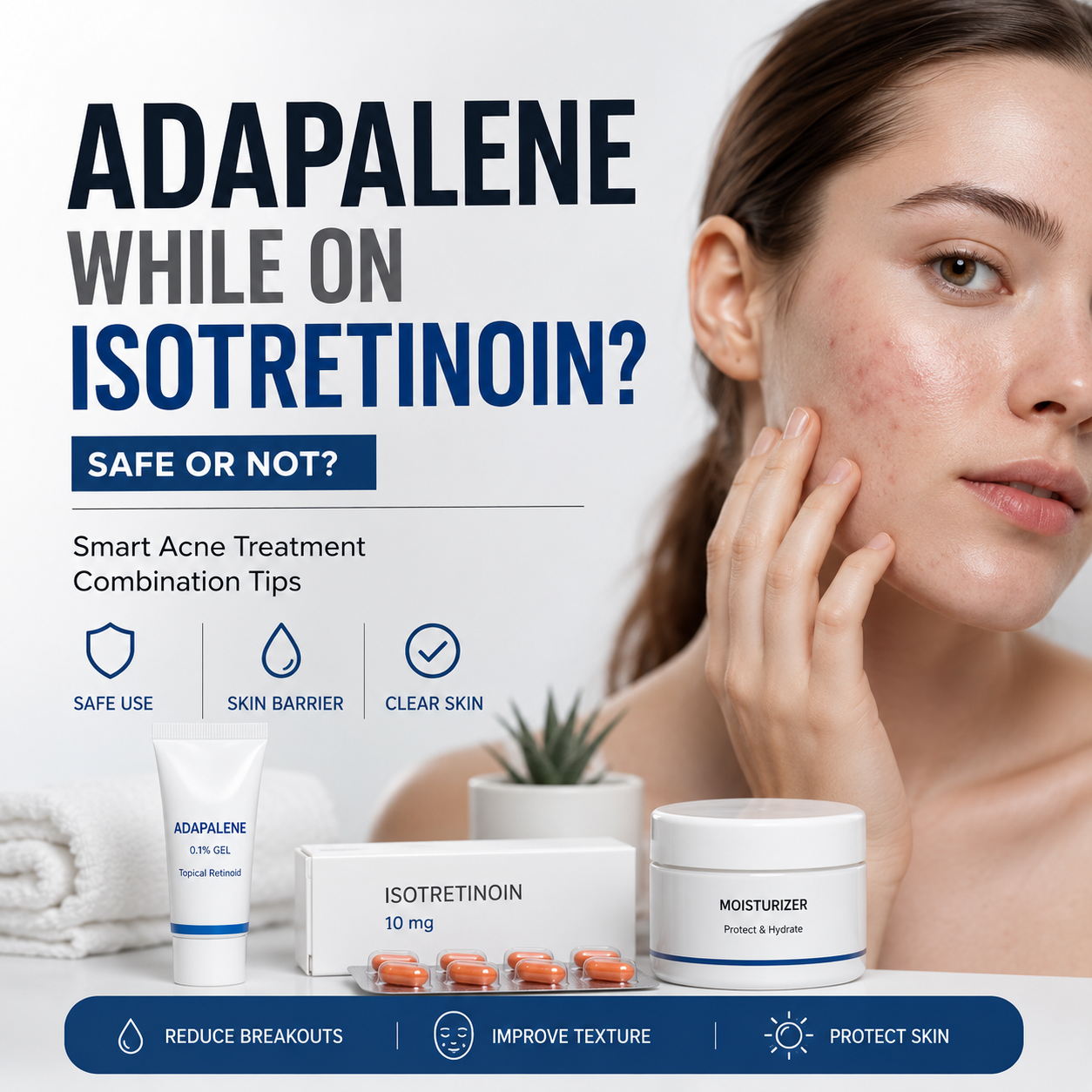
I’m now six weeks into my acne treatment journey, and honestly, it’s been a bit of a rollercoaster. I started off with doxycycline, hoping it would calm things down—but after a few weeks, the results were underwhelming at best. So I made the switch to isotretinoin, thinking it’d be the game-changer. Unfortunately, those deep, red cystic breakouts are still hanging around, and to make things worse, my skin has become noticeably flakier, more irritated, and extremely dry.
After going back and forth for a while, I seriously considered adding topical treatments like adapalene, tretinoin, or benzoyl peroxide to my routine. At the same time, I worried that combining too many active ingredients would only damage my skin barrier further.
That’s when I turned to Reddit. I spent hours reading through discussions from people who had gone through the same process—starting with antibiotics, switching to isotretinoin, and eventually trying to find the safest way to introduce topical treatments without making their skin worse.
This guide summarizes the most helpful experiences I found along with my own observations. While everyone’s skin responds differently, these strategies may help you build a more balanced acne routine.
1. Using Adapalene While on Isotretinoin: Proceed Carefully
Isotretinoin is already one of the strongest acne medications available, so adding adapalene too early can easily overwhelm your skin. During the first couple of months, my skin barrier was extremely fragile, and almost everything caused burning or irritation.
Around week ten, however, my skin became much more stable. I still had clogged pores and rough texture, so I decided to slowly introduce 0.1% adapalene.
My Routine
- Wait approximately 20 minutes after cleansing before application.
- Apply moisturizer first.
- Use only a pea-sized amount of adapalene.
- Finish with another layer of moisturizer using the "sandwich method."
- Begin only twice a week.
- Increase frequency gradually if your skin tolerates it.
Unlike isotretinoin, adapalene doesn't dramatically reduce oil production. Instead, it works by preventing clogged pores, reducing blackheads, and improving overall skin texture. Because both treatments increase sensitivity, daily moisturizer and sunscreen became absolutely essential.
2. Doxycycline + Adapalene: One of the Best Combinations
Before switching to isotretinoin, the combination that worked best for me was doxycycline together with adapalene.
Doxycycline controlled inflammation while adapalene prevented new clogged pores from forming. Over several weeks, I noticed significantly fewer inflamed pimples around my cheeks and jawline.
Tips for Better Results
- Use a gentle cleanser every evening.
- Moisturize consistently to reduce irritation.
- Wear sunscreen every morning.
- Allow your skin to dry completely before applying adapalene.
Compared with tretinoin, adapalene is generally less irritating, making it easier for many people to use consistently over long periods. For individuals with mild to moderate inflammatory acne, this combination can be an excellent starting point before considering stronger systemic treatments.
3. Tretinoin After Finishing Isotretinoin
Tretinoin serves a different purpose than isotretinoin. Rather than treating severe active acne, it's commonly used for maintenance, improving skin texture, reducing post-acne pigmentation, and minimizing fine lines.
I introduced tretinoin approximately six weeks after finishing my isotretinoin course.
Initially, I experienced redness, peeling, and mild burning, but limiting use to twice weekly allowed my skin to gradually adjust.
Application Order
- Moisturizer
- Wait about 20 minutes
- Apply a small amount of tretinoin
- Finish with a soothing moisturizer
If you also use benzoyl peroxide, apply it at a different time of day—for example, benzoyl peroxide in the morning and tretinoin at night. This simple adjustment helps minimize irritation while allowing both products to perform effectively.
Once active acne was under control, tretinoin became extremely helpful for smoothing skin texture, fading post-inflammatory hyperpigmentation, and maintaining clearer skin over the long term.
4. Benzoyl Peroxide: Effective on Its Own or with Adapalene
Benzoyl peroxide remains one of the most effective topical treatments for inflammatory acne because it kills acne-causing bacteria without contributing to antibiotic resistance.
The downside is that it can also cause dryness, irritation, and bleach towels or clothing.
For that reason, I preferred applying benzoyl peroxide in the morning while keeping adapalene or hydrating products for my nighttime routine.
Combination products containing both adapalene and benzoyl peroxide can also be an excellent starting option for people beginning topical acne treatment. Used consistently, benzoyl peroxide can reduce inflammatory breakouts and help prevent new acne lesions from developing.
A Note on Niacinamide and Clindamycin
Another lesson I learned is that adding too many products at once can backfire.
Although niacinamide and clindamycin are beneficial for many people, introducing them alongside tretinoin sometimes caused additional redness and small inflammatory pimples. While this isn't universal, adding multiple active ingredients simultaneously can make it difficult to determine which product is causing irritation.
Whenever introducing a new skincare product, it is generally best to add only one active ingredient at a time and observe your skin for at least two to four weeks before making additional changes.
Conclusion: Timing Matters More Than Quantity
Successful acne treatment isn't about using every effective ingredient at once. It's about choosing the right combination at the right stage of your treatment.
- During isotretinoin: Introduce adapalene only after your skin has stabilized, and always prioritize moisturizing.
- While taking doxycycline: Adapalene pairs well by reducing clogged pores while antibiotics control inflammation.
- After isotretinoin: Tretinoin becomes an excellent maintenance treatment for improving skin texture and fading acne marks.
- For inflammatory acne: Benzoyl peroxide remains one of the most reliable topical options and works well alongside a carefully planned routine.
Acne treatment is rarely a quick fix. Building a routine that your skin can tolerate—and sticking with it consistently—is often the biggest factor behind long-term success. Patience, gradual adjustments, and protecting your skin barrier will usually deliver better results than constantly changing products. Finding a sustainable routine is ultimately far more valuable than chasing overnight results, and small, consistent improvements often lead to the healthiest skin over time.