When I first heard about metformin, I thought of it as a straightforward diabetes medication.
It seemed simple enough: people with type 2 diabetes take it to lower their blood sugar, improve insulin sensitivity, and support long-term glucose control. Since I did not have diabetes, I assumed metformin had little relevance to me.
Then I started noticing it everywhere.
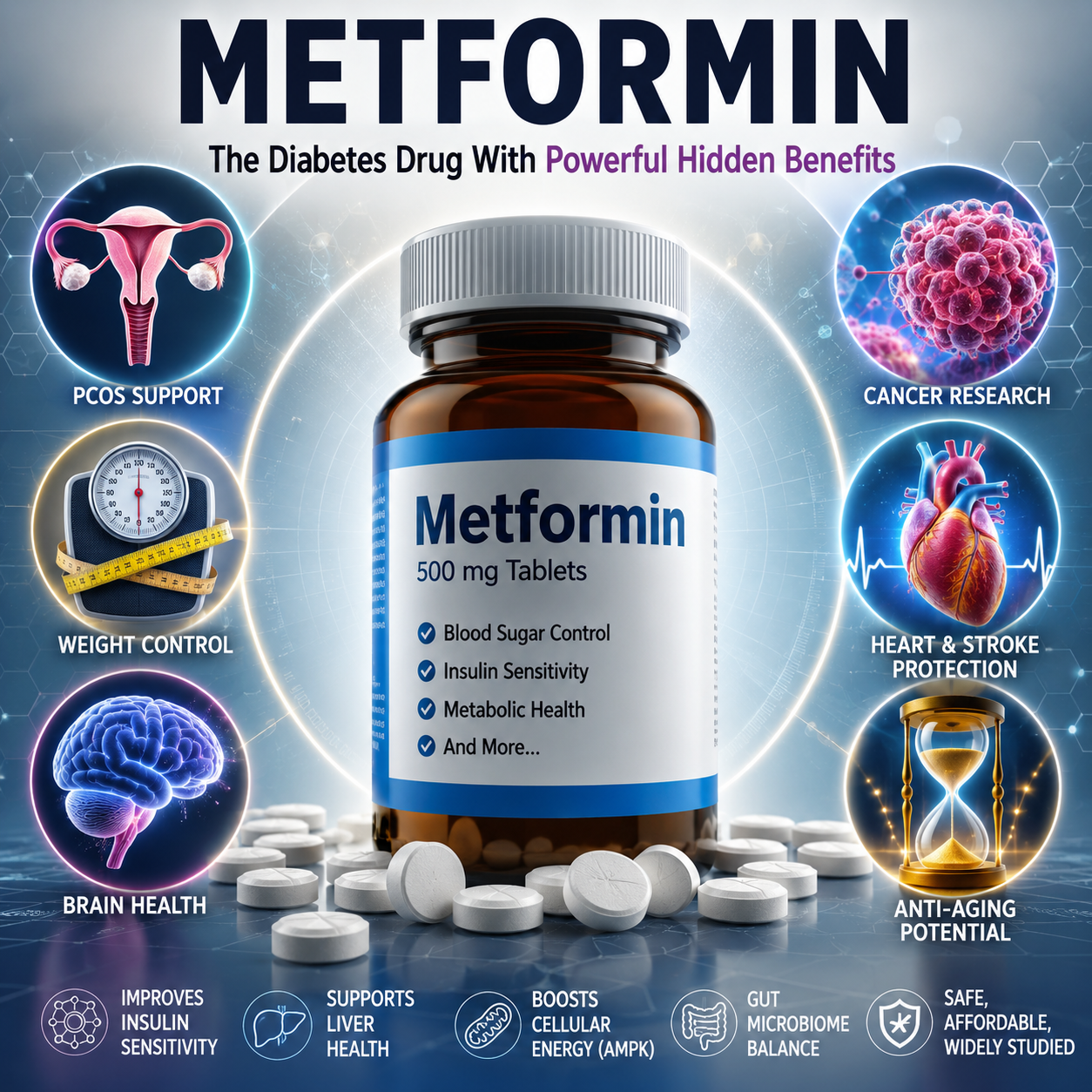
It appeared in discussions about polycystic ovary syndrome, insulin resistance, weight management, fertility, cardiovascular health, cancer research, cognitive decline, and even healthy aging.
Online forums were filled with comments such as:
“My menstrual cycle finally became regular.”
“I stopped craving sugar all day.”
“I started taking it for PCOS, but my skin improved too.”
“It did not make me lose weight overnight, but controlling my appetite became much easier.”
Personal experiences are not the same as clinical evidence. Still, the consistency of these stories made me curious.
Why was an inexpensive medication developed for blood sugar control appearing in so many different areas of health research?
The more I investigated, the clearer the answer became: metformin is not a miracle drug, but its effects on insulin signaling, liver glucose production, cellular energy regulation, and metabolism may influence far more than blood sugar alone.
Here is what the evidence currently tells us.
1. Metformin’s Main Role: Managing Type 2 Diabetes
Metformin is primarily approved for improving blood glucose control in people with type 2 diabetes, together with appropriate diet and exercise.
It works mainly by:
-
Reducing the amount of glucose produced by the liver
-
Improving the body’s sensitivity to insulin
-
Helping muscles and other tissues use glucose more effectively
-
Influencing glucose regulation within the digestive system
Unlike several older diabetes medications, metformin used alone generally has a low risk of causing hypoglycemia. It is also considered weight-neutral for many users and may produce modest weight loss in some people.
That combination explains much of its popularity: it addresses insulin resistance without commonly promoting weight gain.
However, modern diabetes treatment is increasingly individualized. Depending on a person’s cardiovascular health, kidney function, body weight, blood glucose level, and other conditions, metformin may be used alone or alongside newer medications.
It remains important, but it is not automatically the best standalone treatment for every person with type 2 diabetes.
2. Metformin and PCOS: More Than a Fertility Medication
Polycystic ovary syndrome, commonly known as PCOS, is closely associated with insulin resistance in many patients.
When insulin levels remain elevated, they can contribute to increased androgen production, irregular ovulation, unpredictable menstrual cycles, acne, excessive hair growth, and difficulty managing weight.
Metformin may help by improving insulin sensitivity and reducing some of the metabolic disturbances that contribute to PCOS symptoms.
The 2023 International Evidence-Based Guideline for PCOS recognizes metformin as an option, particularly for metabolic indications and in adults with PCOS and a higher body mass index. However, treatment decisions depend on the patient’s symptoms, fertility goals, metabolic risk, and tolerance of the medication.
Some users report:
-
More regular menstrual cycles
-
Improved ovulation
-
Reduced appetite or cravings
-
Modest weight loss
-
Improvements in acne or other androgen-related symptoms
These outcomes are not guaranteed, and metformin does not directly “balance hormones” in the way hormonal contraceptives do. Its effects are largely connected to improvements in insulin resistance and metabolism.
For someone whose PCOS is strongly driven by insulin resistance, however, that metabolic improvement may make a meaningful difference.
3. Can Metformin Help With Weight Loss?
Metformin is not approved as a conventional weight-loss drug.
It does not usually produce the dramatic weight reductions associated with medications specifically developed for obesity. Nevertheless, some people do experience gradual, modest weight loss while taking it.
Possible reasons include:
-
Improved insulin sensitivity
-
Reduced insulin levels
-
Changes in appetite
-
Fewer glucose fluctuations
-
Reduced cravings for highly processed carbohydrates
-
Gastrointestinal effects that decrease food intake
The effect varies substantially. Some people lose weight, some maintain their weight more easily, and others notice no meaningful change.
It is also important to separate true appetite regulation from nausea, diarrhea, or digestive discomfort. Eating less because a medication causes persistent gastrointestinal distress is not the same as achieving healthy, sustainable weight management.
Metformin may be particularly relevant when excess weight is accompanied by insulin resistance, prediabetes, PCOS, or metabolic syndrome. For people without these issues, the expected benefit may be limited.
In practical terms, metformin may support weight control in selected patients, but it should not be marketed as a substitute for approved obesity treatment.
4. Why Researchers Are Studying Metformin in Cancer
One of the most intriguing areas of metformin research involves cancer.
Laboratory studies suggest that metformin may affect cellular pathways associated with energy use, insulin signaling, inflammation, AMPK activation, and mTOR activity. These pathways can also play roles in tumor growth.
Researchers have therefore explored whether metformin might help:
-
Reduce cancer risk
-
Slow the growth of certain tumors
-
Improve responses to existing cancer treatments
-
Reduce recurrence in selected patient groups
However, the evidence is not strong enough to describe metformin as a proven cancer treatment or a general cancer-prevention medication.
Observational studies initially produced encouraging signals, but observational data can be influenced by differences in weight, diabetes severity, access to care, and other medications.
For example, a National Cancer Institute review reported that women with type 2 diabetes taking metformin did not show a statistically significant reduction in breast cancer risk, and a related clinical trial produced a similar result.
At the same time, metformin continues to be investigated in active cancer-prevention and treatment trials, including studies involving lung cancer risk and precancerous oral lesions.
The most accurate conclusion is therefore:
Metformin has interesting biological properties and remains an active area of cancer research, but it is not an established replacement for chemotherapy, immunotherapy, radiation, surgery, or other evidence-based cancer treatments.
5. Metformin and Brain Health
Another popular claim is that metformin may protect the brain or prevent Alzheimer’s disease.
There are plausible reasons researchers are interested.
Insulin resistance, chronic inflammation, vascular dysfunction, and abnormal glucose metabolism may all contribute to cognitive decline. Since metformin improves several metabolic factors, scientists have examined whether long-term use could affect dementia risk.
Some observational analyses have found that people with type 2 diabetes who use metformin have a lower incidence of dementia than certain comparison groups.
However, the evidence is inconsistent.
Other analyses have found no clear reduction in Alzheimer’s disease incidence, and observational results cannot prove that metformin itself caused the difference.
Researchers are now conducting more structured trials, including studies combining metformin with lifestyle interventions for cognitive impairment prevention.
At present, metformin should not be described as an established Alzheimer’s-prevention medication.
The responsible interpretation is that it may influence dementia risk indirectly by improving diabetes and metabolic health, while any direct neuroprotective benefit remains under investigation.
6. Cardiovascular Health and Stroke Risk
Poorly controlled type 2 diabetes increases the risk of cardiovascular disease, stroke, kidney disease, and damage to blood vessels.
By improving glucose regulation and insulin sensitivity, metformin may contribute to better long-term metabolic and cardiovascular health.
However, it would be inaccurate to say that metformin independently prevents strokes or heart attacks in every user.
Current treatment decisions often consider medications with specifically demonstrated cardiovascular or kidney benefits, including certain SGLT2 inhibitors and GLP-1 receptor agonists.
Metformin may still form part of a broader risk-reduction strategy, but blood pressure management, cholesterol control, smoking cessation, diet, exercise, kidney function, and the choice of additional medications can be equally or more important.
In other words, metformin may support cardiovascular health by improving the underlying metabolic environment, but it is only one component of risk management.
7. Does Metformin Slow Aging?
Metformin has attracted enormous attention in longevity communities because it affects biological pathways involved in cellular energy use, nutrient sensing, inflammation, AMPK, and mTOR signaling.
These same pathways are frequently discussed in aging research.
Researchers have proposed that metformin might delay the development of multiple age-related conditions rather than targeting one disease at a time.
That idea is scientifically interesting, but it has not yet been proven that metformin extends the lifespan of healthy humans.
Metformin is currently considered a candidate for drug-repurposing research involving aging, cancer, and neuroprotection—not an approved anti-aging therapy.
This distinction matters.
An association between metformin use and improved outcomes in people with diabetes does not automatically mean that a healthy individual will live longer by taking it.
People with diabetes, prediabetes, insulin resistance, and obesity may benefit from correcting metabolic dysfunction. A metabolically healthy person may not experience the same effect and may still face side effects.
For now, metformin’s potential role in healthy aging remains a research question rather than a clinical conclusion.
8. Side Effects and Important Safety Considerations
Metformin has been used for decades and is generally well tolerated, but it is still a prescription medication with meaningful risks.
The most common side effects include:
-
Diarrhea
-
Nausea
-
Abdominal discomfort
-
Bloating
-
Reduced appetite
-
Metallic taste
These symptoms are often strongest when treatment begins or when the dose increases.
Taking metformin with food, gradually increasing the dose, or switching from immediate-release to extended-release tablets may improve tolerance for some patients.
Long-term metformin use has also been associated with reduced vitamin B12 levels. Periodic B12 monitoring may be appropriate, particularly for people using higher doses, taking metformin for several years, or experiencing anemia, fatigue, numbness, tingling, or neuropathy-like symptoms.
A rare but serious complication is lactic acidosis. The risk is higher in situations involving severe kidney dysfunction, significant liver disease, severe infection, dehydration, tissue hypoxia, or certain other medical conditions.
Kidney function should therefore be evaluated before and during treatment.
Who Might Actually Benefit From Metformin?
Metformin may be worth discussing in situations involving:
-
Type 2 diabetes
-
Prediabetes with a high risk of progression
-
PCOS associated with insulin resistance or metabolic risk
-
Metabolic syndrome
-
Insulin resistance
-
Selected cases of medication-associated weight gain
-
Other clinician-directed off-label uses
It is much less reasonable to view metformin as a general wellness supplement for everyone.
Someone taking it solely because of social-media claims about weight loss, cancer prevention, cognitive enhancement, or longevity may be expecting benefits that have not been established.
The best candidate is usually someone with a specific metabolic or clinical indication—not simply someone looking for an inexpensive anti-aging pill.
Final Thoughts
Metformin is much more interesting than its reputation as an ordinary diabetes medication suggests.
Its established role is in blood glucose management, and it also has clinically relevant applications in conditions such as PCOS and prediabetes.
Beyond those areas, researchers are actively exploring possible effects involving body weight, cardiovascular health, cancer biology, brain function, and aging.
But “promising” is not the same as “proven.”
Metformin has not been established as a universal weight-loss medication, a cancer treatment, an Alzheimer’s-prevention drug, or an anti-aging therapy.
Its real value lies in the fact that metabolism influences nearly every system in the body. When metformin corrects genuine metabolic dysfunction, the benefits may extend beyond a glucose reading.
That does not make it a miracle drug.
It makes it a well-established medication with a surprisingly broad—and still evolving—scientific story.