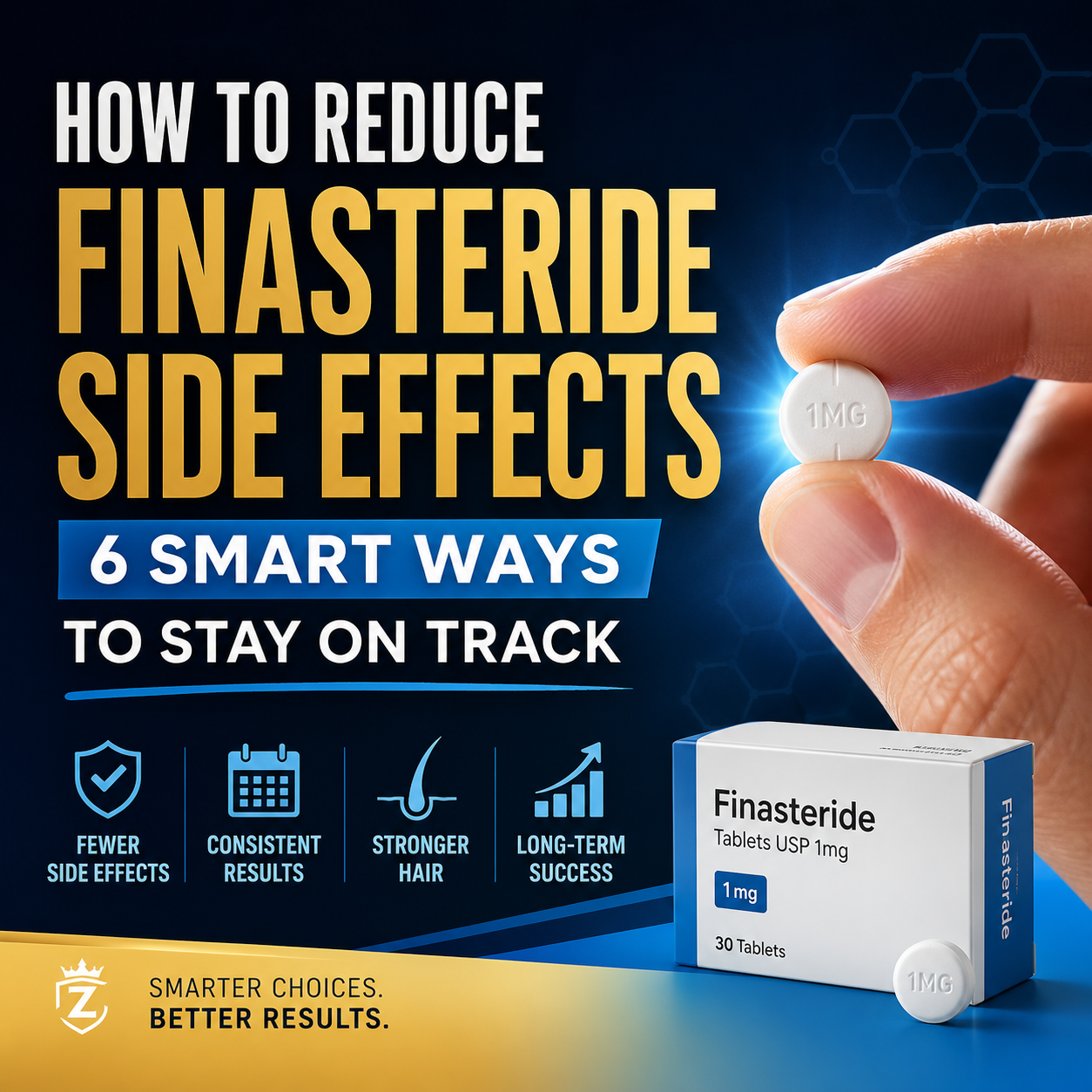
Hair loss affects millions of men worldwide, and Finasteride has remained one of the most effective treatments for male pattern baldness for decades. By lowering dihydrotestosterone (DHT), the hormone responsible for shrinking hair follicles, Finasteride helps slow hair loss while supporting healthier hair growth.
One reason some men hesitate to start treatment is concern about potential side effects. While these concerns are understandable, clinical studies have consistently shown that most users tolerate Finasteride well. Understanding how to use the medication correctly can help maximize results while minimizing unwanted effects.
How Finasteride Works
Finasteride belongs to a class of medications called 5-alpha reductase inhibitors. It works by blocking the enzyme responsible for converting testosterone into DHT.
DHT plays a major role in androgenetic alopecia (male pattern hair loss). Over time, elevated DHT causes hair follicles to shrink, resulting in thinner hair and eventually permanent hair loss.
By reducing DHT levels, Finasteride helps preserve existing hair and, in many patients, encourages thicker hair growth.
What Side Effects Can Occur?
Like any prescription medication, Finasteride may cause side effects in some individuals.
Possible side effects include:
- Reduced libido
- Erectile dysfunction
- Decreased semen volume
- Ejaculatory changes
- Breast tenderness or enlargement (rare)
- Mild skin rash (rare)
It's important to remember that these effects occur in only a small percentage of users and are often temporary. Many men complete long-term treatment without experiencing any significant problems.
1. Stick to the Recommended Dose
When treating male pattern hair loss, the standard dosage is 1mg once daily.
Taking more than the recommended amount does not improve hair growth. Instead, unnecessarily increasing the dose may increase the chance of side effects.
Consistency is far more important than dosage escalation.
2. Take It Consistently Every Day
Finasteride works best when taken regularly.
Choose a time that fits your daily routine—morning, afternoon, or evening—and take your tablet at roughly the same time each day.
The medication can be taken with or without food, making it easy to fit into almost any schedule.
3. Don't Double the Dose
If you accidentally miss a dose, simply continue with your next scheduled tablet.
Avoid taking two tablets at once to make up for a missed dose. Doing so provides no additional benefit and may increase unnecessary drug exposure.
Missing one dose occasionally is unlikely to affect your long-term results.
4. Store Finasteride Properly
Proper storage helps maintain medication quality.
For best results:
- Keep tablets at room temperature.
- Store them in a dry place.
- Protect them from excessive heat and direct sunlight.
- Leave them inside the original container whenever possible.
Bathrooms and other humid environments are not ideal places for medication storage.
5. Give Your Body Time
Many users become anxious after reading online discussions about Finasteride and immediately attribute every minor symptom to the medication.
In reality, the body often needs time to adjust.
Likewise, hair growth itself requires patience. Most users notice visible improvements after approximately three to six months of consistent treatment, with continued progress over the following year.
Stopping treatment too early may prevent you from seeing its full benefits.
6. Speak With Your Healthcare Provider If Side Effects Persist
If you experience side effects that continue or interfere with your daily life, don't stop treatment without professional guidance.
Depending on your situation, your healthcare provider may recommend:
- Adjusting your treatment plan
- Trying topical Finasteride
- Combining therapy with Minoxidil
- Considering alternative hair loss medications
Individual treatment plans often provide better long-term outcomes than abandoning therapy altogether.
Is Topical Finasteride Worth Considering?
Topical Finasteride has gained popularity among men looking to reduce systemic exposure while treating hair loss.
Applied directly to the scalp, topical formulations target hair follicles more locally and may be an option for individuals who cannot tolerate oral therapy.
Although topical Finasteride may still produce side effects, many patients find it to be an effective alternative when prescribed appropriately.
Final Thoughts
Finasteride continues to be one of the most reliable medications for slowing male pattern hair loss.
While side effects receive significant attention online, they remain relatively uncommon for most users. Following the recommended dosage, taking the medication consistently, storing it correctly, and maintaining realistic expectations can help you achieve the best possible results.
Hair restoration is a long-term commitment, and success comes from consistency—not from taking more medication.
Frequently Asked Questions
Can Finasteride side effects be prevented?
There is no guaranteed way to eliminate side effects completely, but following the recommended dosage and using the medication consistently may help reduce the risk.
Is it safe to take Finasteride long term?
Many clinical studies have demonstrated that Finasteride can be used safely for long-term treatment when taken as directed under appropriate medical supervision.
How long does Finasteride take to work?
Most users begin seeing noticeable improvements within 3 to 6 months, while maximum cosmetic results often require 12 months or longer of continuous treatment.
Can Finasteride and Minoxidil be used together?
Yes. Finasteride and Minoxidil work through different mechanisms and are frequently used together as part of a comprehensive hair loss treatment plan.