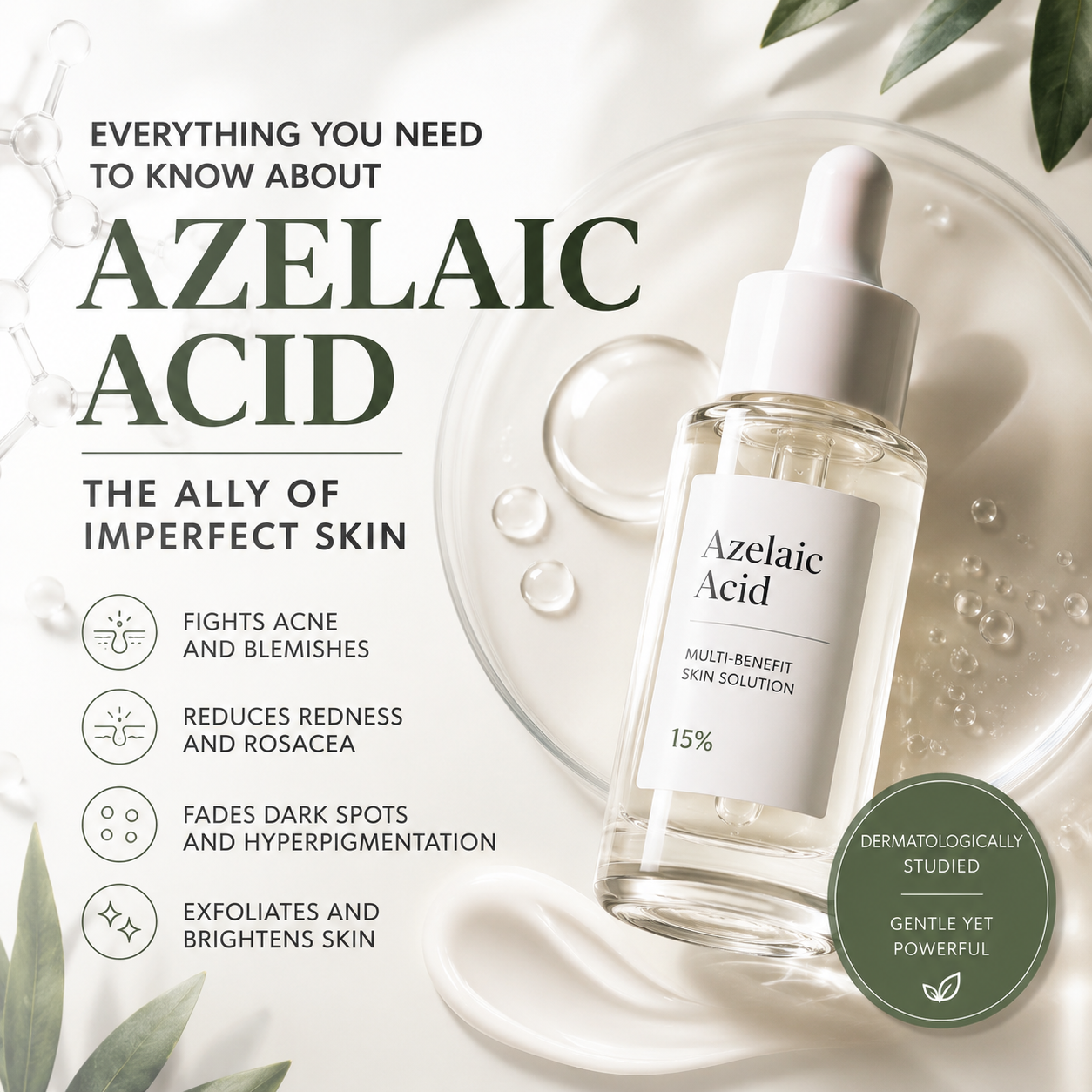
Azelaic acid has quietly become one of the most trusted ingredients in modern skincare. While it may not receive as much attention as retinol or vitamin C, dermatologists have relied on it for decades to help treat acne, rosacea, redness, hyperpigmentation, and uneven skin tone.
Its ability to address multiple skin concerns while remaining gentle enough for sensitive skin makes it one of the most versatile active ingredients available today.
In this article, we'll explore what azelaic acid is, how it works, its proven benefits, who should use it, and how to incorporate it into your skincare routine.
What Is Azelaic Acid?
Azelaic acid is a naturally occurring dicarboxylic acid found in grains such as wheat, barley, and rye. In skincare, however, the ingredient is produced synthetically to ensure greater stability, purity, and consistent effectiveness.
The ingredient first gained attention in dermatology during the late 1970s, when researchers discovered its ability to reduce pigmentation. Since then, numerous clinical studies have confirmed its effectiveness for several common skin conditions.
Unlike many skincare ingredients that target only one concern, azelaic acid provides multiple skin benefits at the same time.
The Benefits of Azelaic Acid
Reduces Redness and Rosacea
One of the best-known benefits of azelaic acid is its anti-inflammatory effect.
When skin becomes irritated, inflammatory molecules and oxidative stress contribute to persistent redness. Azelaic acid helps reduce this inflammatory response by neutralizing free radicals and calming irritated skin.
For individuals with rosacea or facial redness, regular use may noticeably reduce visible redness while improving overall skin comfort.
Helps Treat Acne
Azelaic acid is also an effective treatment for acne-prone skin.
It works by reducing the growth of Cutibacterium acnes (formerly known as Propionibacterium acnes), one of the primary bacteria involved in acne development.
At the same time, it helps prevent clogged pores and supports a healthier skin microbiome, reducing the likelihood of future breakouts.
Because of its relatively mild nature, many people who cannot tolerate stronger acne treatments find azelaic acid to be an excellent alternative.
Fades Dark Spots and Hyperpigmentation
Post-acne marks, sun spots, and melasma are often caused by excess melanin production.
Azelaic acid helps regulate pigmentation by inhibiting tyrosinase, the enzyme responsible for melanin synthesis.
Rather than bleaching the skin, it gradually helps even out skin tone while reducing existing discoloration, making it particularly useful for post-inflammatory hyperpigmentation.
Gently Exfoliates the Skin
Azelaic acid also has mild keratolytic properties.
By encouraging the removal of dead skin cells, it helps unclog pores, smooth rough texture, and reveal brighter-looking skin.
Unlike stronger exfoliating acids such as glycolic acid or salicylic acid, azelaic acid provides gentle exfoliation without excessive irritation for most users.
Helps Control Excess Oil
Another often overlooked benefit is its ability to regulate sebum production.
Research suggests that azelaic acid may help normalize sebaceous gland activity, reducing excessive oiliness and unwanted shine while supporting a healthier skin balance.
This makes it particularly beneficial for individuals with combination or oily skin.
Who Should Use Azelaic Acid?
One of azelaic acid's greatest strengths is its excellent tolerability.
It is suitable for nearly every skin type, including:
- Sensitive skin
- Acne-prone skin
- Oily skin
- Combination skin
- Rosacea-prone skin
- Skin with post-acne marks
- Skin affected by melasma or sun-induced pigmentation
Unlike some stronger active ingredients, azelaic acid is generally well tolerated across all skin tones and phototypes.
It is also considered one of the few dermatological ingredients that may be appropriate during pregnancy and breastfeeding when recommended by a healthcare professional.
How to Use Azelaic Acid
Azelaic acid is not photosensitizing, meaning it can be used both morning and evening throughout the year.
For best results:
- Apply to clean, dry skin before moisturizer.
- Use consistently once or twice daily.
- If you have sensitive skin, begin by applying it every other day for the first couple of weeks before increasing frequency.
- Always follow with a moisturizer if your skin feels dry.
Patience is important.
Most users begin noticing improvements in skin texture and redness after approximately four to six weeks of regular use.
For acne, dark spots, or melasma, more noticeable improvements often require six to eight weeks or longer.
Ingredients That Pair Well with Azelaic Acid
One reason dermatologists frequently recommend azelaic acid is its compatibility with many other skincare ingredients.
It works especially well alongside niacinamide, which helps strengthen the skin barrier while enhancing its calming effects.
Hyaluronic acid is another excellent companion, providing additional hydration and minimizing dryness.
Vitamin C can also complement azelaic acid by delivering extra antioxidant protection and supporting a brighter complexion.
When using retinol or stronger exfoliating acids such as AHAs or BHAs, extra caution is recommended. Rather than applying them together in the same routine, alternating them between morning and evening or on different days may reduce the risk of irritation.
Possible Side Effects
Azelaic acid is generally very well tolerated.
Some users may experience mild side effects during the first few weeks, including:
- Temporary tingling
- Mild burning sensation
- Slight redness
- Dryness
- Minor flaking
These effects are usually temporary as the skin adjusts.
If irritation persists, reducing application frequency and using a gentle moisturizer can often improve comfort.
Avoid applying azelaic acid to broken or severely irritated skin, and avoid direct contact with the eyes or mucous membranes.
Frequently Asked Questions
Is azelaic acid safe?
Yes. Azelaic acid has an excellent safety profile and is widely used in both cosmetic and prescription skincare products.
Can I use azelaic acid during pregnancy?
Azelaic acid is generally considered one of the safer topical skincare ingredients during pregnancy and breastfeeding. However, it is always advisable to consult your healthcare provider before starting any new treatment.
How long does it take to work?
Visible improvements in skin texture and redness often appear within four to six weeks.
For acne and pigmentation concerns, consistent use for six to eight weeks or longer typically produces the best results.
Does azelaic acid increase sun sensitivity?
No.
Unlike retinoids or many exfoliating acids, azelaic acid does not make the skin more sensitive to sunlight. Nevertheless, daily sunscreen remains essential for maintaining healthy skin and preventing pigmentation.
At what age can azelaic acid be used?
Azelaic acid is commonly used by both teenagers and adults and may be appropriate for acne treatment from around 10 years of age under appropriate guidance.
Final Thoughts
Azelaic acid is one of the most versatile ingredients in modern skincare. Its ability to simultaneously reduce redness, treat acne, fade pigmentation, gently exfoliate, and control excess oil makes it suitable for a wide range of skin concerns.
Because it combines proven clinical effectiveness with excellent skin tolerability, azelaic acid continues to be a favorite recommendation among dermatologists worldwide. Whether you're dealing with persistent breakouts, rosacea, uneven skin tone, or dullness, this multi-functional ingredient may be an excellent addition to your daily skincare routine.