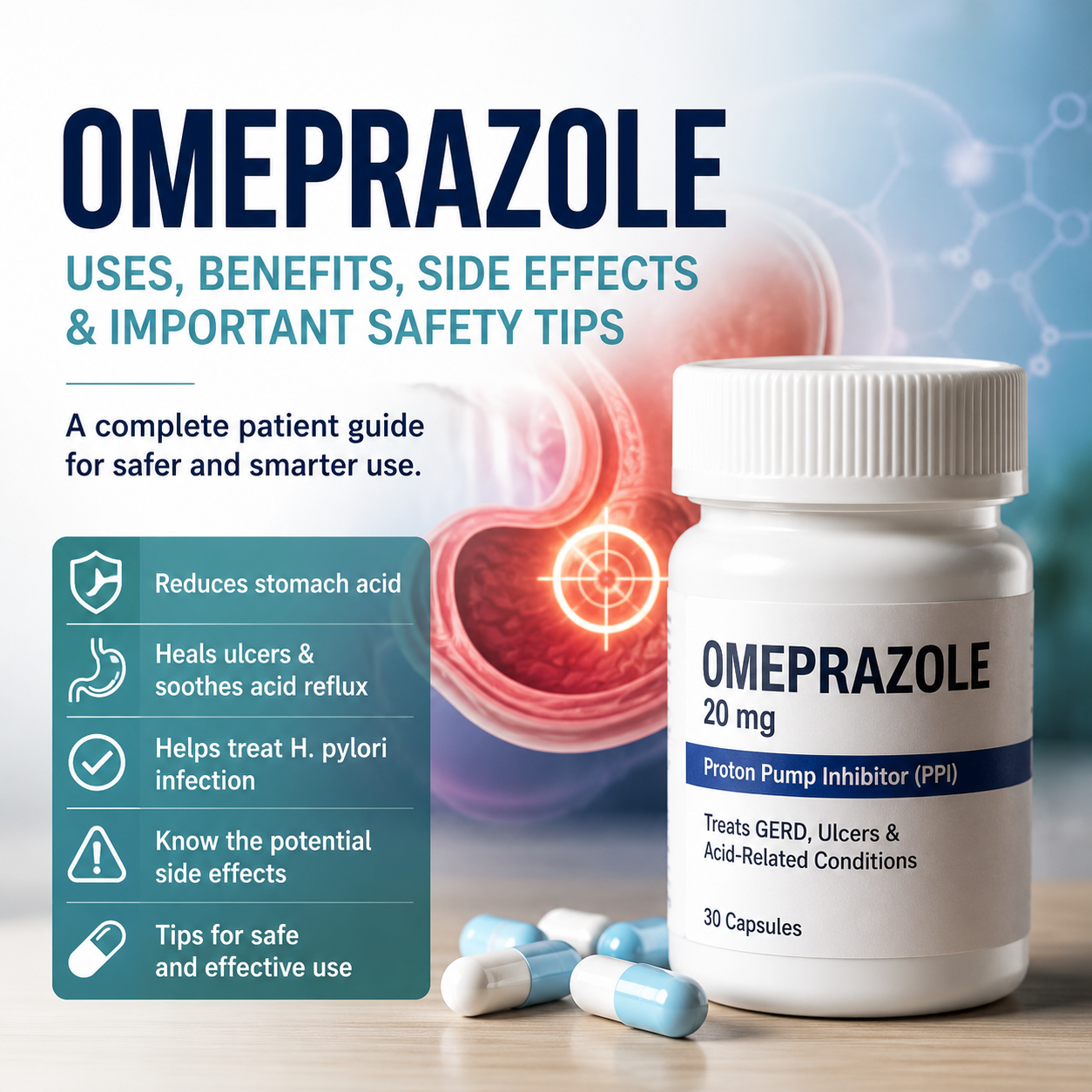
Millions of people worldwide experience acid reflux, heartburn, or stomach ulcers every year. One of the most commonly prescribed medications for these conditions is Omeprazole, a proton pump inhibitor (PPI) that has been used for decades to reduce stomach acid and promote healing.
But while Omeprazole is highly effective, many patients wonder how it works, how long they should take it, and whether long-term use is safe.
In this guide, we'll cover everything you need to know about Omeprazole, including its uses, dosage tips, potential side effects, and important precautions.
What Is Omeprazole?
Omeprazole is a medication that belongs to a class of drugs known as proton pump inhibitors (PPIs).
Unlike antacids that neutralize existing stomach acid, Omeprazole works by blocking the stomach's acid-producing pumps (H+/K+ ATPase) inside specialized cells called parietal cells.
By significantly reducing acid production, Omeprazole allows inflamed or damaged tissues in the stomach and esophagus to heal naturally.
What Is Omeprazole Used For?
Doctors commonly prescribe Omeprazole to treat several digestive disorders.
Duodenal Ulcers
Omeprazole is frequently used for treating active duodenal ulcers. Most ulcers heal within four weeks, although some patients may require additional treatment.
Gastroesophageal Reflux Disease (GERD)
People suffering from frequent heartburn or acid reflux often benefit from Omeprazole.
Reducing stomach acid helps relieve symptoms while allowing the esophagus to recover from acid-related damage.
Erosive Esophagitis
When acid reflux becomes severe, it can damage the lining of the esophagus.
Omeprazole helps heal this inflammation and may also be prescribed to prevent recurrence.
Helicobacter pylori (H. pylori) Infection
Omeprazole is commonly combined with antibiotics to eliminate H. pylori, a bacterium strongly associated with stomach and duodenal ulcers.
Zollinger-Ellison Syndrome
Patients with this rare condition produce excessive stomach acid.
Omeprazole helps control acid secretion and reduce symptoms.
How Quickly Does Omeprazole Work?
Many patients expect immediate relief, but Omeprazole works differently from traditional antacids.
- Acid suppression begins within 1 hour.
- Maximum acid reduction occurs after approximately 2 hours.
- The effect may last up to 72 hours.
- After stopping treatment, stomach acid typically returns to normal within 3–5 days.
Because it works gradually, Omeprazole is generally less effective for instant relief than antacid medications.
How to Take Omeprazole Correctly
To achieve the best results:
- Take once daily, unless otherwise directed by your healthcare provider.
- Take it at least one hour before meals on an empty stomach.
- Swallow tablets or capsules whole.
- Do not crush or chew the medication.
- If swallowing capsules is difficult, the capsule may be opened and mixed with applesauce before swallowing immediately.
Using the lowest effective dose for the shortest necessary duration is generally recommended.
Common Side Effects
Most people tolerate Omeprazole well.
The most commonly reported side effects include:
- Headache
- Diarrhea
- Nausea
- Vomiting
- Abdominal pain
- Drowsiness
- Temporary taste changes
- Tongue discoloration
These side effects are generally mild and often improve after treatment ends.
Risks of Long-Term Use
Although Omeprazole has an excellent safety record, prolonged use may increase the risk of certain complications.
Vitamin B12 Deficiency
Long-term treatment—particularly beyond two years—may reduce Vitamin B12 absorption.
Low Magnesium Levels
Extended therapy has been associated with magnesium deficiency, which may cause:
- Muscle cramps
- Weakness
- Irregular heartbeat
- Tremors
- Seizures
Bone Fractures
Long-term or high-dose PPI therapy may slightly increase the risk of fractures involving the:
- Hip
- Wrist
- Spine
This is particularly important for older adults.
Kidney Problems
Rarely, Omeprazole has been linked to acute interstitial nephritis, a serious inflammatory kidney condition.
Patients should seek medical attention if symptoms such as fever, rash, fatigue, or reduced urine output develop.
Clostridioides difficile Infection
Lower stomach acid may increase susceptibility to certain intestinal infections, including C. difficile-associated diarrhea.
Persistent diarrhea should never be ignored.
Drug Interactions
Omeprazole can interact with numerous medications.
Some of the most important include:
- Clopidogrel
- Warfarin
- Methotrexate
- Digoxin
- Tacrolimus
- Iron supplements
- Ketoconazole
- HIV medications
- Rifampin
- St. John's Wort
Because Omeprazole changes stomach acidity, it may reduce the absorption of medications that require an acidic environment.
Always inform your healthcare provider about all prescription medications, supplements, and herbal products you take.
Pregnancy and Breastfeeding
Available human data remain limited.
Animal studies have suggested potential developmental effects at high doses, so Omeprazole should generally be used during pregnancy only when clearly needed.
Women who are pregnant, planning pregnancy, or breastfeeding should discuss treatment options with their healthcare provider.
Who Should Use Extra Caution?
Speak with your healthcare provider before using Omeprazole if you have:
- Liver disease
- Osteoporosis
- Low magnesium levels
- Vitamin B12 deficiency
- Kidney disease
- A history of lupus
Additional monitoring may be appropriate during long-term therapy.
Frequently Asked Questions
Can I take Omeprazole every day?
Yes, but only for as long as recommended by your healthcare provider. Long-term therapy should be periodically reviewed.
Can Omeprazole be taken with antibiotics?
Yes. It is commonly combined with antibiotics to eradicate H. pylori infection.
Does Omeprazole provide immediate heartburn relief?
Not usually.
Unlike antacids, Omeprazole gradually reduces acid production and may require one or more days for maximum symptom relief.
Can I stop taking Omeprazole suddenly?
Some people experience rebound acid secretion after discontinuing long-term therapy.
If you've taken Omeprazole for an extended period, your healthcare provider may recommend gradually reducing the dose instead of stopping abruptly.
Final Thoughts
Omeprazole remains one of the most effective medications for reducing stomach acid and treating conditions such as GERD, stomach ulcers, erosive esophagitis, and Zollinger-Ellison syndrome.
When used appropriately, it provides excellent symptom relief and promotes healing of the digestive tract. However, like all medications, long-term use should be carefully monitored due to potential risks including vitamin B12 deficiency, magnesium deficiency, osteoporosis-related fractures, and kidney complications.
Using the lowest effective dose for the shortest appropriate duration—and reviewing ongoing therapy with your healthcare provider—can help maximize benefits while minimizing potential risks.
Disclaimer: This article is intended for educational purposes only and should not replace professional medical advice. Always follow your healthcare provider's instructions regarding the use of Omeprazole or any prescription medication.