Building muscle is not simply about lifting heavier weights or eating more protein. Muscle growth depends on a much larger biological process involving training, recovery, nutrition, sleep, and hormones.
Among the hormones most frequently associated with muscle growth and recovery, two names consistently stand out: Growth Hormone (GH) and Testosterone.
Growth Hormone, also known as GH or HGH (Human Growth Hormone), plays an important role in growth, tissue repair, metabolism, and the regulation of IGF-1. Testosterone, meanwhile, contributes to muscle protein synthesis, maintenance of lean body mass, bone health, and normal male physiology.
Together, Growth Hormone and Testosterone form part of the hormonal environment that influences how the body responds to resistance training and recovery.
In this article, we'll take a closer look at Growth Hormone (GH), Testosterone, muscle growth, protein synthesis, sleep, exercise, and nutrition, as well as pharmaceutical products such as Headon, Genryzon, TEST-P, TEST-E, and TEST-C that belong to the Growth Hormone and Testosterone categories.
How Does Muscle Growth Actually Happen?
Resistance training places mechanical stress on skeletal muscle. This creates a biological signal telling the body that the muscle needs to adapt to the workload.
The recovery process involves numerous signaling pathways, amino acids, growth factors, and hormones. When adequate nutrients are available, muscle protein synthesis helps repair and remodel muscle tissue.
Over time, repeated resistance training combined with sufficient recovery can result in muscle growth, increased strength, and adaptation to progressively heavier workloads.
This is why simply training harder is not enough.
For effective muscle growth, the body also requires:
- Adequate protein and essential amino acids
- Sufficient calories
- Progressive resistance training
- Quality sleep
- Appropriate recovery
- A healthy hormonal environment
Two hormones frequently discussed within this environment are Testosterone and Growth Hormone (GH).
Growth Hormone (GH) and Muscle Growth
Growth Hormone (GH) is a peptide hormone produced naturally by the pituitary gland.
Growth Hormone has numerous physiological functions throughout the body, including roles in childhood growth, adult metabolism, tissue maintenance, and the regulation of insulin-like growth factor 1 (IGF-1).
The relationship between Growth Hormone and muscle growth is more complicated than simply saying that higher GH automatically produces more muscle.
GH contributes to anabolic and metabolic processes, while many of its growth-related effects are mediated through IGF-1. It also influences protein metabolism and connective tissue.
This makes Growth Hormone (GH) particularly interesting when discussing exercise recovery, body composition, and muscle physiology.
Growth Hormone and IGF-1
One of the most important relationships to understand is the GH/IGF-1 axis.
Growth Hormone stimulates IGF-1 production, particularly in the liver and other tissues. IGF-1 subsequently participates in cellular growth and anabolic signaling.
For this reason, discussions surrounding Growth Hormone, muscle growth, recovery, and protein synthesis frequently include IGF-1 as well.
However, GH and IGF-1 are not interchangeable. They are separate hormones with different biological functions despite being closely connected.
Testosterone and Muscle Growth
Testosterone is another major hormone associated with skeletal muscle physiology.
It is an androgen naturally produced primarily in the testes in men, with smaller amounts produced in women.
Testosterone influences many physiological functions, including:
- Maintenance of muscle mass
- Muscle protein synthesis
- Bone mineral density
- Red blood cell production
- Sexual development and function
- General androgenic characteristics
This explains why Testosterone and muscle growth are so closely associated in sports and fitness discussions.
Resistance training itself can produce temporary changes in circulating hormones. But long-term muscle growth ultimately depends on the combined effects of progressive training, adequate nutrition, recovery, genetics, and the individual's underlying hormonal status.
Growth Hormone vs Testosterone: What's the Difference?
Although Growth Hormone and Testosterone are frequently discussed together, they are fundamentally different hormones.
Growth Hormone (GH) is a peptide hormone secreted by the pituitary gland. It is closely connected with IGF-1 and plays broad roles in growth, metabolism and tissue maintenance.
Testosterone, by comparison, is a steroid hormone and androgen. It has direct effects on androgen receptors and plays a particularly important role in male reproductive physiology, muscle maintenance, and bone health.
Therefore, GH and Testosterone should not be treated as interchangeable substances.
Their physiological pathways are different, even though both may be discussed in the broader context of muscle growth, recovery, and body composition.
Protein Synthesis: The Foundation of Muscle Growth
No discussion of Growth Hormone, Testosterone, and muscle growth is complete without protein synthesis.
Muscle tissue is constantly undergoing protein breakdown and protein synthesis.
Following resistance training, providing sufficient dietary protein supplies the amino acids necessary for muscle repair and remodeling.
Essential amino acids—and particularly leucine—play important roles in activating pathways involved in muscle protein synthesis.
This means that even with normal Growth Hormone and Testosterone levels, inadequate protein intake can limit recovery and muscle development.
Hormones provide biological signals, but the body still requires the necessary nutritional building blocks.
For most people interested in muscle growth, training and nutrition therefore remain the foundation.
Sleep, Growth Hormone and Recovery
Sleep deserves particular attention when discussing Growth Hormone (GH).
Normal Growth Hormone secretion occurs in pulses rather than remaining constant throughout the day. Significant GH secretion is associated with sleep, particularly slow-wave sleep.
This creates an important relationship between:
Sleep → Growth Hormone → Recovery
Poor or insufficient sleep can also negatively affect athletic recovery and endocrine function.
Testosterone is similarly connected with normal sleep patterns. Chronic sleep restriction can interfere with normal hormonal physiology and recovery.
For anyone pursuing muscle growth, consistently sacrificing sleep while focusing exclusively on training and supplementation can therefore be counterproductive.
Exercise and Natural Growth Hormone Release
Exercise—particularly sufficiently intense exercise—can temporarily increase circulating Growth Hormone.
Resistance exercise can produce an acute GH response depending on factors such as intensity, volume, rest periods, and the amount of muscle involved.
However, an acute increase in Growth Hormone following a workout should not be interpreted as a direct measurement of future muscle growth.
The overall adaptation to training remains considerably more complicated.
For practical purposes, consistent progressive resistance training remains much more important than trying to manipulate individual short-term hormone spikes.
Supporting Healthy Testosterone and Growth Hormone Naturally
Before discussing pharmaceutical Growth Hormone or Testosterone products, it is useful to distinguish treatment from normal physiological optimization.
Several fundamental lifestyle factors support normal endocrine function and muscle growth:
Sleep: Consistent, sufficient sleep supports recovery and normal hormonal rhythms.
Resistance Training: Progressive strength training provides the primary stimulus for skeletal muscle adaptation.
Protein: Adequate dietary protein provides amino acids required for muscle protein synthesis.
Energy Intake: Chronic severe calorie restriction can negatively affect training performance, recovery, and reproductive hormones.
Micronutrients: Adequate vitamin D, magnesium, zinc, and other essential nutrients contribute to normal physiological function when dietary intake is insufficient.
Body Composition: Both severe obesity and extremely low energy availability can interfere with normal hormonal function.
These fundamentals remain important regardless of whether someone is researching Growth Hormone, Testosterone, or muscle growth.
Pharmaceutical Growth Hormone: Somatropin
Natural Growth Hormone should also be distinguished from pharmaceutical recombinant human Growth Hormone (somatropin).
Somatropin is manufactured recombinant human Growth Hormone used medically for specific approved indications involving Growth Hormone deficiency and certain growth disorders.
It should not be confused with nutritional supplements marketed as "GH boosters."
For readers researching pharmaceutical Growth Hormone (GH), Zarvy Pharm currently lists products within the somatropin category, including:
Headon
Headon 4 IU Injection belongs to the somatropin / recombinant human Growth Hormone category.
Because somatropin corresponds to human Growth Hormone, Headon falls directly within the pharmaceutical Growth Hormone (GH/HGH) category rather than the supplement category.
Genryzon
Genryzon 24 mg/1.2 mL Pen and Genryzon 60 mg/1.2 mL Pen are also listed within Zarvy Pharm's Growth Hormone product range.
Therefore, when distinguishing nutritional approaches from pharmaceutical Growth Hormone, products such as Headon and Genryzon belong to the latter category.
The indication, formulation and dosing requirements of individual somatropin products should always be distinguished rather than assuming that every Growth Hormone product is interchangeable.
Pharmaceutical Testosterone: TEST-P, TEST-E and TEST-C
The same distinction applies to Testosterone.
Strategies intended to support the body's natural testosterone production are fundamentally different from administering exogenous pharmaceutical Testosterone.
Zarvy Pharm currently lists several Testosterone products:
TEST-P
TEST-P belongs to the Testosterone ester category associated with testosterone propionate.
TEST-E
TEST-E belongs to the testosterone enanthate category.
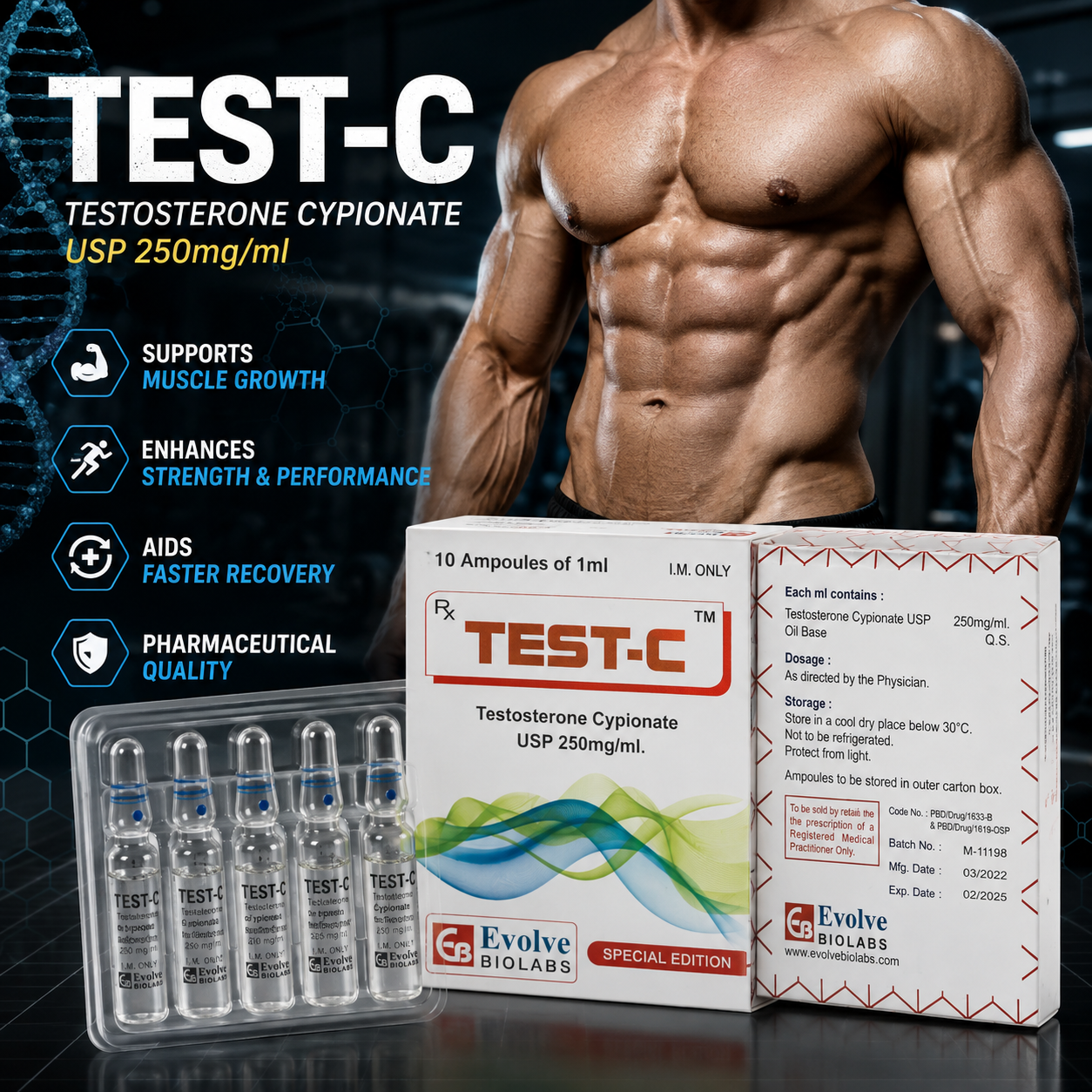
TEST-C
TEST-C belongs to the testosterone cypionate category.
Although TEST-P, TEST-E and TEST-C all belong to the broader Testosterone family, their ester forms affect pharmacokinetic characteristics such as the rate at which Testosterone is released following administration.
They should therefore not be treated as identical formulations simply because their active hormone is Testosterone.
Headon & Genryzon vs TEST-P, TEST-E & TEST-C
This distinction makes the Zarvy Pharm product range relatively straightforward to understand:
Headon and Genryzon → Growth Hormone (somatropin) category
TEST-P, TEST-E and TEST-C → Testosterone category
Both Growth Hormone and Testosterone are frequently discussed in relation to muscle growth, body composition and recovery, but their biological mechanisms and legitimate medical applications differ substantially.
Likewise, pharmaceutical Growth Hormone and Testosterone should not be confused with supplements marketed as natural hormone boosters.
Does More Growth Hormone or Testosterone Always Mean More Muscle Growth?
No.
This is one of the biggest oversimplifications surrounding Growth Hormone, Testosterone and muscle growth.
Hormones operate within complex feedback systems. Artificially increasing a hormone does not simply reproduce the body's natural response to exercise.
For example, administering exogenous Testosterone can suppress the hypothalamic-pituitary-gonadal axis and reduce endogenous Testosterone production.
Pharmaceutical Growth Hormone can likewise produce effects extending far beyond skeletal muscle, including changes in glucose metabolism and fluid balance.
Therefore, "higher hormone level = better muscle growth" is not an accurate way to understand endocrine physiology.
The relationship between GH, Testosterone and muscle growth depends on hormone status, dose exposure, nutrition, training, age, health status, and numerous other biological variables.
Growth Hormone, Testosterone and Muscle Growth: The Bigger Picture
When the goal is muscle growth, it's tempting to focus on one hormone.
In reality, muscle development is a coordinated process.
Resistance training provides the stimulus.
Protein provides amino acids.
Sleep and recovery allow adaptation to occur.
Testosterone contributes to normal anabolic signaling and muscle maintenance.
Growth Hormone (GH) participates in growth, metabolism, tissue maintenance, and the GH/IGF-1 axis.
IGF-1 participates in growth signaling.
All of these systems interact rather than operating independently.
That's why understanding Growth Hormone, Testosterone and muscle growth requires looking beyond a single number on a hormone test—or a single product.
Final Thoughts
Growth Hormone (GH), Testosterone and muscle growth are closely connected topics, but they shouldn't be oversimplified.
Natural Growth Hormone secretion is influenced by factors including sleep and exercise, while normal Testosterone physiology is affected by sleep, energy balance, health status, age and numerous other factors.
Meanwhile, pharmaceutical products represent a completely different category.
Headon and Genryzon belong to the pharmaceutical Growth Hormone / somatropin category, while TEST-P, TEST-E and TEST-C belong to the pharmaceutical Testosterone category.
For anyone researching Growth Hormone, GH, Testosterone, muscle growth, Headon, Genryzon, TEST-P, TEST-E, or TEST-C, understanding these distinctions is essential.
Ultimately, muscle growth remains the result of training stimulus, protein synthesis, adequate nutrition, recovery, genetics, and hormonal physiology working together—not one hormone acting alone.