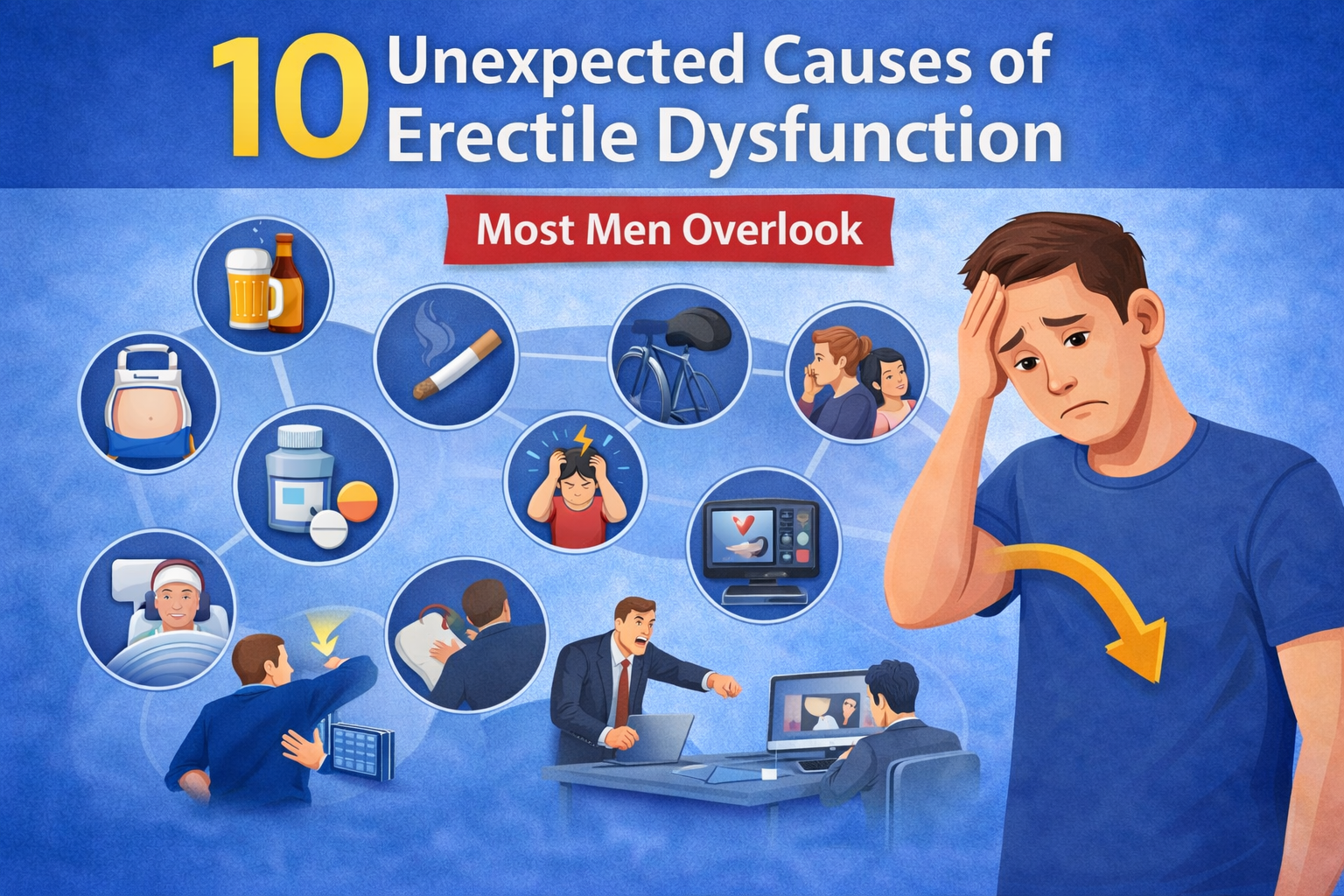
Erectile dysfunction (ED) isn’t always as straightforward as people assume. Many men think it only happens with age or serious illness, but the reality is more complicated. Lifestyle habits, emotional health, and even everyday routines can quietly influence sexual performance over time.
Instead of focusing only on the obvious risk factors, it helps to look at the lesser-known triggers that often go unnoticed.
1. Alcohol Isn’t Always “Relaxing” for Performance
A drink or two might lower inhibitions, but frequent or heavy drinking tells a different story. Alcohol affects nerve signaling and blood circulation — both essential for erections. Over time, excessive consumption can dull sexual response and contribute to nerve damage that makes erections harder to achieve.
2. Smoking and Vascular Health
Many younger men underestimate how strongly smoking affects erectile function. Nicotine narrows blood vessels and encourages plaque buildup, limiting the blood flow needed for a firm erection. Even men who feel otherwise healthy can notice gradual changes after years of smoking.
3. Past Injuries You Forgot About
Pelvic injuries, spinal trauma, or accidents affecting nerves and blood vessels can have lingering effects. Erections rely on coordinated signals between the brain, nerves, and blood vessels. When any part of that pathway is disrupted, sexual function can change — sometimes long after the injury itself seems healed.
4. Too Much Cycling or Pressure on the Perineum
Exercise is usually beneficial, but certain activities come with trade-offs. Long hours on narrow bicycle seats can compress nerves and arteries in the perineal area. Many avid cyclists don’t connect numbness or reduced sensitivity with ED risk, yet prolonged pressure in this region may contribute to performance issues.
5. Hair-Loss Treatments and Hormonal Shifts
Some medications used for male pattern hair loss work by altering hormone pathways, particularly DHT levels. While many men tolerate them well, a subset report decreased libido or erection difficulties. If symptoms begin after starting a new treatment, timing alone can offer an important clue.
6. Abdominal Weight Gain
Carrying extra weight — especially around the midsection — affects more than appearance. Belly fat is closely tied to inflammation, lower testosterone levels, and reduced vascular health. Even modest weight loss has been associated with improvements in blood flow and sexual confidence.
7. Chronic Work Stress
Mental pressure doesn’t stay at the office. Persistent stress raises cortisol, disrupts sleep, and may reduce testosterone levels. Many men notice that performance issues appear during demanding periods at work, even when physical health seems unchanged.
8. Medication Side Effects
Certain prescription drugs can influence sexual function without it being obvious at first. Blood pressure medications, antidepressants, antihistamines, and some neurological drugs are known examples. A gradual decline in performance after starting a new medication is worth paying attention to.
9. Unrealistic Expectations from Online Content
Psychological factors matter more than many people realize. Constant exposure to highly curated or unrealistic sexual imagery can shift expectations about performance and intimacy. When real experiences don’t match those expectations, anxiety can interfere with arousal — even when physical health is normal.
10. Relationship Dynamics
Communication, emotional distance, or unresolved tension with a partner can quietly reduce sexual desire. ED doesn’t always stem from the body alone; emotional disconnect or routine boredom can make intimacy feel forced rather than natural.
Final Thoughts
Erectile dysfunction rarely has just one cause. Lifestyle habits, mental health, medications, and relationship dynamics often overlap. For many men, small adjustments — improving sleep, reducing alcohol, managing stress, or addressing underlying health issues — can make a noticeable difference over time.
Rather than viewing ED as a single problem with a single fix, it’s more accurate to think of it as a signal. Paying attention to that signal early often leads to better long-term outcomes, both for overall health and for sexual wellbeing.