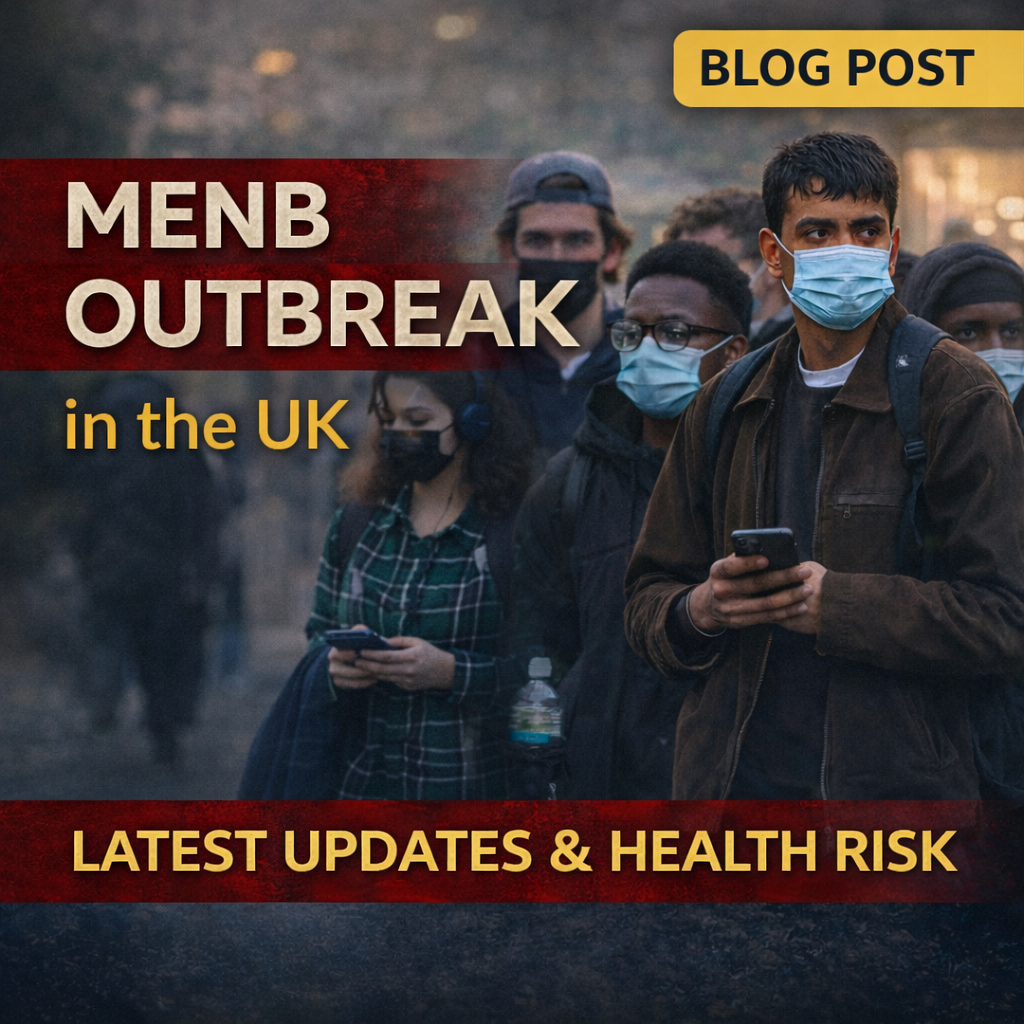
A recent meningitis outbreak in Kent, UK, has quickly escalated into a serious public health concern—particularly among students.
As of mid-March, around 15–20 cases have been identified or are under investigation, with at least two confirmed deaths involving young individuals.
The situation has intensified rapidly, with reports of hundreds of students queuing for vaccination and authorities distributing preventive antibiotics to those potentially exposed.
Cluster, Rapid Response, and Growing Concern
The outbreak has been linked to a cluster event in early March, with transmission believed to be associated with close-contact environments.
Health officials have responded aggressively:
-
Preventive antibiotics distributed to exposed individuals
-
Targeted vaccination programs for students
-
Nationwide alerts issued to healthcare providers
This level of response suggests one key concern:
👉 Speed of progression.
Bacterial meningitis—especially MenB—can escalate within hours, not days.
Common Antibiotic Options to be considered
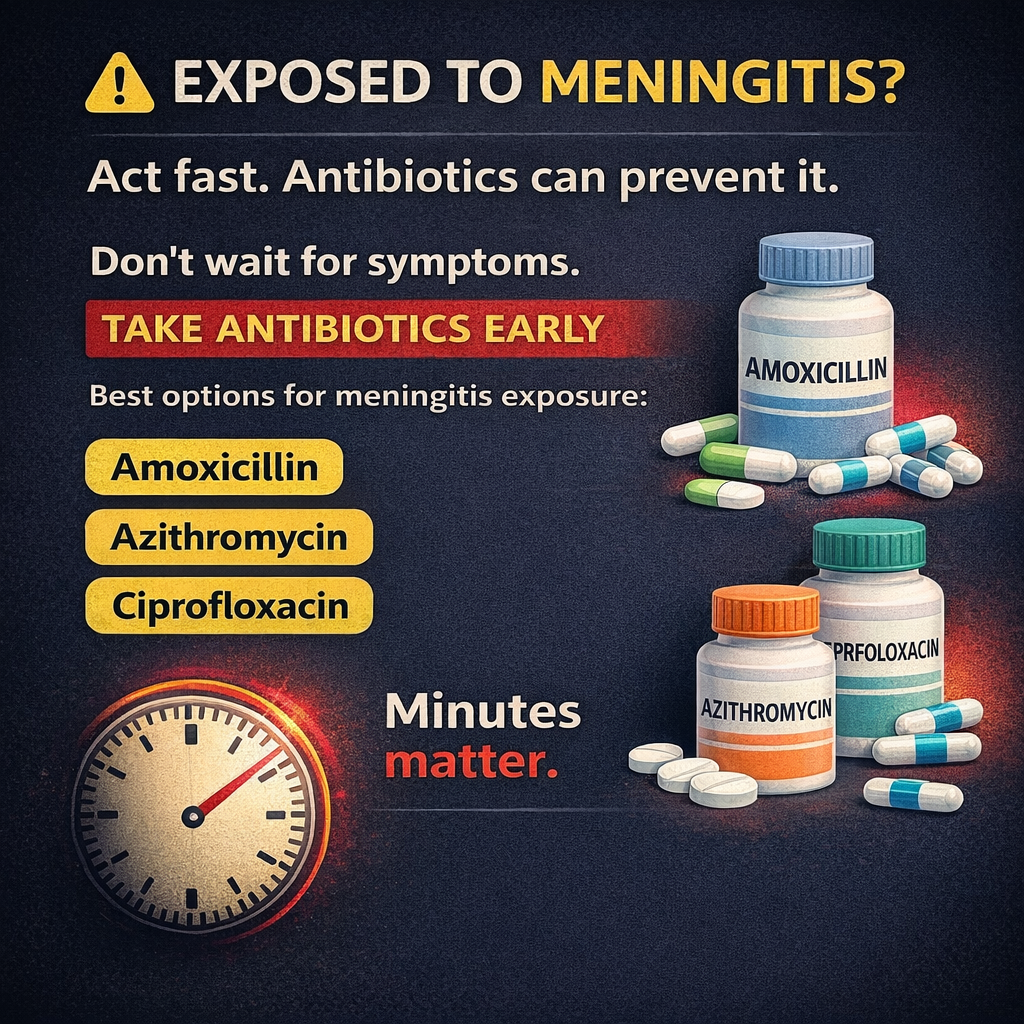
While treatment protocols vary, commonly used broad-spectrum antibiotics include:
-
Ciprofloxacin
Supportive care may also include:
-
Paracetamol (for fever and discomfort)
What People Are Saying (Forum Reactions)
Interestingly, online discussions reveal a very mixed reaction to the situation.
Some users focused on the scale and urgency:
“Meningitis outbreak being treated as a national incident… spread is unprecedented.”
Others questioned the response itself:
“Masks for meningitis? Those don’t work.”
“Thousands queuing for vaccines… something feels off.”
There are also more skeptical voices raising concerns about vaccines and institutional responses:
“They need compliant samples of people to regain credibility…”
While these views vary widely in tone and accuracy, they highlight something important:
👉 Public uncertainty is high.
What Stands Out: Early Antibiotic Use
One detail that stands out across both official reports and independent discussions is the use of antibiotics before symptoms appeared.
According to reports, individuals who may have been exposed were given antibiotics immediately—not as treatment, but as prevention.
This aligns with what some medical experts have recently emphasized.
Dr. John Campbell also discussed this in a recent video, noting that:
-
Bacterial meningitis can progress extremely fast
-
Early antibiotic intervention can significantly change outcomes
Symptoms Are Not Always Obvious
Many people associate meningitis with a rash—but that can be misleading.
Common early signs include:
-
Fever
-
Severe headache
-
Neck stiffness
-
Sensitivity to light
-
Fatigue or confusion
⚠️ Importantly, not all cases show clear warning signs early on.
Why This Matters
This outbreak is not about widespread panic—but it is about awareness.
There are three key takeaways:
Early exposure
Fast progression
Preventive antibiotics
The combination of these factors explains why authorities moved quickly.
Final Thought
This situation raises an important question:
If early intervention—especially with antibiotics—can make such a significant difference…
👉 Is this aspect being fully understood by the public?
In fast-moving bacterial infections, timing isn’t just important.
It may be everything.