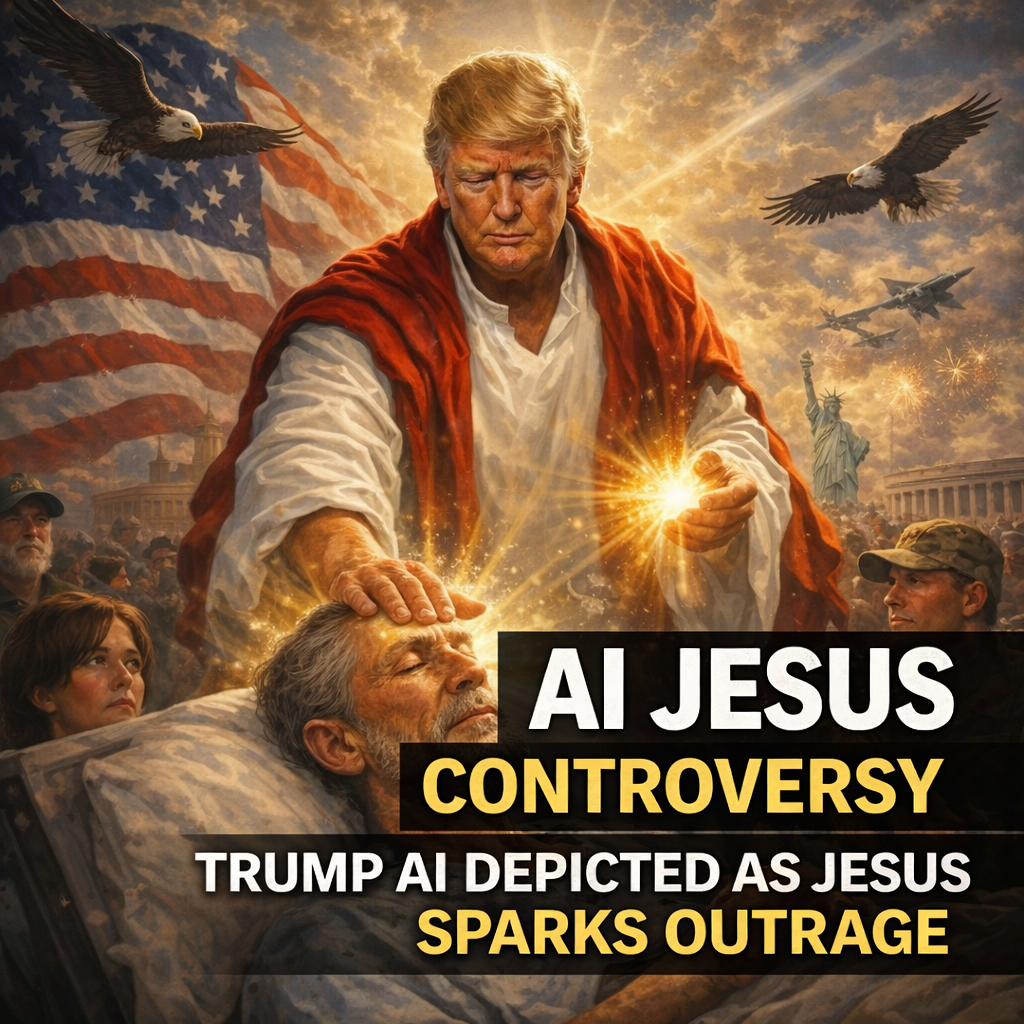
A recent post from Donald Trump stirred up backlash for an unexpected reason — not politics, but perception.
At first glance, it looked like just another viral moment. But the deeper you look, the more it raises a bigger question:
How easily can people be misled today?
What Actually Happened
Trump shared an image on his Truth Social account that appeared to be AI-generated.
It showed him in a scene strongly resembling traditional depictions of Jesus — wearing a white robe, a red cloak, and seemingly healing someone lying in a hospital bed. Light radiated from the scene, and patriotic symbols filled the background.
Whether intentional or not, the message felt clear to many.
And that’s where things started to shift.
The Reaction Wasn’t What You’d Expect
The backlash didn’t come from political opponents.
It came from his own supporters — particularly evangelical Christians and conservative Catholics.
Some called the image blasphemous. Others questioned why such symbolism was used at all.
That alone says something.
When even a loyal audience starts questioning what they’re seeing, it’s no longer just about politics — it’s about trust.
Trump’s Explanation vs. Public Perception
Trump later responded by saying the image wasn’t meant to portray him as Jesus.
According to him, it was supposed to show him as a “doctor” — someone healing others, similar to a Red Cross worker.
But the visual didn’t really match that explanation.
And that gap — between what’s intended and what’s perceived — is exactly where things get complicated.
The Bigger Issue: AI and Reality
This isn’t really about Trump.
It’s about something bigger.
We’re entering a space where:
- Images can be generated instantly
- Symbolism can be exaggerated or misinterpreted
- And people react before they verify
The line between real and constructed is getting thinner.
And most people don’t even realize it.
Why This Matters More Than It Seems
If something like this can confuse people in politics —
a space where millions are watching closely —
What about areas that are even more personal?
Like health.
Like what you choose to trust.
Like what you put into your body.
Final Thought
We’re not just dealing with misinformation anymore.
We’re dealing with overload — where everything looks convincing, but not everything is real.
And in a world like that, the real question isn’t what you’re looking at.
It’s what you actually trust.