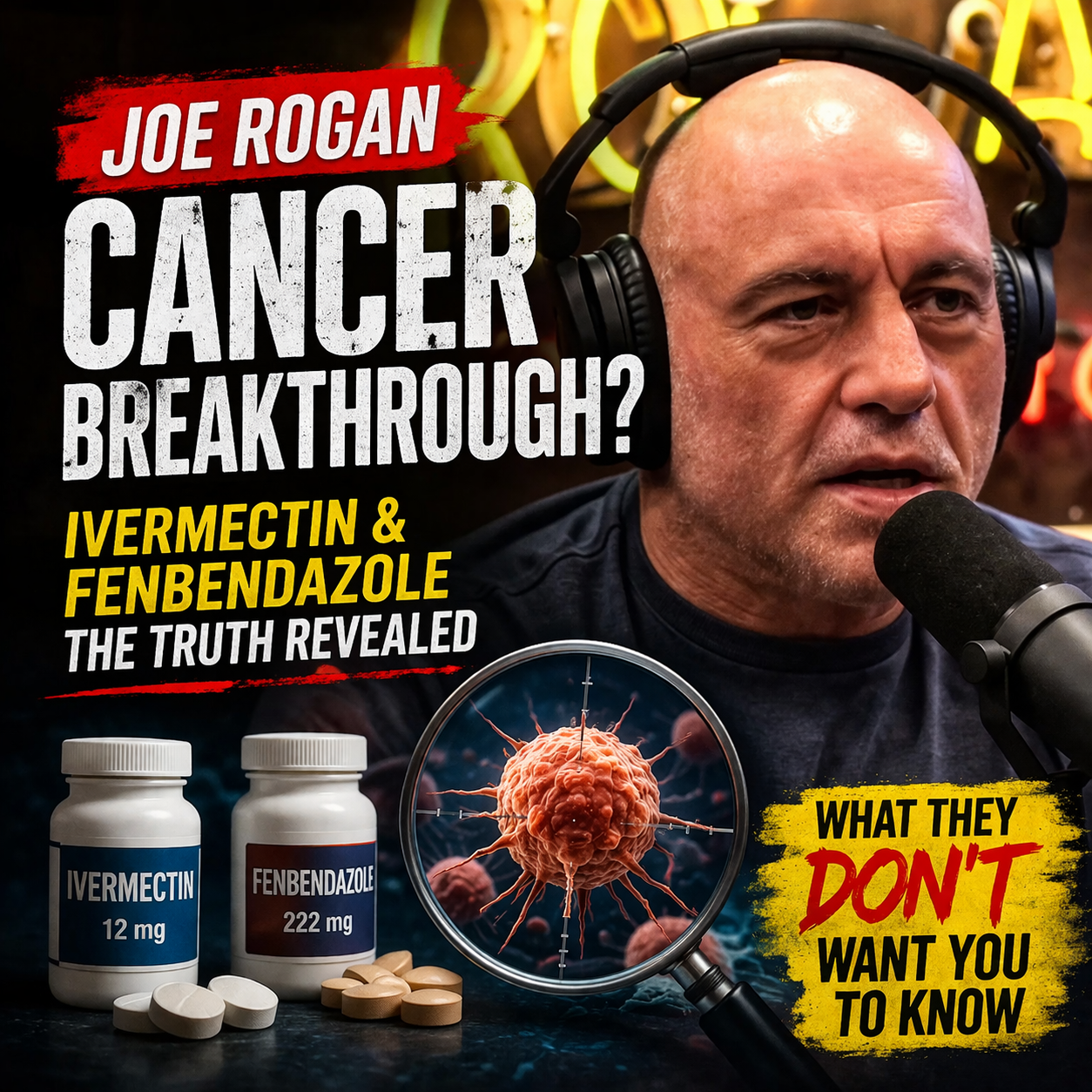
Why Is Everyone Talking About This Now?
The conversation around ivermectin and fenbendazole didn’t just appear out of nowhere.
A major surge in public interest came after an episode of The Joe Rogan Experience, where Mel Gibson shared a story about three individuals with stage IV cancer who reportedly experienced remission after using these antiparasitic drugs.
That short segment quickly went viral, reaching millions of viewers and sparking widespread curiosity.
Since then, discussions around these compounds have spread rapidly across online communities, forums, and alternative health spaces.
What’s Driving the Interest?
The rising attention comes down to a few key factors:
- People actively looking for additional or supportive options beyond conventional cancer treatments
- Increasing awareness of drug repurposing — using existing medications in new ways
- The power of real-life stories and shared experiences, especially when traditional options feel limited
For many, it’s not about replacing standard treatments, but exploring whether something more can be done.
What Does Science Actually Say?
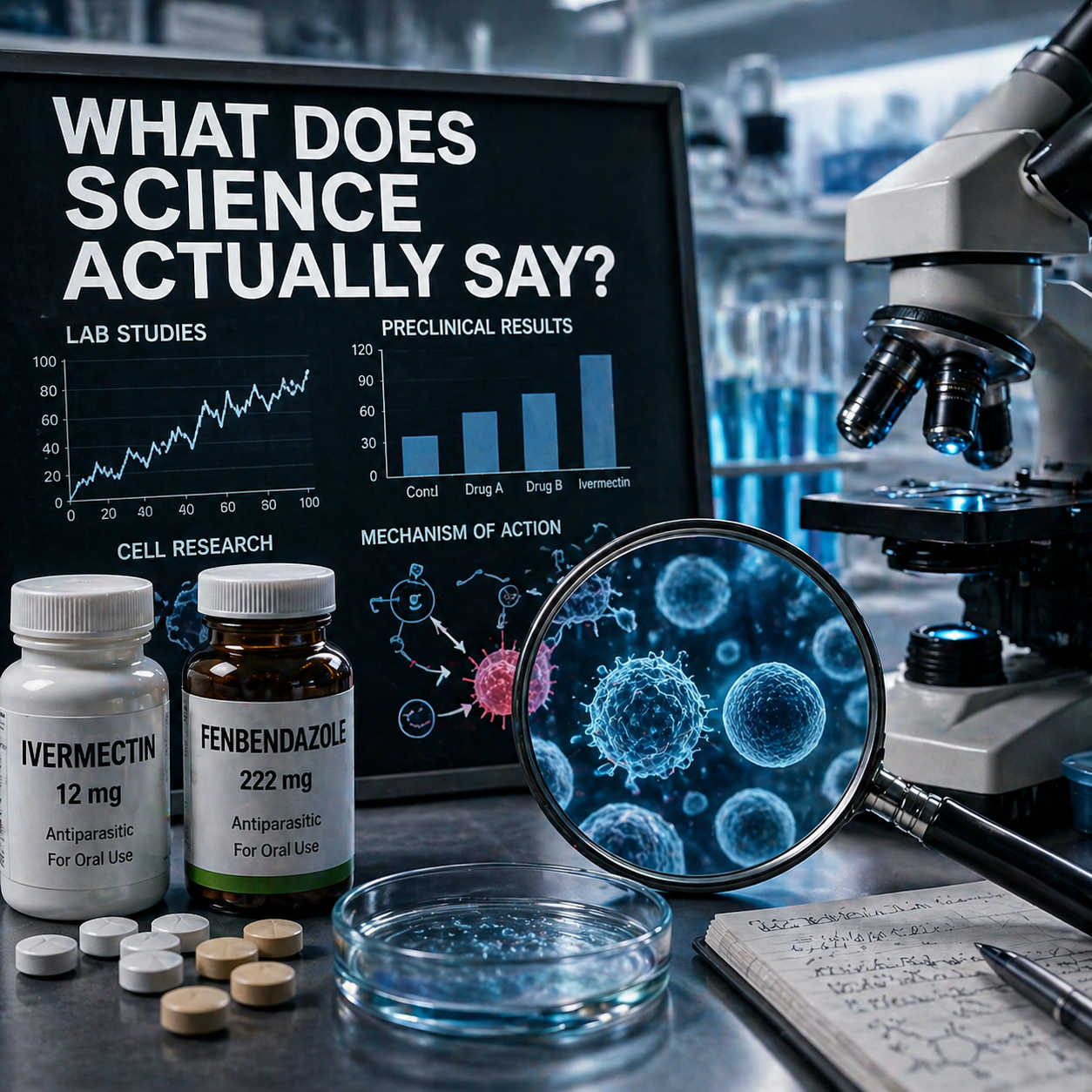
Scientific interest in ivermectin and cancer has been building for years.
Preclinical research — including lab and animal studies — has shown that ivermectin may:
- Affect cancer cell growth under controlled conditions
- Interact with key biological pathways
- Potentially influence immune-related mechanisms
These early findings have been enough to justify continued research.
However, current evidence in humans remains limited, and there is no confirmed clinical proof that these drugs can effectively treat cancer in patients.
Where Things Stand Right Now
Some early-stage clinical investigations have been conducted, including small studies combining ivermectin with existing cancer therapies.
So far, results have been mixed, with no clear evidence showing a significant advantage beyond standard treatment approaches.
This places ivermectin and fenbendazole in a category that can best be described as:
“promising in theory, but not yet proven in practice.”
Why People Are Still Paying Attention
Despite limited clinical validation, interest continues to grow.
That’s because:
- These drugs are already widely known and accessible
- Early research suggests biological activity worth exploring
- Anecdotal cases continue to circulate and influence perception
For some individuals, especially those exploring every possible avenue, that alone is enough to keep the conversation alive.
A More Realistic Perspective
It’s important to separate potential from proven results.
Ivermectin and fenbendazole are not established cancer treatments.
At the same time, they are not being ignored either — research is ongoing, and the scientific community continues to evaluate their role.
Final Take
The growing attention around ivermectin and fenbendazole reflects a broader shift in how people approach health:
More curiosity.
More exploration.
More willingness to question existing boundaries.
Whether these drugs will eventually find a place in cancer treatment remains uncertain.
But one thing is clear — this is no longer a fringe topic. It’s something researchers, clinicians, and patients are all watching closely.