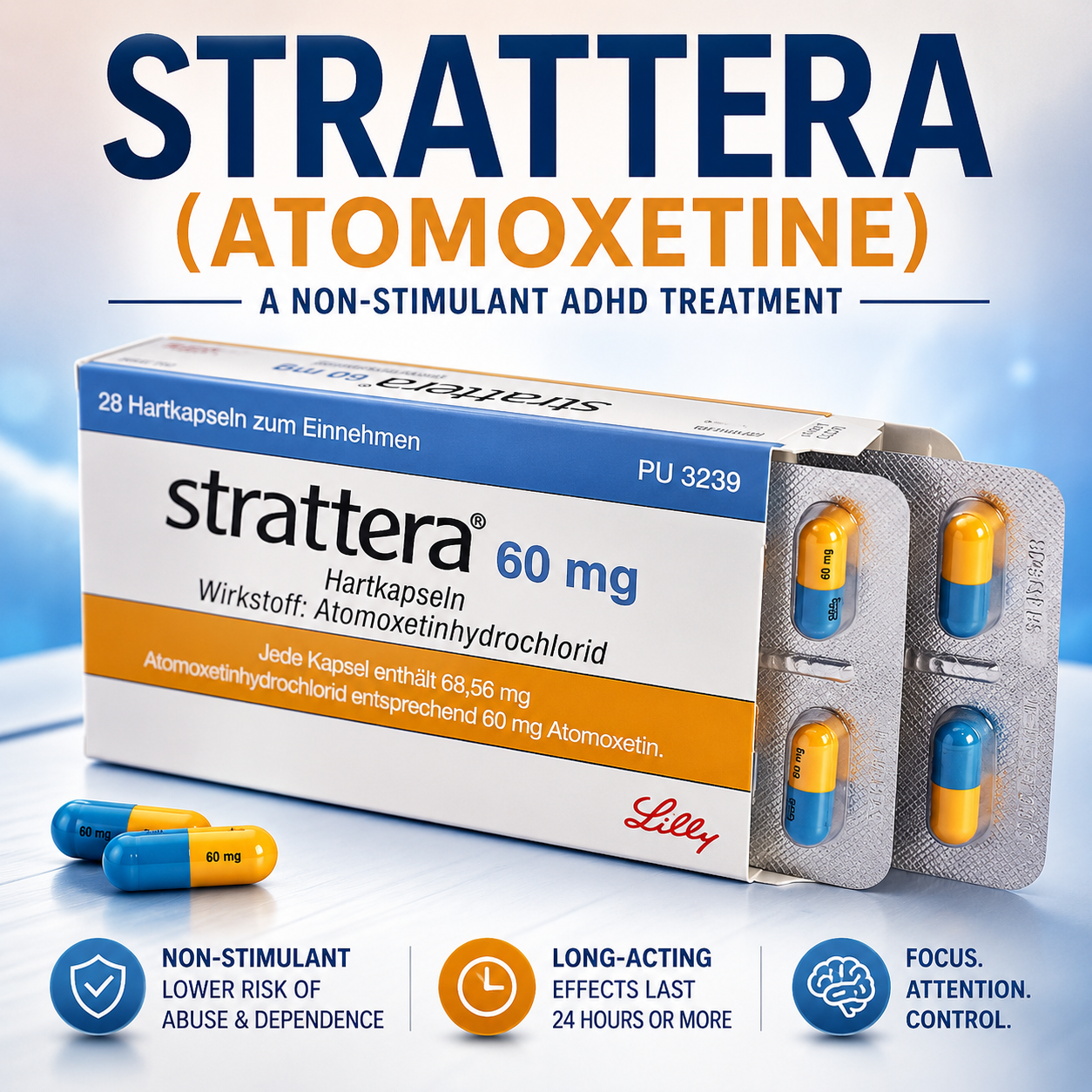
Pros of Strattera for ADHD: longer duration of action compared to some stimulants, lower potential for abuse and dependence, and fewer classic stimulant-type side effects such as insomnia.
Cons of Strattera for ADHD: requires several weeks to reach full effect, generally less potent than stimulant medications, may cause uncomfortable side effects, and carries a warning for increased risk of suicidal thoughts.
Understanding Where Strattera Fits in ADHD Treatment
Attention deficit hyperactivity disorder (ADHD) is a common neurodevelopmental condition that can persist from childhood into adulthood. Effective management often depends on choosing the right medication class—either stimulant or non-stimulant.
While stimulant medications remain the first-line standard, Strattera (generic atomoxetine) represents a key non-stimulant alternative, especially for patients who cannot tolerate stimulants or prefer a different risk profile.
What Are the Pros and Cons of Strattera?
Pros
- Provides consistent symptom control with once-daily dosing
- Lower risk of misuse or dependency
- Not classified as a controlled substance
- Less likely to cause stimulant-related insomnia or jitteriness
Cons
- Takes 3–4 weeks (sometimes up to 6 weeks) for full therapeutic effect
- May be less effective than stimulants in some individuals
- Requires consistent daily use (not suitable for “as-needed” use)
- Possible side effects such as nausea, appetite loss, or fatigue
- Warning for increased suicidal ideation, especially in younger patients
Stimulants vs Non-Stimulants: Core Differences
Stimulant medications like Adderall or Ritalin work by increasing both dopamine and norepinephrine levels in the brain, leading to rapid symptom improvement.
Strattera, on the other hand, selectively increases norepinephrine. This results in a smoother, more gradual effect—without the peaks and crashes often associated with stimulants.
Positioning:
- Stimulants → first-line, higher efficacy
- Strattera → second-line or alternative option
How Effective Is Strattera?
Strattera is a norepinephrine reuptake inhibitor that enhances focus, attention, and impulse control over time. Its effects can last 24 hours or longer, making it suitable for patients who need all-day symptom coverage.
However, the delayed onset is a major drawback. Unlike stimulants, which can work within hours, Strattera requires consistent use for several weeks before noticeable improvement occurs. This often leads to early discontinuation in impatient users.
Side Effects and Safety Profile
Common side effects include:
- Reduced appetite
- Nausea and digestive discomfort
- Fatigue or daytime drowsiness
- Mood fluctuations
Less common but important risks:
- Increased heart rate or blood pressure
- Rare cardiovascular complications in at-risk individuals
- Suicidal thoughts, particularly in children and adolescents
One unique effect is urinary retention, which can be either beneficial or problematic depending on the patient.
Abuse Potential and Prescription Flexibility
A major advantage of Strattera is that it is not a controlled substance. This means:
- Lower abuse and dependency risk
- Less restrictive prescribing rules
- إمكانية longer prescription durations compared to stimulants
This makes it attractive in markets or patient groups where stimulant regulation is strict.
Is Strattera Better Than Stimulants?
Not exactly—just different.
- Strattera → safer profile, slower onset, steadier effect
- Stimulants → faster, stronger symptom control
For patients needing immediate performance improvement (e.g., exams, work tasks), stimulants often outperform.
For patients prioritizing long-term stability or avoiding stimulant risks, Strattera becomes a viable alternative.
Final Positioning: Who Should Consider Strattera?
Strattera is best suited for:
- Patients sensitive to stimulant side effects
- Individuals with substance abuse concerns
- ADHD patients with coexisting anxiety or depression
- Children with tic disorders (e.g., Tourette’s)
Bottom Line
Strattera occupies a clear niche in ADHD treatment. It’s not the strongest option—but it’s one of the safest and most stable long-term alternatives.
Choosing between stimulant and non-stimulant therapy ultimately comes down to balancing speed vs stability, efficacy vs safety, and short-term performance vs long-term management.