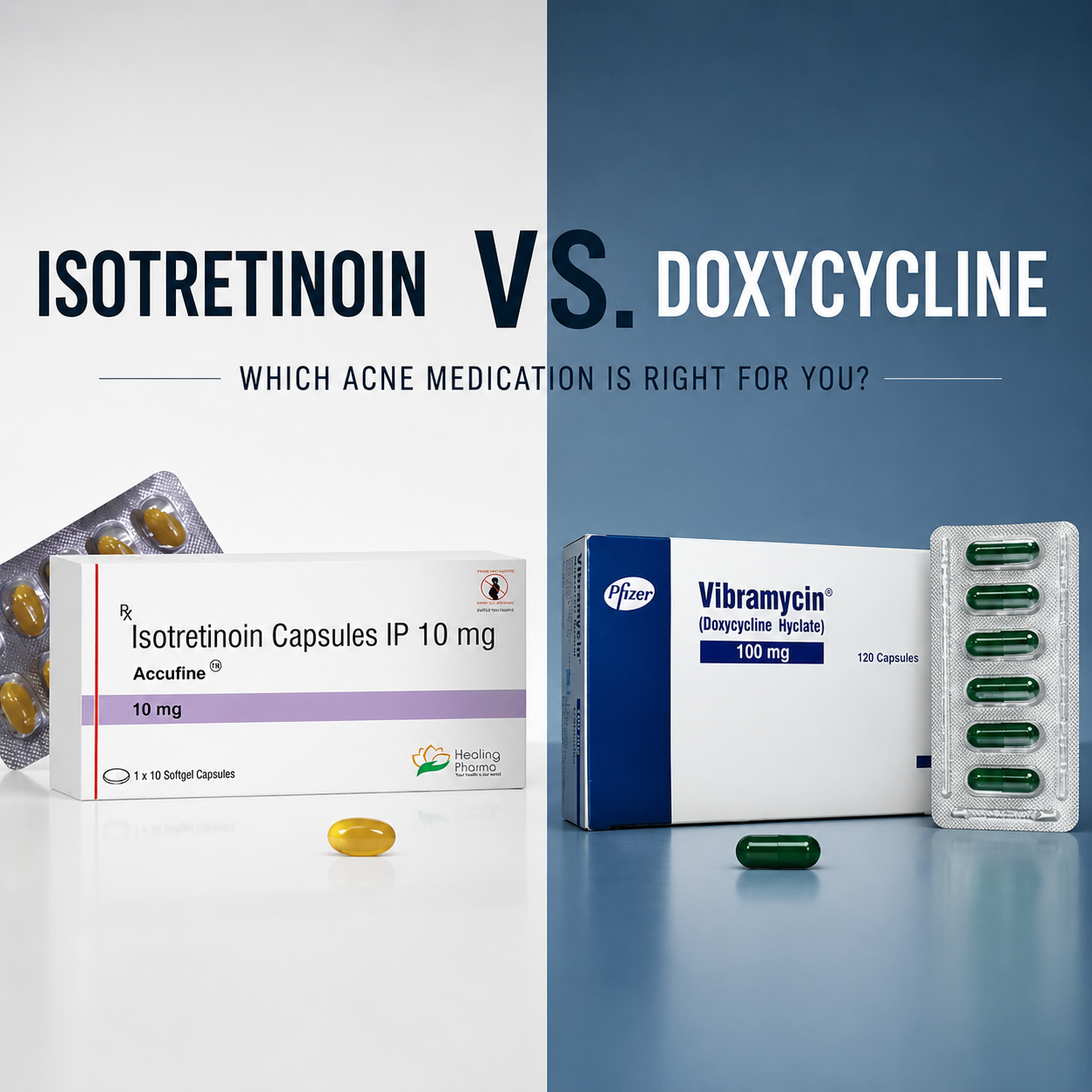
When I first started dealing with persistent acne, I thought every breakout cream and face wash would eventually solve the problem. But after months of inflamed acne, painful cystic acne, oily skin, and recurring acne flare-ups, I realized topical products alone were not enough. That was when I ended up trying both Doxycycline and Isotretinoin.
Both acne medications are widely used for acne treatment, but they work in completely different ways. One targets acne bacteria and inflammation. The other targets the root cause of severe acne itself.
If you are currently comparing Isotretinoin vs Doxycycline for acne, understanding the differences between these acne medications can help you decide which acne treatment may fit your skin condition better.
How Isotretinoin Works for Acne
Isotretinoin is a Vitamin A derivative commonly prescribed for severe acne, cystic acne, nodular acne, and long-term recurring acne.
Unlike antibiotics, Isotretinoin reduces oil production directly by shrinking sebaceous glands. Excess oil production is one of the biggest causes of acne formation, clogged pores, and inflammatory acne.
Because Isotretinoin targets the root cause of acne, many dermatologists consider it one of the most effective treatments for severe cystic acne and persistent acne that does not respond to standard acne medication.
Common benefits of Isotretinoin include:
Reduced oil production
Fewer cystic acne breakouts
Long-term acne control
Lower recurrence of severe acne
Improved skin texture over time
In many cases, Isotretinoin can keep skin mostly clear for months or even years after treatment ends.
How Doxycycline Works for Acne
Doxycycline is an oral antibiotic used for inflammatory acne and moderate acne.
Unlike Isotretinoin, Doxycycline does not reduce sebum production. Instead, Doxycycline works by reducing acne-causing bacteria and calming inflammation.
This makes Doxycycline especially useful for:
Red acne
Swollen pimples
Inflammatory acne
Early-stage acne
Moderate acne breakouts
Doxycycline is often chosen because it works relatively quickly. Many patients notice improvement in redness and inflammation within one to two weeks of starting Doxycycline treatment.
Isotretinoin vs Doxycycline for Acne
Speed of Results
Doxycycline usually works faster during the early stages of acne treatment.
Doxycycline often reduces redness and swelling within 1 to 2 weeks.
Isotretinoin usually starts showing noticeable improvement around weeks 2 to 4, but full acne treatment results can take several months.
Long-Term Acne Control
This is where Isotretinoin often outperforms Doxycycline.
Doxycycline is excellent for short-term inflammatory acne control, but acne may return after stopping the antibiotic.
Isotretinoin addresses the deeper causes of severe acne and often provides long-lasting acne remission.
Best Candidates
Isotretinoin may be better for:
Severe cystic acne
Recurring acne
Deep painful acne
Oily skin with constant breakouts
Long-term acne problems
Doxycycline may be better for:
Inflammatory acne
Moderate acne
Red swollen pimples
Patients wanting a less aggressive acne medication
Early acne treatment stages
Side Effects of Isotretinoin
Isotretinoin side effects can be intense because the medication strongly reduces oil production.
Common Isotretinoin side effects include:
Dry lips
Dry skin
Dry eyes
Skin peeling
Joint discomfort
Elevated liver enzymes
Increased triglycerides
Because of potential liver effects, routine blood tests are required during Isotretinoin treatment.
Many patients also experience an initial acne purge during the first few weeks of Isotretinoin treatment before improvement begins.
Side Effects of Doxycycline
Doxycycline side effects are usually milder but still important.
Common Doxycycline side effects include:
Stomach irritation
Nausea
Sun sensitivity
Photosensitivity
Digestive discomfort
Long-term antibiotic resistance risk
Doxycycline should not be taken with dairy products, iron supplements, calcium supplements, or magnesium supplements because these reduce Doxycycline absorption.
Taking Doxycycline with food is generally recommended to reduce stomach irritation.
Important Tips While Using Acne Medication
Tips for Isotretinoin
Take Isotretinoin with dietary fat to improve absorption
Use lip balm daily
Use moisturizer consistently
Avoid excessive alcohol consumption
Attend regular blood test appointments
Wear sunscreen daily
Tips for Doxycycline
Avoid taking Doxycycline on an empty stomach
Avoid milk and calcium close to dosing time
Use sunscreen every day
Avoid lying down immediately after taking Doxycycline
Stay hydrated throughout treatment
Can You Take Isotretinoin and Doxycycline Together?
In most situations, Isotretinoin and Doxycycline are not taken together.
However, some dermatologists temporarily use Doxycycline first to calm severe inflammatory acne before transitioning patients to Isotretinoin treatment later.
This approach can sometimes reduce inflammation before beginning stronger acne therapy.
Which Acne Medication Is Better?
There is no universal best acne medication.
The better acne treatment depends on:
Your acne severity
Your skin type
Your tolerance for side effects
Your lifestyle
Your ability to commit to blood monitoring
If your acne is severe, cystic, oily, and constantly recurring, Isotretinoin may offer stronger long-term acne control.
If your acne is mostly inflammatory, moderate, and manageable, Doxycycline may be a more practical starting point.
For many people, acne treatment is not about finding the strongest medication. It is about finding the acne medication that best matches the current condition of your skin.
Final Thoughts
Both Isotretinoin and Doxycycline are powerful acne medications with very different roles in acne treatment.
Doxycycline helps reduce inflammatory acne quickly.
Isotretinoin targets the deeper causes of severe acne and oily skin.
After experiencing both treatments, one thing became obvious: successful acne treatment is less about rushing and more about using the right medication at the right stage.
Understanding your acne type, your skin condition, and your tolerance for side effects matters far more than simply choosing the strongest acne medication available.