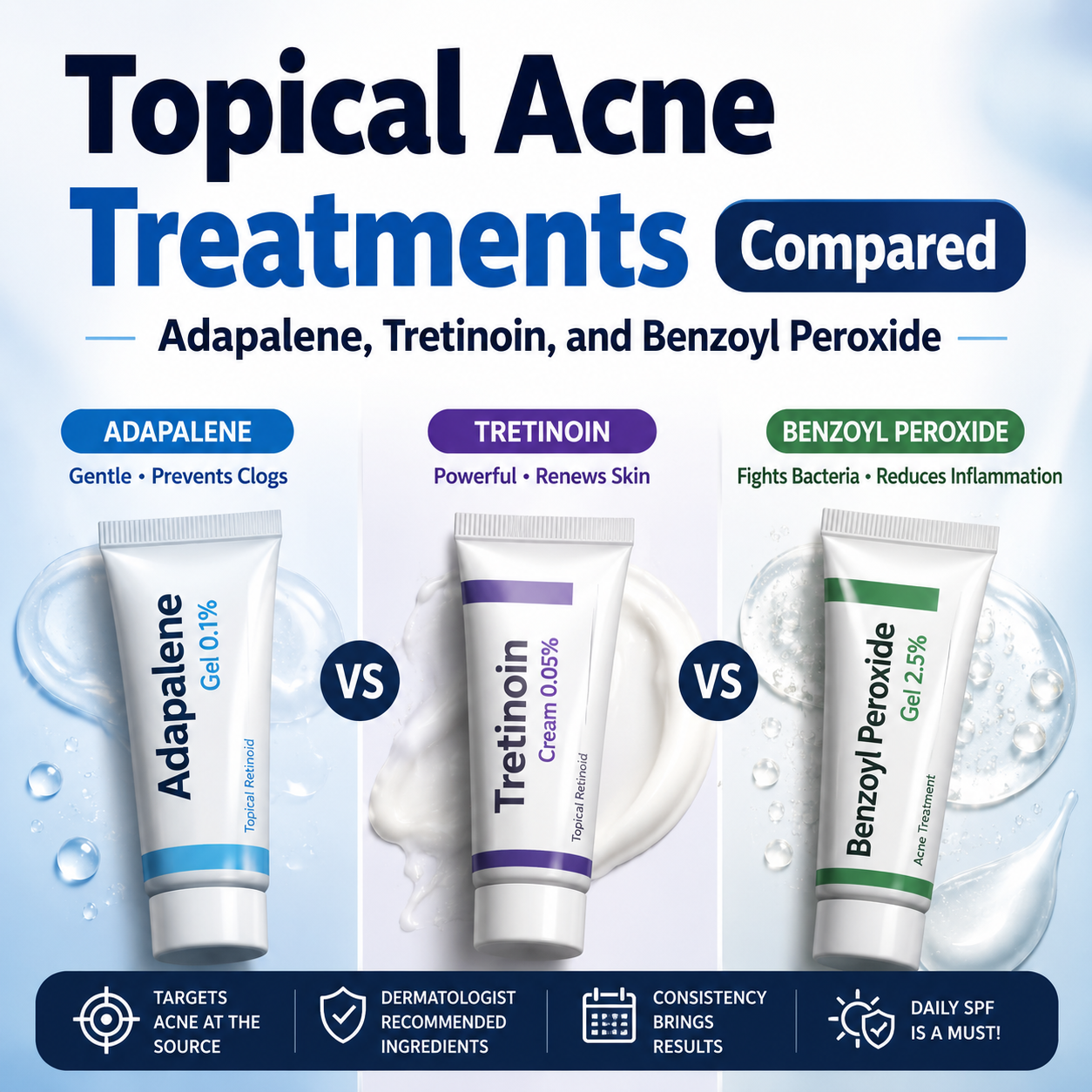
Acne treatments can be confusing, especially when multiple ingredients seem to promise the same result. Among the most widely used topical treatments are Adapalene, Tretinoin, and Benzoyl Peroxide. While all three can help improve acne, they work in very different ways and are often suited for different skin types and acne patterns.
Understanding those differences can help you choose a treatment that matches your goals and avoid unnecessary irritation along the way.
Why These Three Ingredients Are So Popular
Dermatologists have relied on retinoids and Benzoyl Peroxide for decades because they address the core causes of acne:
- Excess oil production
- Clogged pores
- Acne-causing bacteria
- Skin inflammation
The challenge is that not every treatment targets these factors equally. Some are better for preventing breakouts, while others are designed to calm active inflammatory acne.
Let's take a closer look at each option.
Adapalene
[사진 1 삽입]
Adapalene is a third-generation retinoid specifically developed to treat acne while minimizing irritation. It helps normalize skin cell turnover, preventing dead skin cells from clogging pores and creating new breakouts.
For many people, Adapalene serves as the ideal introduction to retinoid therapy because it is generally easier to tolerate than older retinoids.
Common Strengths
- 0.1%
- 0.3%
Best For
- Whiteheads
- Blackheads
- Mild to moderate acne
- Sensitive skin
- First-time retinoid users
Advantages
- Less irritation compared with Tretinoin
- Stable in sunlight
- Effective for long-term acne prevention
- Suitable for ongoing maintenance therapy
Drawbacks
- Results can take 8–12 weeks
- Temporary dryness and peeling may occur during adjustment
Usage Tips
Start with every-other-night application and gradually increase frequency as tolerated. Applying a moisturizer before or after treatment can significantly reduce irritation.
Tretinoin
[사진 2 삽입]
Tretinoin is considered one of the most effective prescription retinoids available. Originally developed for acne treatment, it later became famous for its ability to improve skin texture, fine lines, and signs of photoaging.
Because it accelerates skin renewal so effectively, Tretinoin can produce impressive results. However, that effectiveness often comes with a higher risk of irritation during the first several weeks.
Common Strengths
- 0.025%
- 0.05%
- 0.1%
Best For
- Moderate acne
- Persistent acne
- Acne scars and pigmentation
- Long-term skin rejuvenation
- Photoaging concerns
Advantages
- Strong acne-fighting effects
- Improves skin texture
- Helps fade post-acne marks
- Clinically proven anti-aging benefits
Drawbacks
- Higher irritation potential
- Initial redness and peeling are common
- Requires consistent sun protection
Usage Tips
Use only at night. Many users benefit from beginning with applications every two or three nights before progressing to nightly use.
Always apply sunscreen during the day, regardless of weather conditions.
Tretinoin and Photoaging
Photoaging refers to skin damage caused by long-term UV exposure. Symptoms may include:
- Fine lines
- Wrinkles
- Uneven pigmentation
- Loss of skin elasticity
Tretinoin remains one of the few topical ingredients with substantial evidence supporting its ability to improve visible signs of photoaging over time.
Benzoyl Peroxide
[사진 3 삽입]
Unlike retinoids, Benzoyl Peroxide works primarily by targeting acne-causing bacteria. It reduces the population of Cutibacterium acnes while also helping to decrease inflammation.
One major advantage is that bacteria do not develop resistance to Benzoyl Peroxide, making it a valuable long-term treatment option.
Common Strengths
- 2.5%
- 5%
- 10%
Best For
- Inflamed pimples
- Red, swollen acne lesions
- Sudden acne flare-ups
- Combination treatment plans
Advantages
- Fast acting
- Effective against acne bacteria
- Reduces inflammation quickly
- No bacterial resistance concerns
Drawbacks
- Can cause dryness
- May irritate sensitive skin
- Can bleach clothing, towels, and pillowcases
Usage Tips
Most people achieve excellent results with 2.5% formulations, which often provide similar effectiveness to higher strengths with less irritation.
Apply to clean, dry skin and follow with moisturizer when needed.
Side-by-Side Comparison
| Feature | Adapalene | Tretinoin | Benzoyl Peroxide |
|---|---|---|---|
| Prevents clogged pores | Excellent | Excellent | Moderate |
| Reduces bacteria | No | No | Excellent |
| Reduces inflammation | Good | Good | Excellent |
| Anti-aging benefits | Mild | Excellent | None |
| Beginner-friendly | Excellent | Moderate | Good |
| Irritation potential | Low to Moderate | Moderate to High | Moderate |
| Sun sensitivity | Increased | Increased | Increased |
How to Use Them Properly
Adapalene
- Apply once nightly
- Use on clean, dry skin
- Avoid eyes and lips
- Visible improvement often begins after 4–8 weeks
Tretinoin
- Apply once nightly
- Begin slowly if new to retinoids
- Wait 15–20 minutes after washing your face before application if sensitivity occurs
- Consistent use is important for long-term results
Benzoyl Peroxide
- Use once or twice daily
- Start with lower concentrations
- Moisturize if dryness develops
- Spot treatment or full-face application may be used depending on acne severity
Important Warnings
[사진 4 삽입]
Always Wear Sunscreen
All three treatments increase sensitivity to sunlight.
Choose:
- SPF 30 or higher
- Broad-spectrum protection
- Daily application, even on cloudy days
Pregnancy Considerations
Retinoids such as Adapalene and Tretinoin are generally avoided during pregnancy or when attempting to conceive.
Avoid Applying Tretinoin and Benzoyl Peroxide Together
Benzoyl Peroxide can reduce the effectiveness of Tretinoin when applied simultaneously.
A common approach is:
- Benzoyl Peroxide in the morning
- Tretinoin at night
Reduce Frequency If Irritation Occurs
Temporary dryness and peeling are common. If irritation becomes excessive:
- Reduce application frequency
- Increase moisturizer use
- Resume gradually once skin recovers
Frequently Asked Questions
Can I wear makeup while using these treatments?
Yes. However, during the first few weeks of treatment, your skin may be more sensitive. Choosing gentle, non-comedogenic makeup products is recommended.
My skin is peeling. Should I stop?
Not necessarily. Mild peeling and dryness are common during the adjustment phase. Consider reducing frequency and increasing moisturization before discontinuing treatment.
Is sunscreen really necessary?
Absolutely. These treatments increase photosensitivity and make your skin more vulnerable to UV damage.
Can Adapalene and Benzoyl Peroxide be used together?
Yes. In fact, some acne medications combine both ingredients into a single formulation.
When should I expect results?
Most users begin seeing meaningful improvement after 4–8 weeks, with continued progress over several months.
Which One Should You Choose?
Choose Adapalene If:
- You're new to retinoids
- You have sensitive skin
- Your acne consists mainly of blackheads and whiteheads
- You want a gentle long-term treatment
Choose Tretinoin If:
- You have persistent acne
- You want stronger skin-renewal effects
- You are also concerned about fine lines and pigmentation
- You can tolerate a longer adjustment period
Choose Benzoyl Peroxide If:
- You need quick control of inflamed breakouts
- You frequently develop red, swollen pimples
- You want an effective antibacterial treatment
Final Thoughts
When comparing Adapalene, Tretinoin, and Benzoyl Peroxide, there is no universal winner. The best choice depends on your skin type, acne severity, and ability to tolerate treatment consistently.
Many people ultimately benefit from combining therapies rather than relying on a single ingredient.
The key is patience. Acne treatments rarely deliver overnight results. Consistent use, proper skincare habits, and realistic expectations are what ultimately lead to clearer skin over time.
Healthy skin is usually not the result of a single product—it is the result of a routine that you can maintain for the long term.