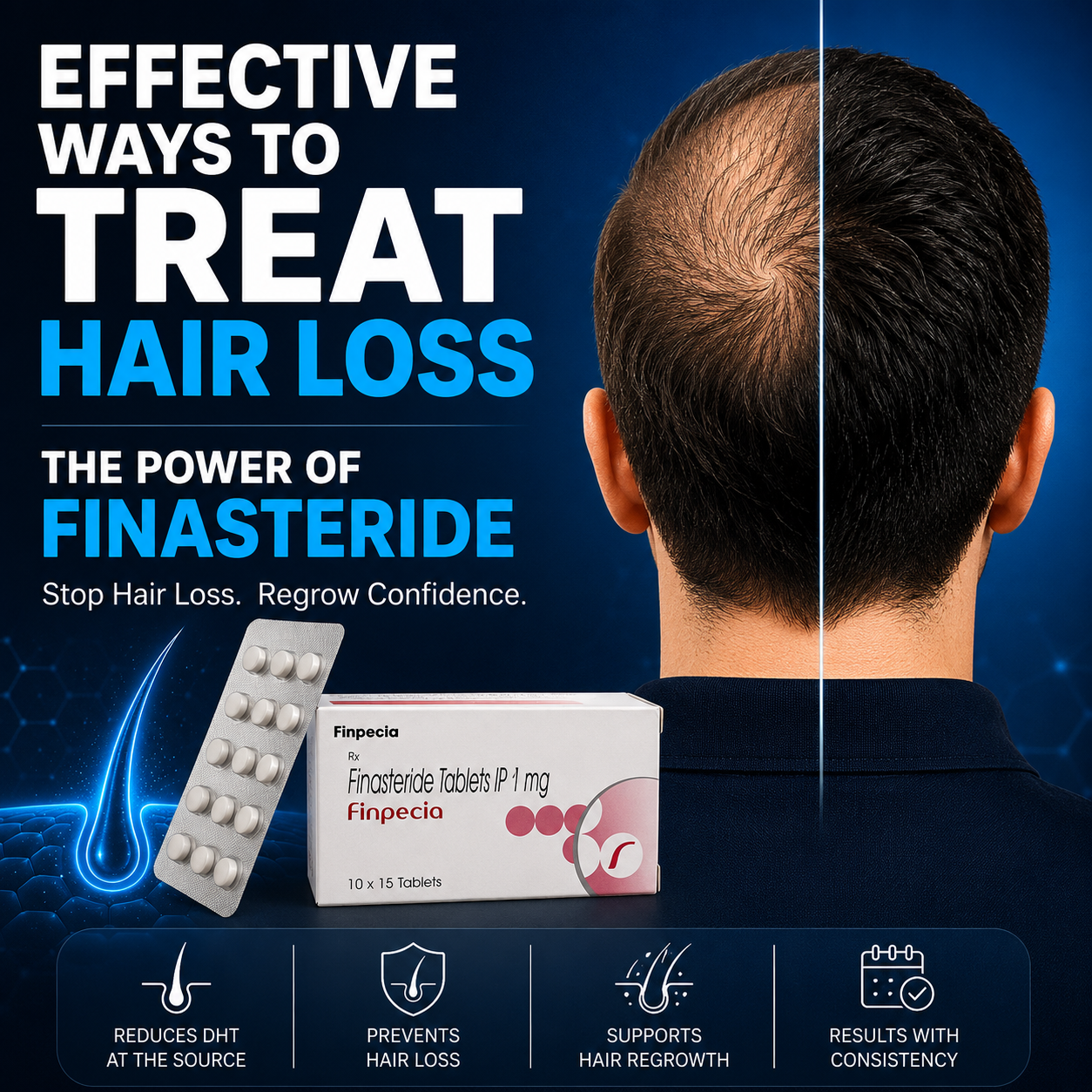
Hair loss affects millions of people worldwide and can have a significant impact on confidence and quality of life. While genetics are one of the leading causes, factors such as stress, poor nutrition, hormonal changes, and inadequate scalp care can also contribute to thinning hair.
The good news is that early treatment can help slow hair loss and preserve existing hair. Among the available treatment options, Finasteride has become one of the most trusted medications for male pattern hair loss.
Let's take a closer look at what causes hair loss, how Finasteride works, and how to use it effectively.
What Is Hair Loss?
Hair loss (alopecia) is a condition in which hair becomes thinner or falls out from areas where it normally grows.
Although losing 50 to 100 hairs per day is considered normal, consistently shedding more than that may indicate abnormal hair loss. Because different types of hair loss require different treatment approaches, identifying the underlying cause is an important first step.
Common causes include:
-
Genetic predisposition
-
Hormonal changes
-
Chronic stress
-
Nutritional deficiencies
-
Poor scalp health
-
Certain medical conditions
Common Types of Hair Loss
M-Shaped Hair Loss
This type begins with gradual recession of the front hairline, creating an "M" shape. It is one of the earliest signs of male pattern baldness and is strongly linked to genetics and male hormones.
Crown Hair Loss
Hair gradually becomes thinner at the crown of the head. In men, it often occurs together with a receding hairline, while women typically notice widening of the part line before crown thinning develops.
Alopecia Areata
Alopecia areata is an autoimmune disorder in which the immune system mistakenly attacks healthy hair follicles, resulting in round patches of hair loss. Unlike androgenetic alopecia, it is not caused by DHT.
Androgenetic Alopecia (Male Pattern Hair Loss)
The most common form of hair loss in men is androgenetic alopecia. This condition develops gradually due to genetic susceptibility and the effects of the hormone DHT (dihydrotestosterone).
Fortunately, this is also the type of hair loss that responds best to Finasteride.
Understanding Androgenetic Alopecia
Male pattern hair loss occurs when hair follicles become increasingly sensitive to DHT.
DHT is produced when the male hormone testosterone is converted by the enzyme 5-alpha reductase.
Over time, elevated DHT levels shrink susceptible hair follicles, causing:
-
Thinner hair
-
Shorter hair growth cycles
-
Progressive hair loss
-
Reduced hair density
Although testosterone levels are usually normal, certain scalp areas produce more DHT, leading to localized hair thinning around the temples and crown.
Why Is Finasteride Effective?
Finasteride was originally developed to treat benign prostatic hyperplasia (BPH). During clinical studies, researchers discovered that it also significantly slowed hair loss and promoted hair regrowth in men with androgenetic alopecia.
Today, it is considered one of the first-line medical treatments for male pattern baldness.
Finasteride works by:
-
Inhibiting the enzyme 5-alpha reductase
-
Reducing DHT production
-
Protecting hair follicles from miniaturization
-
Slowing further hair loss
-
Supporting healthier hair growth over time
By lowering scalp DHT levels, Finasteride helps preserve existing hair and may stimulate regrowth in many patients.
How to Take Finasteride
For male pattern hair loss, the recommended dosage is:
-
1 mg orally once daily
-
Can be taken with or without food
-
Take it at approximately the same time every day
Most users begin noticing visible improvements after 3 to 6 months of continuous treatment.
Hair loss medications require patience. Since hair grows slowly, consistent long-term use is necessary to achieve and maintain results.
If treatment is discontinued, hair loss typically resumes within about 12 months.
Precautions Before Taking Finasteride
Finasteride is intended only for adult men.
Women, particularly those who are pregnant or may become pregnant, should not handle crushed or broken tablets, as the medication can be absorbed through the skin and may affect fetal development.
The protective coating on intact tablets prevents direct exposure, making whole tablets safe to handle.
Possible Side Effects
Like any prescription medication, Finasteride may cause side effects, although most users tolerate it well.
Common Side Effects
-
Decreased libido
-
Erectile dysfunction
-
Ejaculation disorders
-
Dizziness
-
Fatigue
-
Orthostatic hypotension
Less Common Side Effects
-
Rash
-
Breast tenderness
-
Gynecomastia (male breast enlargement)
-
Reduced semen volume
-
Swelling (edema)
-
Drowsiness
-
Shortness of breath
-
Rhinitis
Rare Side Effects
-
Mood changes
-
Depression
-
Sleep disturbances
-
Persistent sexual dysfunction
-
Testicular pain
-
Temporary reduction in fertility
-
Allergic reactions such as itching, hives, or angioedema
Should You Be Worried About Side Effects?
Most men do not experience significant side effects, and those that occur are generally uncommon and often improve after stopping the medication.
Millions of men around the world have successfully used Finasteride for decades, making it one of the most extensively studied treatments for androgenetic alopecia.
If any unusual symptoms develop, consult your healthcare provider for appropriate advice.
Finpecia: A Popular Finasteride Option
For men looking for an affordable Finasteride treatment, Finpecia is one of the most widely recognized generic options.
Containing Finasteride 1 mg, it works through the same proven mechanism by reducing DHT production and helping slow the progression of male pattern hair loss.
Finpecia is most effective when treatment begins early, before hair follicles become permanently inactive.
Final Thoughts
Hair loss can be frustrating, but it doesn't have to be permanent.
Understanding the cause of your hair loss is the first step toward finding an effective treatment. For men with androgenetic alopecia, Finasteride remains one of the most scientifically proven and effective medications available.
Combined with consistent daily use, a healthy lifestyle, and proper scalp care, Finasteride can help slow hair loss, preserve existing hair, and support long-term confidence.
The earlier treatment begins, the better the chances of maintaining healthy, fuller-looking hair.