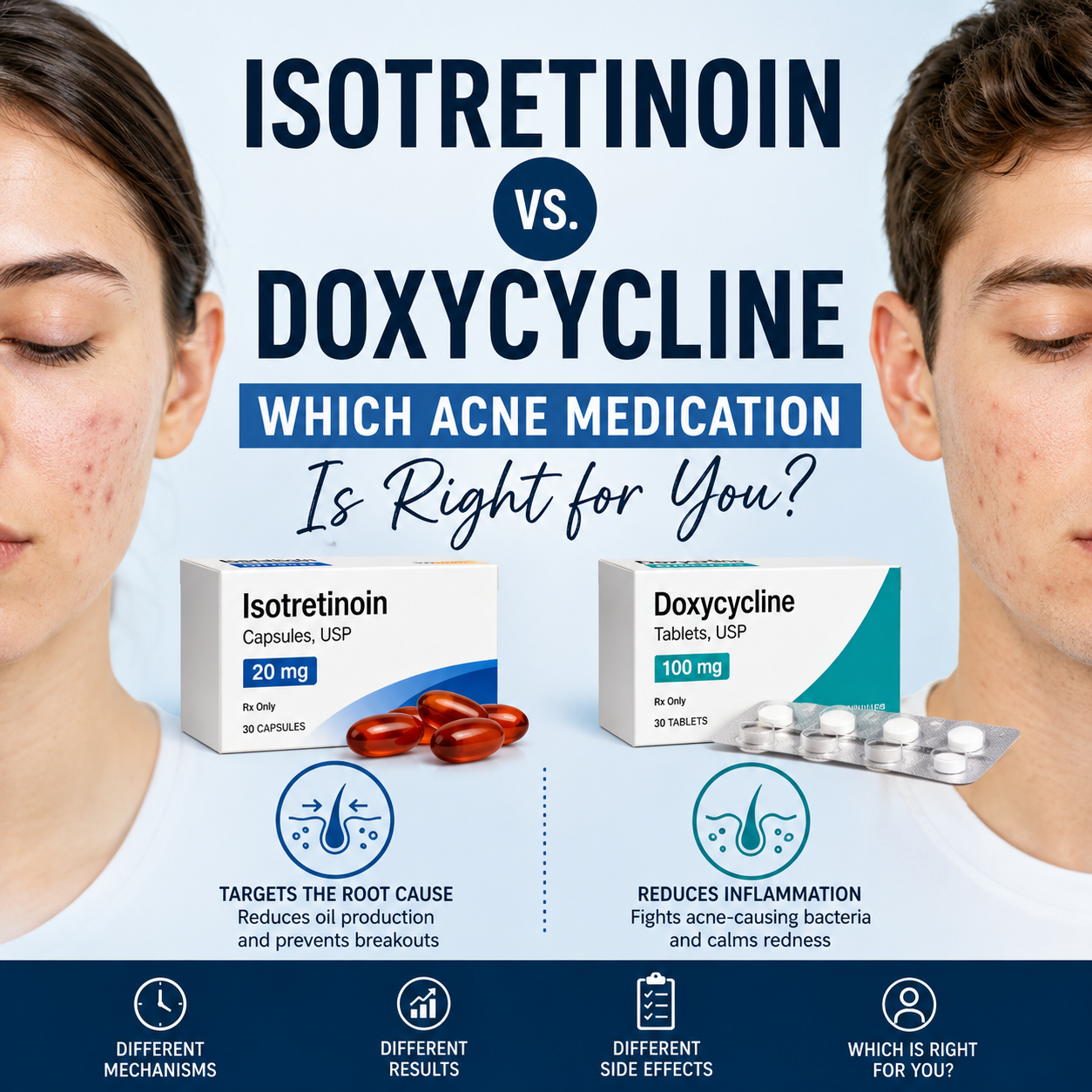
Acne can be frustrating, persistent, and difficult to treat. While countless creams and cleansers promise clear skin, moderate to severe acne often requires prescription medication. Two of the most commonly prescribed oral treatments are Isotretinoin and Doxycycline.
Although both medications are used to treat acne, they work in completely different ways. Understanding their differences can help you choose the treatment that best matches your skin condition and long-term goals.
Let's take a closer look.
Understanding the Difference
Both medications can significantly improve acne, but they target different aspects of the condition.
Isotretinoin
Isotretinoin is a Vitamin A derivative (retinoid) that dramatically reduces the size and activity of the sebaceous glands. By decreasing oil production, preventing clogged pores, and reducing inflammation, it addresses the root causes of acne.
Because of its effectiveness, Isotretinoin is widely considered the gold standard for severe or persistent acne.
It is commonly recommended for:
- Severe cystic acne
- Nodular acne
- Acne resistant to antibiotics
- Frequent recurring breakouts
- Acne that causes permanent scarring
Doxycycline
Doxycycline is an oral tetracycline antibiotic.
Rather than reducing oil production, it works by suppressing the growth of acne-causing bacteria while reducing inflammation inside the pores.
It is particularly effective for inflammatory acne that presents with red, swollen pimples and pustules.
Doxycycline is often prescribed alongside topical acne treatments during the early stages of therapy.
It is generally recommended for:
- Mild to moderate inflammatory acne
- Sudden inflammatory flare-ups
- Patients beginning prescription acne treatment
- Temporary acne control before transitioning to other therapies
Isotretinoin vs. Doxycycline Comparison
| Feature | Isotretinoin | Doxycycline |
|---|---|---|
| Drug Type | Oral Retinoid | Oral Antibiotic |
| Main Action | Reduces oil production and treats root cause | Reduces bacteria and inflammation |
| Best For | Severe cystic acne | Mild to moderate inflammatory acne |
| Typical Onset | 2–4 weeks for noticeable improvement | 1–2 weeks for inflammation relief |
| Long-Term Results | Often long-lasting remission | Acne may return after discontinuation |
| Blood Test Required | Yes | Usually No |
| Treatment Duration | 4–6 months | 2–4 months |
Which Medication Works Faster?
Many patients notice improvement with Doxycycline sooner.
Doxycycline
- Improvement often begins within 1 to 2 weeks.
- Redness and swelling typically decrease first.
- Active inflammatory lesions gradually improve.
However, since it does not reduce oil production, acne may return after treatment ends.
Isotretinoin
Isotretinoin requires more patience.
Some people experience an initial acne flare during the first few weeks before significant improvement occurs.
Most patients begin noticing visible improvement after approximately 2 to 4 weeks, with the most dramatic results appearing after several months of continuous treatment.
The benefit is that Isotretinoin targets the underlying causes of acne rather than simply suppressing inflammation.
Side Effects
Common Isotretinoin Side Effects
- Dry lips
- Dry skin
- Dry eyes
- Nosebleeds
- Increased sensitivity to sunlight
- Elevated liver enzymes
- Increased cholesterol or triglycerides
- Joint or muscle discomfort
Because of these potential effects, routine blood tests are recommended throughout treatment.
Common Doxycycline Side Effects
- Upset stomach
- Nausea
- Heartburn
- Increased sensitivity to sunlight
- Esophageal irritation if taken without enough water
- Risk of antibiotic resistance with prolonged use
To reduce stomach irritation, take Doxycycline with food and plenty of water.
Important Tips for Safe Use
Taking Isotretinoin
- Take with a meal that contains healthy fats to improve absorption.
- Apply lip balm and moisturizer daily.
- Wear sunscreen every day.
- Avoid excessive alcohol consumption.
- Attend all scheduled blood test appointments.
Taking Doxycycline
- Take with food to reduce stomach discomfort.
- Drink a full glass of water.
- Stay upright for at least 30 minutes after taking the medication.
- Avoid milk, calcium, magnesium, iron, and zinc supplements within two hours before or after each dose.
- Wear sunscreen and protective clothing when outdoors.
Which One Should You Choose?
Isotretinoin may be the better option if you have:
- Severe cystic acne
- Deep, painful nodules
- Frequent acne recurrence
- Acne scarring
- Long-standing acne that hasn't responded to antibiotics
Doxycycline may be the better option if you have:
- Mild to moderate inflammatory acne
- Red, swollen pimples
- Acne flare-ups requiring rapid control
- A treatment plan that doesn't involve regular blood monitoring
Frequently Asked Questions
Can Isotretinoin and Doxycycline be taken together?
Generally, no.
Using these medications together is usually avoided because the combination may increase the risk of intracranial hypertension (increased pressure around the brain). Dermatologists may prescribe Doxycycline first to control inflammation before transitioning to Isotretinoin when appropriate.
Why are blood tests required during Isotretinoin treatment?
Isotretinoin can affect liver function and blood lipid levels. Regular monitoring helps ensure treatment remains safe throughout the course.
What should I avoid while taking Doxycycline?
Avoid taking the medication with milk or mineral supplements containing calcium, magnesium, iron, or zinc, as they reduce absorption.
Also remember to protect your skin from excessive sun exposure.
Is an acne purge normal?
Yes.
Some people experience an initial worsening of acne during the first few weeks of Isotretinoin treatment. This temporary flare usually settles as treatment continues.
A similar reaction is much less common with Doxycycline.
Final Thoughts
Although both medications are effective treatments for acne, they serve very different purposes.
Isotretinoin focuses on treating the underlying causes of acne and offers the greatest chance of long-term remission, making it ideal for severe or stubborn cases.
Doxycycline works quickly to reduce inflammation and bacterial growth, making it an excellent option for inflammatory acne and short-term symptom control.
The best treatment isn't simply the strongest medication—it's the one that matches your skin condition, treatment goals, and ability to follow the recommended care plan.
With the right approach and consistent treatment, clearer, healthier skin is an achievable goal.
Related Searches
- Isotretinoin for cystic acne
- Doxycycline for acne treatment
- Oral acne medications
- Best treatment for inflammatory acne
- Acne antibiotics vs Isotretinoin
- Severe acne treatment options
- How long does Isotretinoin take to work?
- Doxycycline side effects