
Exchange & Returns Information
(0)
| Generic For | TAXOL |
|---|---|
| Active Ingredient | PACLITAXEL |
| Strength | 30MG |
| Manufacturer | BDR PHARMA |


| Pack Size | Price Per Unit | Unit Price | QTY | CART | Best Coupon Price MAX DISCOUNT |
|---|---|---|---|---|---|
| 1 BOX - 1 VIAL | $ 13.40 | $ 13.40 |
$ 11.39
Apply ZARVY26 (-15%)
You save $ 2.01
|
||
| 2 BOXES - 2 VIALS | $ 9.60 |
28% $ 26.80
$ 19.20
|
$ 16.32
Apply ZARVY26 (-15%)
You save $ 2.88
|
||
| ★ Best Value 3 BOXES - 3 VIALS | $ 8.50 |
37% $ 40.20
$ 25.50
|
$ 21.68
Apply ZARVY26 (-15%)
You save $ 3.83
|




Reference information will be available soon.
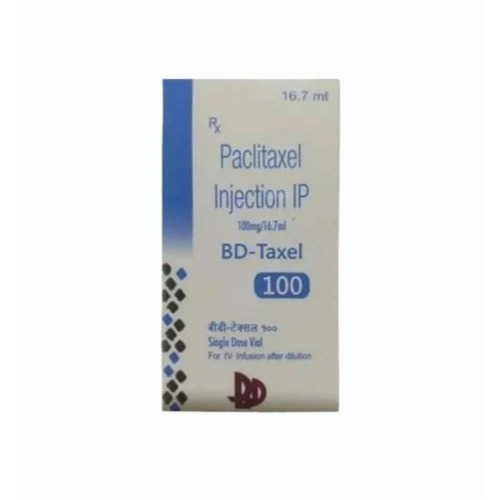
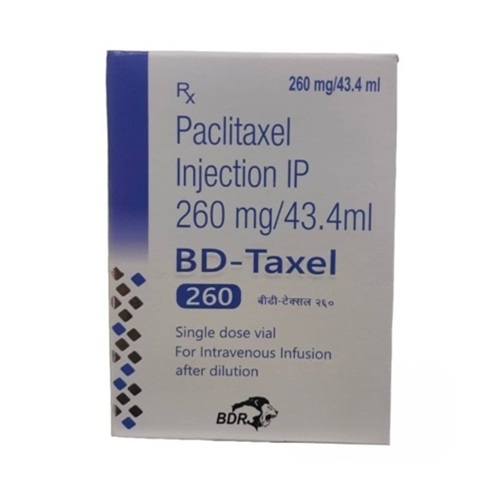
Bd-Taxel 30, Injection – 50 ml is an injectable anticancer formulation containing paclitaxel, a potent cytotoxic taxane used in the treatment of multiple solid tumors.
Its mechanism of action is based on microtubule stabilization, preventing their disassembly during mitosis. This disrupts cell division and induces apoptosis in rapidly proliferating cancer cells, making it highly effective across a broad range of malignancies.
Bd-Taxel 30 is employed in both first-line and salvage chemotherapy regimens, either as monotherapy or in combination protocols with agents such as cisplatin, gemcitabine, or trastuzumab, depending on tumor type and stage.
It is a cornerstone option in the treatment of ovarian, breast, lung, pancreatic, and head & neck cancers, as well as AIDS-related Kaposi’s sarcoma, offering oncologists flexibility in tailoring therapy for individual patients.
AntiCancer Drugs > Ovarian Cancer
Used in combination with platinum-based chemotherapy (cisplatin or carboplatin) for both primary and recurrent epithelial ovarian cancer. Its action on microtubule stabilization enhances tumor suppression and prolongs remission.
AntiCancer Drugs > Breast Cancer
Administered in metastatic and adjuvant settings, particularly following anthracycline regimens. When combined with trastuzumab, it offers significant survival benefits in HER2-positive breast cancer.
AntiCancer Drugs > Non-Small Cell Lung Cancer (NSCLC)
Indicated for advanced or inoperable NSCLC, especially when combined with platinum agents. Provides improved survival outcomes and higher tumor response rates.
AntiCancer Drugs > Pancreatic Cancer
A central component of first-line therapy in combination with gemcitabine for metastatic pancreatic cancer, demonstrating improved overall survival compared with gemcitabine alone.
AntiCancer Drugs > Cervical & Head and Neck Cancers
Applied in concurrent chemoradiation protocols or systemic therapy depending on cancer stage. Shows synergistic efficacy as part of multimodal treatment strategies.
AntiCancer Drugs > Kaposi’s Sarcoma
Approved for treatment of AIDS-related Kaposi’s Sarcoma, serving as an effective option where antiretroviral therapy alone is insufficient.
Paclitaxel exerts its antineoplastic activity by binding to tubulin and stabilizing microtubules, thereby preventing their depolymerization. This disruption of the mitotic spindle apparatus halts normal cell division, causing mitotic arrest followed by apoptosis of malignant cells.
Unlike many conventional chemotherapeutics, paclitaxel demonstrates activity throughout the cell cycle, with peak effectiveness during the M phase. Its broad spectrum of efficacy spans numerous solid tumors, including ovarian, breast, lung, pancreatic, and head & neck cancers.
As a taxane derivative, paclitaxel is also recognized for its radiosensitizing properties and its synergistic potential with platinum agents, enhancing tumor control in combination regimens.
Ovarian Cancer:
First-line: 175 mg/m² IV over 3 hours + cisplatin 75 mg/m² IV every 3 weeks
Alternative: 135 mg/m² IV over 24 hours + cisplatin 75 mg/m² every 3 weeks
Recurrent: 135–175 mg/m² IV over 3 hours every 3 weeks
Breast Cancer:
Metastatic: 175 mg/m² IV over 3 hours every 3 weeks
Adjuvant: 175 mg/m² IV over 3 hours every 3 weeks × 4 cycles (post-anthracycline regimens)
Non-Small Cell Lung Cancer (NSCLC):
135 mg/m² IV over 24 hours + cisplatin every 3 weeks
Kaposi’s Sarcoma (AIDS-related):
135 mg/m² IV over 3 hours every 3 weeks
or 100 mg/m² IV over 3 hours every 2 weeks
Premedication:
Corticosteroids
Antihistamines (e.g., diphenhydramine)
H2 antagonists (e.g., ranitidine, famotidine)
→ Mandatory to prevent hypersensitivity reactions
Dose Adjustments & Monitoring:
Adjust or delay dosing if neutrophils < 1000/mm³
Consider G-CSF support for recurrent neutropenia
Administration Guidelines:
Take: via IV infusion under strict clinical supervision
Do not: administer without premedication, or if severe neutropenia is present
Store below 25°C in a dry, light-protected environment
Do not freeze
Keep the vial in the original carton to protect from light
Avoid excessive shaking during handling
Use prepared solution within the prescribed stability period as per institutional guidelines
Common side effects: alopecia, myelosuppression (neutropenia, leukopenia), nausea, vomiting, diarrhea, peripheral neuropathy
Hypersensitivity reactions may occur even with premedication
Less common: hepatotoxicity, bradycardia, arthralgia
Severe neutropenia or neuropathy may require dose adjustments or treatment delays
Persistent symptoms should be reported promptly to a healthcare provider
No reviews yet. Be the first to review this product!
No combo deals available at the moment.